Budget 2024 seems to be an 'election budget', says NCMP Hazel Poa
NCMP Hazel Poa views Budget 2024 as an "election budget with no additional taxes." She urges a shift towards long-term strategies, emphasizing fundamental changes to boost real wages, reducing reliance on handouts for a more sustainable future.
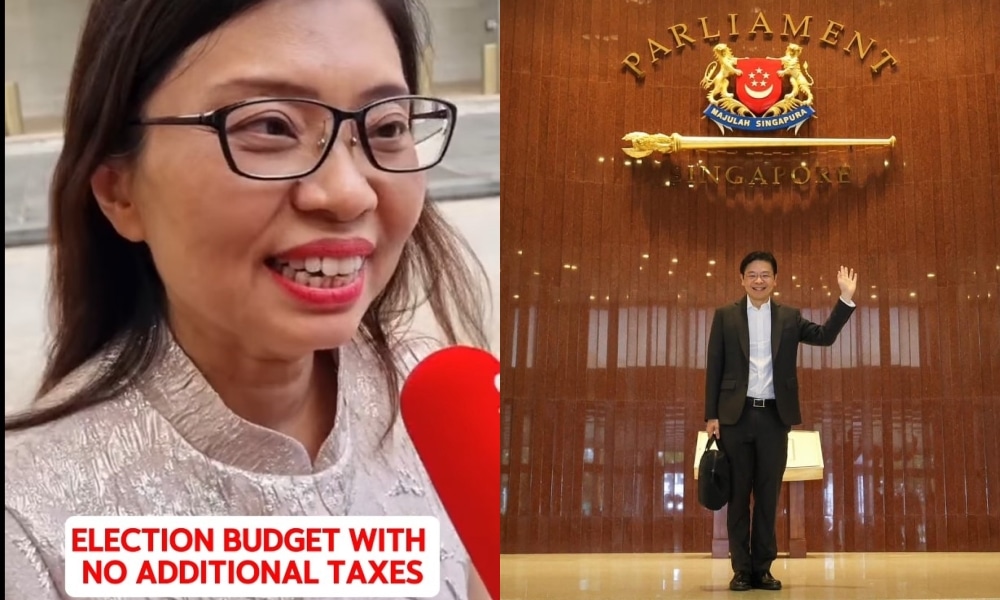

SINGAPORE: Hazel Poa, Non-Constituency Member of Parliament (NCMP) from the Progress Singapore Party (PSP), remarked on the recently unveiled Singapore Budget 2024, suggesting that it appears to be tailored as an "election budget with no additional taxes."
In response to inquiries from local media about the budget, Ms Poa provided further insight into what constitutes an election budget, explaining that it typically involves offering numerous benefits without imposing the burden of increased taxes to ensure widespread satisfaction.
She expressed appreciation for the S$1.9 billion Assurance Package aimed at assisting Singaporeans in managing the cost of living.
However, she cautioned that these measures are short-term and expressed hope that the government's focus would shift towards implementing fundamental changes to enable Singaporeans to increase their real wages, reducing the dependence on handouts for a significant portion of the population.
Ms Poa highlighted a favourable aspect of the budget—the modifications to the SkillsFuture Level-Up Programme.
The program targets Singaporeans aged 40 and above and encompasses a S$4,000 top-up in SkillsFuture Credit allocated for selected courses.
"I like this focus on full-time courses because it allows those who have been retrenched or displaced to take on training that gives them deep learning, to enable them to move into a different industry and improve their employability overall."
Ms Poa, also serving as PSP's Vice Chairman, highlighted that in the past, the constraint of a smaller credit amount limited individuals to shorter courses with minimal impact.
When prompted to elaborate on the fundamental changes she proposed, Ms Poa reiterated the essential need to raise Singaporeans' wages to cope with the cost of living.
She outlined various approaches to achieve this, one of which aligns with the PSP's previous proposal—the implementation of a living wage, which establishes a minimum wage for all individuals.
In addition, she stressed the importance of empowering employees to negotiate better wages, citing the comparatively lower percentage of Singaporeans' wage component in GDP compared to other OECD countries.
"This is something that we can work on to improve the percentage of wages and therefore improve the lives of Singaporeans."
DPM Wong hands out goodies in Budget 2024 amidst early GE speculation
Last Friday (16 February), Deputy Prime Minister and Finance Minister Lawrence Wong announced the Singapore’s 2024 Budget in Parliament.
DPM Wong emphasized that this year’s budget addresses immediate concerns related to the cost of living for both households and businesses.
Simultaneously, the budget outlines strategies to enhance economic competitiveness, offer support to young families, and ensure the relevance of the workforce.
While reassuring the government’s dedication to providing increased support to households, it is challenging for Singaporeans not to view this year’s Budget announcement through the lens of an “Election Budget.”
Speculation about an early poll in 2024 adds a layer of significance to the budgetary decisions made.
On 20 August 2023, PM Lee revealed intentions to step down in favour of Deputy Prime Minister Lawrence Wong, potentially around the PAP’s 70th anniversary on 21 November 2024, although an exact timeline was not disclosed.
Previously expressing his wish “to step down before his 70th birthday in February 2022,” the unexpected challenges of the pandemic disrupted Lee’s plans.
Despite the absence of a clear timeline, PM Lee’s announcement suggests a likelihood of the General Election occurring next year, possibly before the party’s anniversary in November.
In response to the PAP’s dominant 2/3 majority in Parliament, Singapore’s political landscape has witnessed increased manoeuvring, intensifying grassroots outreach efforts, and witnessing alternative parties forming political alliances — both formal and informal — to contest in the upcoming GE.