

Pritam Singh calls for greater transparency in reserves management
Speaking in Parliament on Wednesday (7 Feb), Workers' Party MP Mr Pritam Singh called for transparency and flexibility in managing Singapore’s reserves. He outlined key points concerning reserve utilization and proposed principles for their management.
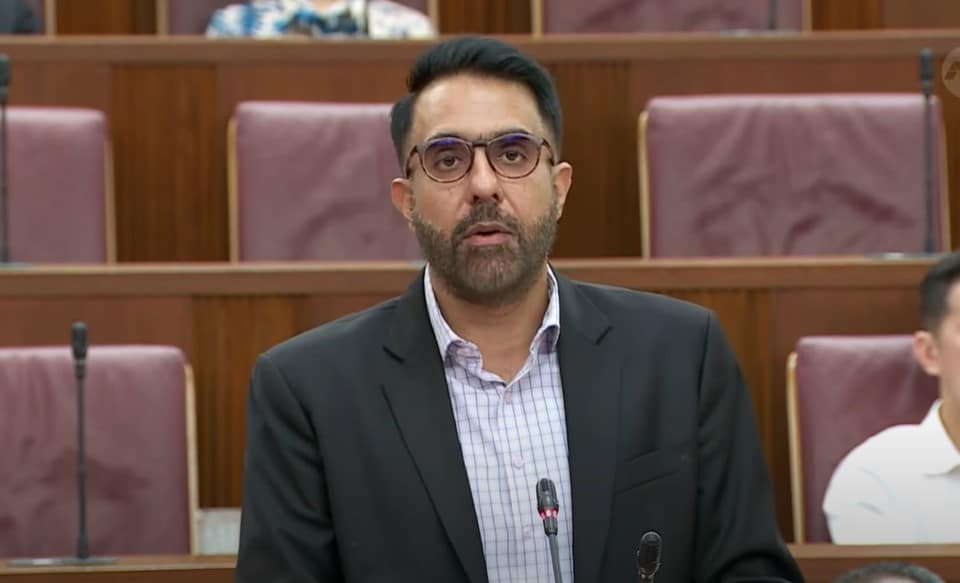

SINGAPORE: Speaking in Parliament on Wednesday (7 Feb), Member of Parliament (MP) Mr Pritam Singh, emphasized the need for greater transparency and flexibility in managing Singapore’s reserves.
Mr Singh, representing the Workers’ Party (WP), outlined three key points concerning the country's reserves and proposed five principles guiding their utilization.
He started his speech by underscoring the importance of openness regarding the reserves.
He argued that transparency is essential for fostering informed discussions and facilitating mature conversations on the topic.
Mr Leong Mun Wai, a Non-constituency Member of Parliament (NCMP) and Secretary General of the Progress Singapore Party (PSP) had initiated a robust debate with a motion calling for the government to reassess its budget and reserve accumulation policies.
Meanwhile, Hazel Poa, NCMP from PSP, raised critical questions regarding Singapore’s reserve policies during the motion filed by Mr Leong Mun Wai on Wednesday (7 Feb).
Her inquiries centered on the purpose of these reserves, particularly amidst declining birth rates and population growth largely reliant on new citizens’ influx.
Advocating for transparency in reserves
“My first point is that the Government should be more open about our reserves and reveal figures not for their own sake, but so as to facilitate mature conversations on the reserves to take place,” stated Mr Singh.
Citing previous proposals by the WP, Mr Singh highlighted the necessity for exploring alternatives to raising the Goods and Services Tax (GST) by tapping into investment returns to fund essential services like healthcare.
However, he noted that discussions on reserves have often been narrow and politically charged, with the WP's inquiries into the use of reserves for social purposes met with accusations of irresponsibility.
Mr Singh highlighted the challenges faced by the WP in obtaining details about reserves, with the People's Action Party (PAP) characterizing them as a "secret weapon."
This characterization, according to him, impedes mature and civil conversations on the topic.
Despite these challenges, Mr Singh emphasized that the public continues to engage in discussions and reimagining the use of reserves.
He referenced Singaporeans' calls for greater transparency and discussions about carving out parts of reserves to address potential threats.
“In my 2020 Budget Speech, I said that calls for greater transparency on the reserves were not out of place and they will continue in years to come.
“They run in parallel with Singaporeans taking ownership to explore fiscal solutions with a view to co-create not just today's Singapore but a sustainable and equitable tomorrow that future generations of Singaporeans will inherit,” Mr Singh said.
Flexibility in utilizing reserves beyond 50% NIRC limit
The second point addressed the Government's reluctance to reconsider the current 50% limit on the Net Income Returns Contribution (NIRC).
Mr Singh argued against ruling out the possibility of using more than 50% of the NIRC to alleviate the taxation burden on Singaporeans.
"The 50% figure is not a sacrosanct number," he said.
He referenced historical contexts, including President Ong Teng Cheong's advocacy for a 50/50 formula in the 1990s, which was eventually implemented in 2001. He highlighted concerns from that era about the need for fiscal prudence and the avoidance of excessive draws on reserves.
Additionally, he cited a recent Institute of Policy Studies (IPS) Working Paper, which revealed that participants in a budget exercise were open to considering using more than 50% of the NIRC for social expenditure, provided clear and measurable returns were generated.
This reflects a growing sentiment among Singaporeans to explore alternative avenues for reserve utilization.
He further emphasized that the WP's stance does not advocate tapping into the principal reserves or rainy day fund but instead proposes an increase in NIRC utilization beyond 50% when necessary.
He underscored the importance of ensuring that such a move would not compromise the growth of reserves.
Mr Singh asserted that the WP's proposal aligns with the sentiments of ordinary Singaporeans and represents a meaningful civic duty to deliberate the use of investment returns from reserves.
He called for openness to reviewing current policies to better serve the needs of Singaporeans and future generations.
Healthy reserves growth through land sales
Mr Singh's third point focused on the steady growth of reserves through land sales. He emphasized that even if more of the NIRC were utilized, the reserves would continue to expand, given the substantial revenue generated from land transactions.
He highlighted the cyclical nature of land sales, particularly in the context of leasehold properties like Housing Development Board (HDB) flats, where land is returned to the state after 99 years.
This perpetual cycle ensures a continuous influx of revenue into the reserves from future generations of Singaporeans.
Mr Singh underscored the public's significant interest in discussing a more equitable use of the NIRC for both current and future generations, given the understanding of the perpetual revenue stream from land sales.
Furthermore, he referenced a previous parliamentary discussion where it was revealed that reserves were utilized during the COVID-19 pandemic.
Despite concerns about depletion, Deputy Prime Minister Lawrence Wong confirmed that the reserves continued to grow, indicating their resilience.
The utilization of reserves during the pandemic, estimated at $40 billion or 3.3% of reserves, was swiftly recovered through mechanisms such as land sales and NIRC contributions, highlighting the robustness of Singapore's financial system.
WP outlines five principles on reserve management
Following these points, Mr Singh outlined the WP's five principles guiding reserve utilization during the parliamentary address.
These principles emphasized prudent fiscal management, economic openness, responsiveness to inter-generational challenges, non-interference in investment decisions, and enhanced public understanding through parliamentary oversight.
Firstly, the WP stressed that principal reserves, fueled by proceeds from land sales, should only be utilized for emergencies such as COVID-19 or financial crises, ensuring the preservation of long-term financial stability.
Secondly, acknowledging the importance of a vibrant economy, the WP advocated for funding government expenditure primarily through revenue generated by economic growth.
However, they also emphasized the importance of exploring the impact of investment returns as long-term social investments, particularly in light of Singapore's transition to an aging society.
Thirdly, the WP highlighted the need to adapt reserve management strategies to intergenerational changes and emerging societal needs.
They suggested considering allocating more investment returns to address social needs, especially for older Singaporeans who have contributed significantly to the nation's development.
Fourthly, the WP underscored the importance of separating political differences on reserve management from interference in the investment decisions of entities like GIC and Temasek.
While the WP will scrutinize decisions when necessary, they cautioned against political pressure on investment teams.
Lastly, the WP proposed enhancing public understanding of fiscal policy and reserve management by establishing a Standing Select Committee in Parliament.
This committee would delve into reserve health, funding needs, and threat preparedness, providing MPs with a platform to inquire without political interference.
Such a committee, the WP argued, could mitigate unjustifiable demands for increased investment returns for expenditure programs.
WP advocates for transparency and responsible reserve management
In his concluding remarks during the parliamentary debate, Mr Singh reiterated the Workers' Party's stance on the need for greater transparency regarding Singapore's reserves.
He emphasized that the public's scepticism regarding the government's management of reserves, as highlighted in the IPS working paper, is not limited to specific socio-economic groups.
Mr Singh addressed concerns about the secrecy surrounding the size of Singapore's reserves, particularly in light of the country's substantial foreign reserves ranking globally.
He questioned whether the rationale for maintaining secrecy, primarily to deter speculative attacks on the Singapore dollar, justifies withholding information from the public.
Drawing parallels with military procurement decisions, he argued for a more nuanced approach to reserve management, considering realistic threat perceptions and the level of deterrence required.
He highlighted the need for open discussions within national institutions like Parliament to address evolving societal needs and changing social compacts.
Looking ahead, Mr Singh anticipated that issues related to aging demographics, healthcare, social mobility, and immigration would drive further debate on the equitable use of investment returns.
He emphasized the importance of the government adopting a more transparent approach to reserve management to address future challenges effectively.


