Israeli hip-hop song sparks outrage with calls for genocide of Palestinian people
Israeli hip-hop hit 'Charbu Darbu' stirs global condemnation for advocating Palestinian genocide, despite topping Israel's charts.
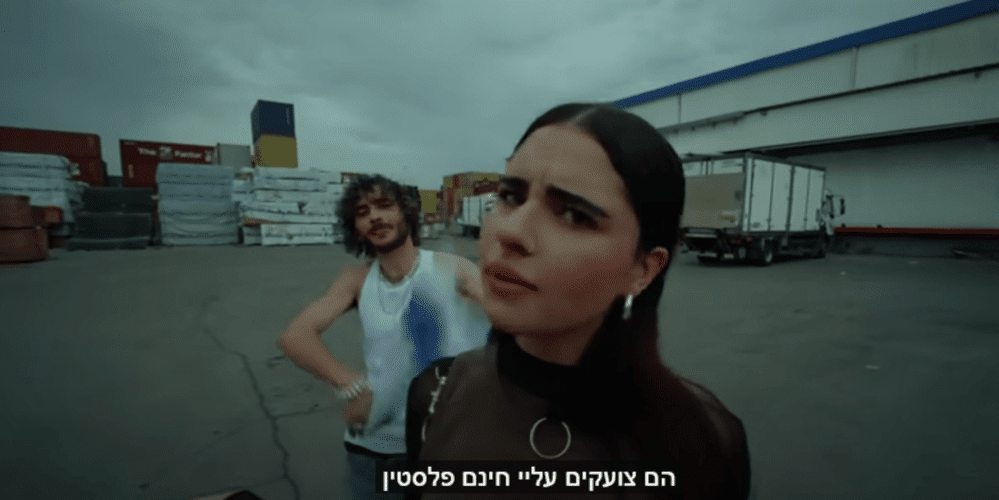

An angry hip-hop war anthem song popularised by Israeli duo Ness Ve Stilla, whose real names are Nesia Levy and Dor Soroker, titled Charbu Darbu, has sparked controversy because it calls for genocide against Palestinians.
Despite the condemnation that this song received from various parts of the world, it has been the No. 1 song in Israel for several weeks.
"Charbu Darbu" originates from Syrian Arabic, translating to "swords and strikes." Hebrew slang figuratively signifies "raining hell" upon an opponent.
In the song, the singer calls the Palestine "rats and sons of Amalek", rapping, "Let’s write names on the bombs, for the children of the Gaza envelope.".
Amalek refers to an ancient tribe and nation who are described in the Torah as the ultimate enemy of the Jewish.
The Hebrew lyric also mentions the leaders of Hamas and Hezbollah and advocates for the Israeli military to eliminate those individuals they labelled as "terrorists," including Bella Hadid, Dua Lipa, and Mia Khalifa, who, to differing extents, have expressed their support for Palestine or their displeasure with Israel.
The song's lyrics note that "every dog's day will come", and the singer raps, "Every c***'s last day will come/ Bella Hadid, Dupa Lipa, Mia Khalifa."
Israelis then post their support for the song online by making videos and dancing to the songs.
https://www.tiktok.com/@hype_crew4/video/7305757258925837569?lang=en
https://www.tiktok.com/@noyaashash7/video/7305027569194192135?lang=en
Mia Khalifa, a Lebanese-American and former pornographic film actress and webcam model reacted to the song on X [formerly Twitter].
She criticized the artist, stating that they resorted to appropriating another culture to achieve popularity with their song. Khalifa highlighted that hip-hop, a genre the song falls into, originated in the early 1970s among African Americans in the Bronx, a borough of New York City, implying the artist's use of the genre was a form of cultural colonization.
According to Professor Asante of African American studies at Temple University, "Hip hop is something that blacks can unequivocally claim as their own".
https://twitter.com/miakhalifa/status/1731099402394059254?ref_src=twsrc%5Etfw%7Ctwcamp%5Etweetembed%7Ctwterm%5E1731099402394059254%7Ctwgr%5Ec024fdc92b45803a0dc34876dee0abad1f8a0a8e%7Ctwcon%5Es1_&ref_url=https%3A%2F%2Fwww.newsweek.com%2Fmia-khalifa-reacts-song-calling-her-murder-israel-palestinian-conflict-1849147
And many people went to social media to condemn the song. Middle East Eye posted a reel on the matter, criticising the song.
Netizens from around the world predominantly condemned the song in the YouTube video's comments section and in various online discussion threads.
A comment on Al Jazeera's YouTube video said: "I believe it exposes their hypocrisy in their mindset. They do not want anyone except themselves to live or consider them as equal humans, nor do they want peace that does not revolve around themselves."
Another wrote: "During the Rwandan genocide there were such songs where people were incited to murder the 'cockroaches'. Such hatred, feelings of superiority toward others results in a war where people butcher others mercilessly like animals."
An Instagram user, @amphetadad, commented, "Tried to report it on Spotify and they refused to remove it and wouldn't give me a reason for it."
Another commented, "@Spotify Why do you ban "Damma Falastin" but not this clearly genocidal trash? Your bigotry is showing."
The song 'My Blood is Palestinian' by 33-year-old Gazan Palestinian pop singer Mohammed Assaf’ gained widespread popularity during the 2021 Palestinian protests against Israeli actions in Sheikh Jarrah village. Its dabke-compatible rhythm deeply resonated with Palestinian cultural sentiments.
According to an interview on Sunday with Al Araby Al Jadeed, Assaf said he received an email from Spotify telling him his song had been removed from the digital music and podcast platform for “inciting against Israel”.
Speaking to Al Jazeera, Spotify said they did not make the decision, rather that it came at the distributor’s request.
“We are not against publishing the song,” said a Spotify representative.
Music writer Danny Hajjar, published a Twitter thread, saying: “Dammi Falastini – and the album – disappeared from Apple, Spotify, Tidal, Amazon, and Deezer (aka digital service providers or DSPs) simultaneously. Typically when this happens, there’s an issue with the distribution agreement to have songs hosted on streaming platforms.”
The owner of Assaf’s label, Saudi Arabian MBC’s Platinum Records, did not respond to inquiries by Al Jazeera.