Growth and closure challenges for Singapore's hawker culture in 2023
Singapore's vibrant Hawker Culture, a UNESCO-recognized culinary heritage, faced both growth and challenges in 2023. The year witnessed new ventures and closures, with escalating costs, health issues, and location mismatches contributing to the closure of cherished stalls. \n \nNetizens express concerns and advocate for protective measures.


SINGAPORE: Hawker culture in Singapore holds a significant place in the daily lives of its residents, drawing people from various backgrounds to hawker centres where they come together to share meals and connect over a variety of hawker foods, skillfully prepared by local vendors.
The evolution of this culinary and communal space has transformed it into a reflection of Singapore’s multicultural society.
These hawker centres feature stalls offering a diverse array of dishes, spanning Chinese, Malay, Indian, and various other cuisines, many of which originated from the culinary traditions of different immigrant groups who settled in Singapore.
These dishes, born from cultural amalgamation, have become cherished local favorites and represent a crucial aspect of Singapore's food heritage.
Hawker centres, functioning as communal dining rooms, are scattered across the island, fostering a sense of community as friends and families gather to share their love for diverse and delectable cuisines.
In 2023, the local hawker scene witnessed significant growth with the launch of numerous new businesses and the expansion of existing ones, resulting in the opening of additional outlets across the island.
Based on National Environment Agency (NEA) data as of November, Singapore boasts a total of 119 markets and hawker centres spread across various locations.
Regrettably, not all hawkers shared in the overall success.
Throughout the year, several cherished stalls had to permanently close their shutters due to various challenges, including escalating rental costs and health-related issues.
For instance, King of Seafood Soup closed its doors on 30 May due to escalating costs and a shortage of manpower.
非同小可 Really Something ended its three-year run, shutting down on 30 November due to rising rental and operational costs.
Teochew Rice & Porridge, after four decades in business, closed its doors in December due to the declining health of the elderly owner.
Historic UNESCO recognition elevates Singapore's hawker culture to global prominence
On 16 December 2020, Singapore's Hawker Culture achieved a historic milestone, officially becoming the country's first entry on the UNESCO Representative List of the Intangible Cultural Heritage of Humanity.
Mr Edwin Tong, Minister for Culture, Community and Youth, expressed deep pride in Singapore's Hawker Culture's UNESCO recognition.
He highlighted its special place in the hearts of diverse Singaporeans, embodying the nation's multicultural identity.
Mr Tong then said that Singapore’s Hawker Culture stands as a source of national pride, symbolizing living heritage and multicultural spirit, integral to people of all ages, races, and backgrounds.
However, despite the UNESCO recognition, some argue that preserving the traditions and tastes of Singapore's hawker culture faces challenges amidst the nation's ongoing development.
The evolution persisted as Singapore urbanized, introducing public housing and specialized hawker centres.
More changes are anticipated as today's educated youth seek diverse career opportunities beyond basic livelihoods.
The potential decline of street food culture is attributed to the retirement or passing away of older hawkers, coupled with a lack of new entrants to fill their roles.
Challenges for aspiring hawkers include limited opportunities for learning the trade and the financial risks associated with setting up a stall.
The perception of simpler entry into the hawker business contrasts with the complexities involved, including the need for seed money, bidding for stalls, and competing with seasoned hawkers.
Starting a stall at a public hawker centre or private food court involves considerable costs, ranging from S$18,000 (US$13,570) to S$50,000 (US$37,695), adding to the barriers faced by those considering entering the hawker trade.
Netizens express concerns over the future of Singapore's hawker culture
In response to a Singapore Yahoo article highlighting the permanent closure of hawker stalls in 2023, one netizen expressed dismay, stating, “Making our Hawker Centres a UNESCO heritage and embracing a Hawkers Culture and way of life, said VB, Hawkers Academy and such. What a freaking disaster!!!”
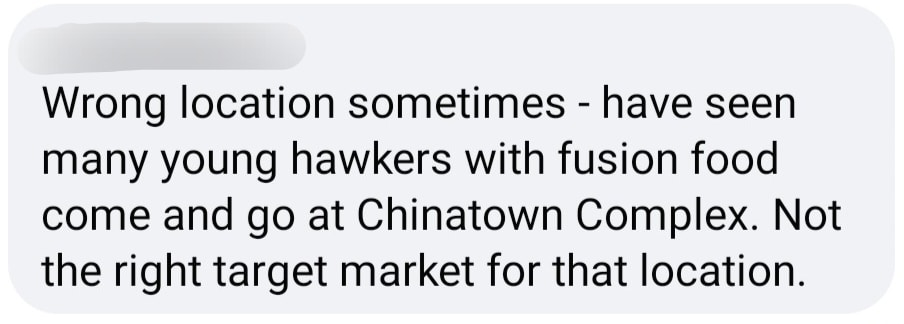
Other netizens contributed to the discussion, emphasizing the role of location in the success of hawker stalls.
Some noted instances where young hawkers offering fusion food struggled in the wrong markets, citing Chinatown Complex as an example.
The mismatch between offerings and the target audience was identified as a key factor in the closures.
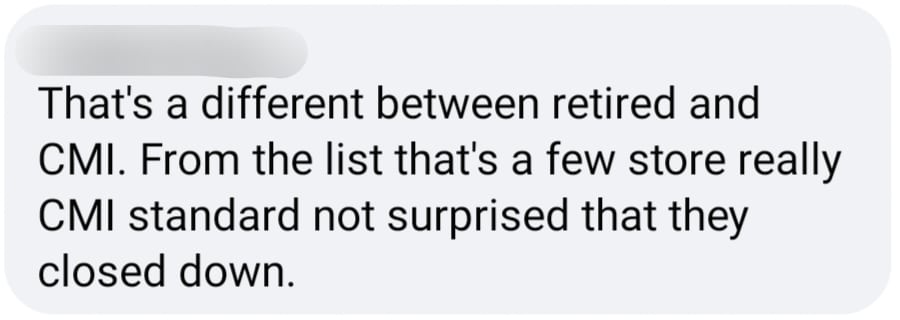
Another aspect discussed by netizens focused on the distinction between hawker stalls closing due to retirement and those deemed Couldn't Make It (CMI).
Observations were made about the perceived subpar standards of some stalls on the closure list, leading to the expectation of their closure.
The discussion on hawker centres continued on Reddit, where users shared insights into the challenges faced by hawkers in Singapore.
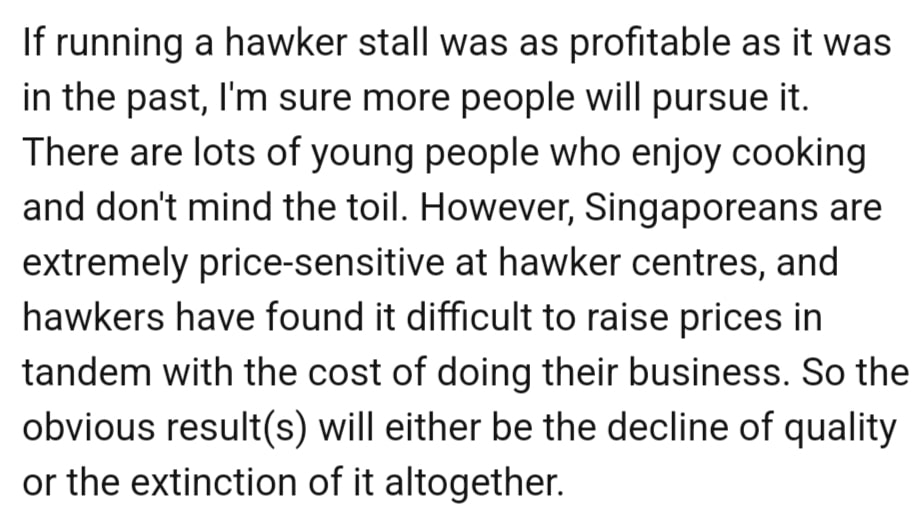
One user highlighted the decline in the profitability of running a hawker stall compared to the past.
They noted the passion of many young individuals for cooking but emphasized the price sensitivity of Singaporeans at hawker centres, making it difficult for hawkers to raise prices in line with business costs.
Rental costs emerged as a recurring issue in the conversation.
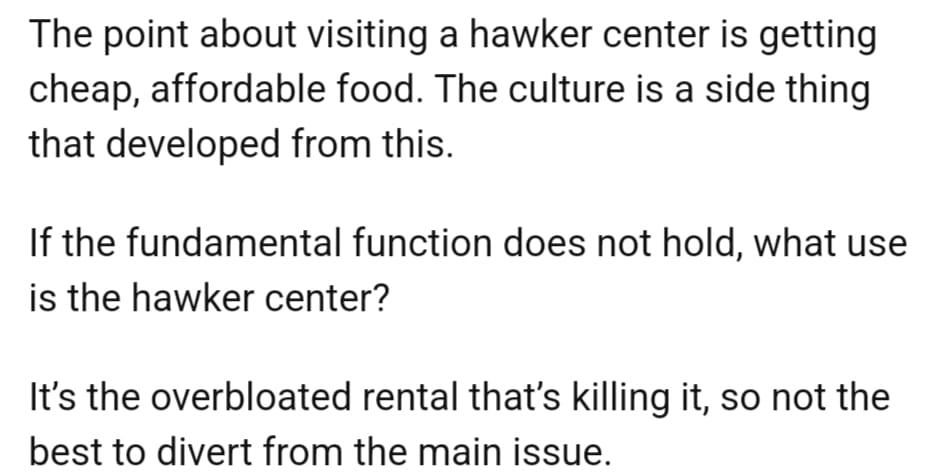
Users pointed out the challenging balance between providing cheap, affordable food at hawker centres and the escalating rental prices.
Some argued that the primary challenge was the exorbitant rental fees rather than a deviation from the main issue of affordability.
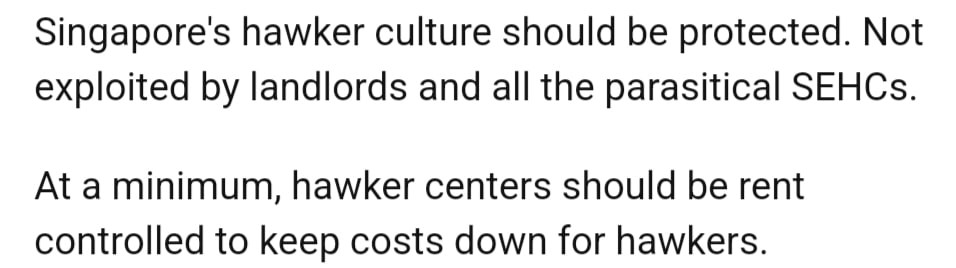
In advocating for the protection of Singapore's hawker culture, users called for measures to prevent exploitation by landlords and hawker center operators.
Suggestions included rent control to alleviate the financial burden on hawkers and maintain the affordability of hawker center offerings.
The sentiment expressed was a collective concern for the preservation and sustainable future of Singapore's cherished hawker culture.
Founder of Makansutra, KF Seetoh, criticizes hawker stall bidding, advocates for fair allocations
In 2022, KF Seetoh, the founder of Makansutra, criticized the bidding process for hawker stalls in response to news reports about vacant stalls at the bustling Amoy Street Food Centre.
He argued that the government should eliminate the bidding system, opting for fair rentals and allocating stalls to the most deserving hawkers.
KF Seetoh, a prominent food critic in Singapore and a strong advocate for local hawkers, pointed out that the bidding concept contradicts the government's goal of using public funds to support micro food businesses and maintain affordable prices.
He emphasized that it's not the hawkers' fault for bidding high rates; it's the bidding process that fosters desperation and greed.
Mr Seetoh argued that in these uncertain times, authorities should abandon the bidding process, opt for fair rentals, and allocate stalls based on criteria such as menu offerings, culinary talent, and the preservation of Singapore's unique food culture.