

Singapore media and advocacy groups urge Singapore to reverse ban on peaceful public assemblies
The editorial board of Singapore Unbound and six other media and advocacy organizations call for lifting the ban on public assemblies, emphasizing the need for a platform to express grief, outrage, and solidarity with Gaza conflict victims.

The editorial board of Singapore Unbound and six other media and advocacy organizations, including Jom, Lepak Conversations, SG Climate Rally, The Monitor Singapore, Wake Up, Singapore, and We, The Citizens, have issued a statement on Thursday (23 Nov) urging the Singapore government to lift the existing ban on peaceful public assemblies related to the ongoing humanitarian crisis in Gaza.
This collective appeal highlights the crucial need for a public platform where Singaporeans can express their grief, outrage, and solidarity with the victims of the conflict.
The statement underscores support for the Singapore government's call for a humanitarian truce in Gaza. However, it emphatically calls for the reversal of the blanket ban on public assemblies, a move deemed necessary to foster discussions towards a better future for all in the region.
Criticizing the violent escalation in the region, the organizations condemned both the lethal attacks by Hamas on Israeli civilians on October 7 and the vastly disproportionate response by Israel.
The statement noted, with grave concern, the death toll exceeding 11,000 Palestinians, including over 4,000 children.
Media workers, through their reporting, have brought to light the brutal impact of the conflict, especially on civilian populations and children. The organizations highlighted distressing images of decimated schools, hospitals, and refugee camps, alongside the personal tragedies of families torn apart by the conflict.
In contrast to global responses, where peaceful public demonstrations against Israel's actions in Gaza have occurred in major cities like New York, London, and Sydney, the statement pointed out the stark difference in Singapore.
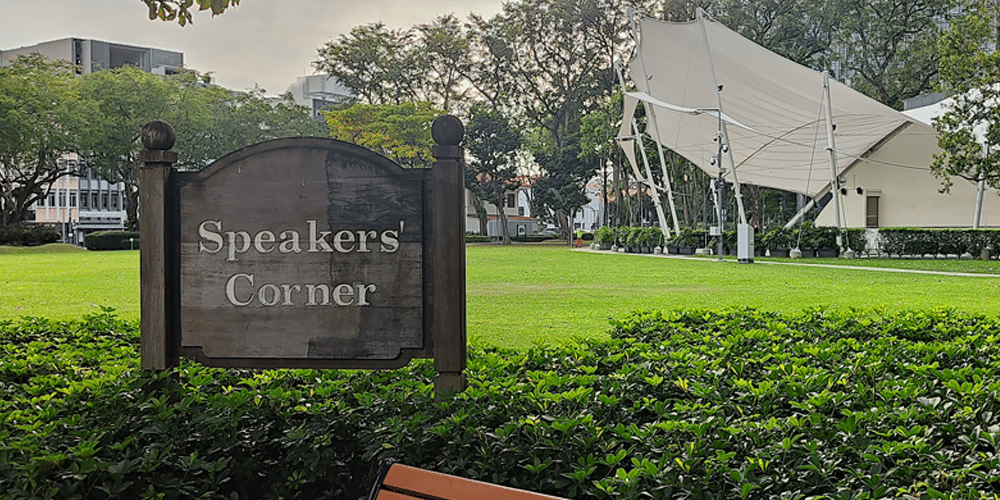
Due to stringent laws, public demonstrations are highly regulated, with Hong Lim Park's Speakers' Corner being the only designated area for such activities.
The organizations criticized the consistent rejection of applications for assemblies related to the Israel-Palestine situation in this venue, citing it as a suppression of freedom of expression.
The statement emphasized that the Singaporean public, amidst their grief and outrage over the Gaza crisis, deserves a legitimate avenue to express themselves.
The organizations argued against the censorship of public debate and expression, even on sensitive issues like the Israel-Palestine conflict.
"Although the issue is undoubtedly sensitive, and the history of Israel and Palestine contested, we believe that calling for peace and voicing grief are legitimate forms of expression, and censoring public debate and expression should not be permitted," the statement read.
It cited MP Nadia Ahmad Samdin's speech in Parliament on 6 November, “A number of our youth in particular have written to me. They seek an outlet to use their voices to do something, anything - for we cannot unsee the suffering in Gaza, we cannot reconcile it with our life as normal and precious peace here, and we cannot sit silent.”
This appeal for open expression comes against the backdrop of Singapore's strict regulatory environment regarding public assemblies.
Highlighted by the case of Singaporean activist Gilbert Goh, who has recently faced police questioning over expressing solidarity with Gaza victims at Hong Lim Park, the current situation underscores the broader constraints on public discourse in Singapore.
The investigation into Goh's activities, as well as the Singapore Police Force's stance on public assemblies relating to the Middle East conflict, reflects the government's cautious approach to handling sensitive international issues.
This caution has led to the denial of several requests to use Speakers' Corner for events related to the conflict, as confirmed in a parliamentary session by Minister of State for Home Affairs and National Development, Associate Professor Faishal Ibrahim.


