Ho Ching reminds Singaporeans on the dos and don’ts on cooling off period ahead of Presidential Election
Ho Ching took to Facebook to address important considerations regarding the conduct of the electoral process ahead of presidential election 2023 in the city-state.
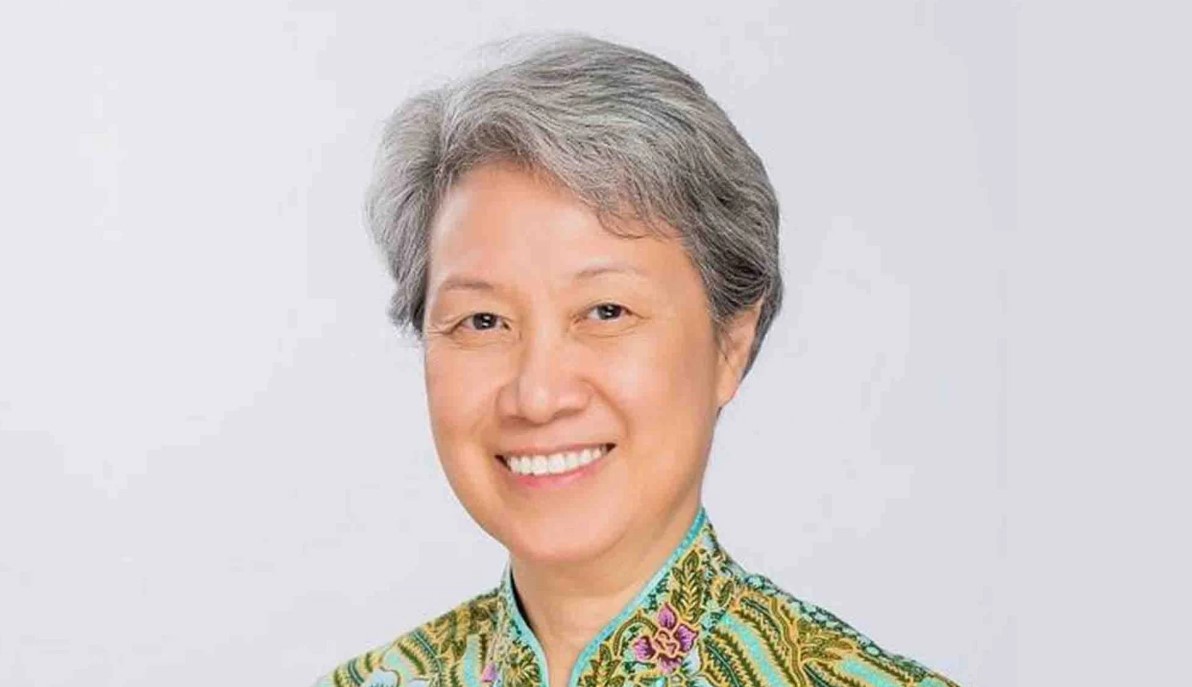

SINGAPORE: On the eve of the Singaporean presidential election, Ho Ching, the wife of Prime Minister Lee Hsien Loong, took to Facebook to address important considerations regarding the conduct of the electoral process.
In her post, she emphasised the significance of the "cooling off day" and cautioned against deliberate efforts to manipulate the outcome of the election through online engagement.
During the cooling-off day, which is a period designated for reflection and abstaining from campaigning activities before the election, Ho expressed concerns about the intentional expansion of the online election advertising (OEA) scope.
She clarified that any deliberate attempt to widen the reach of OEA, including the reposting or resharing of content, as well as paying to promote OEA on social media platforms, is strictly prohibited.
“The regulations extend to OEA that had been lawfully published or displayed online before the cooling off day and remains unchanged,” she shared on her Facebook on 31 Aug 2023.
Mdm Ho made an exception for the sharing of news originating from authorised news agencies.
Highlighting the importance of credible sources, she encouraged the public to stay informed through reputable media channels.
The Facebook post also underscored the possibility of misinformation campaigns orchestrated by malicious actors with the intention of spreading fake news and stirring controversy just before the cooling-off day.
Ho outlined a key characteristic of these "bad actors".
“They create fake news against the candidate or the family of the candidate just before cooling off day so that there is no time for clarification or rebuttals.
“So ignore all bad news about any candidate or their family that popped up just before cooling day, or on cooling day.
“That is the handiwork of shady organisations or people out to manipulate our elections,” she said.
Mdm Ho urged voters to exercise caution and discernment, advising them to dismiss any negative news that surfaces in the immediate lead-up to the cooling off day or on the day itself.
In conclusion, Ho implored citizens to remain vigilant against political scams and manipulation while making their choices for the next president.
She encouraged everyone to stay well-informed through trusted sources and maintain a composed and rational approach during the election period.
“Let’s learn not to be scammed politically in our choice of our next president.
“Keep well, stay cool, and have a good long weekend,” she said.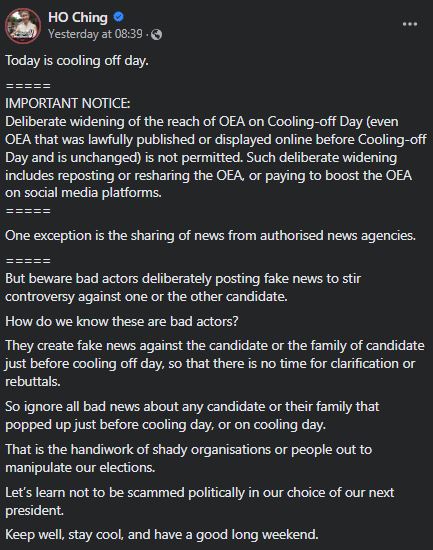
As Singaporeans prepare to cast their votes, Ho’s insights serve as a timely reminder of the challenges posed by disinformation and the importance of maintaining the integrity of the electoral process.
According to Singapore’s Elections Department (ELD) on “prohibited activities on cooling-off day and polling day", the period starting on the eve of Polling Day (Cooling-off Day) and ending with the close of polling on Polling Day is called the “cooling-off period”.
“This is a campaign silence period to give voters some time to reflect rationally on issues raised during the election. This means campaigning is banned and no fresh election advertising shall be published or publicly displayed during the cooling-off period.
“The rules apply to any person, i.e. candidates, election agents and third parties authorised by a candidate or any of his election agents,” it said.
There are some exceptions to the prohibition of election advertising during the cooling-off period:
- non-online election advertising (e.g. banners, flags and posters) that was lawfully publicly displayed before the start of Cooling-off Day and not relocated, altered or modified since the start of the cooling-off period;
- lawful OEA that was already in place before the start of Cooling-off Day, and has not had its reach widened during the cooling-off period;
- public display of any non-online election advertising within or on an exterior wall or exterior window of the office or committee room of a candidate provided that the non-online election advertising:
- consists only of permissible electoral matter; and
- is solely for the purpose of indicating that the office or room is the office or committee room of the candidate;
- news reports relating to election matters by authorised news agencies;
- promotional materials relating to the commercial sale of literary or artistic works such as books, if these works were previously scheduled for publication regardless of any election;
- the communication of content between two or more individuals that is of a private or domestic nature using electronic means; and
- the communication of content using electronic means to a closed-group of end-users who are employed or engaged in a business, for the conduct of that business.