ICJ to rule on Myanmar’s alleged genocide against Rohingya on 19 November
The International Court of Justice will deliver its judgment on 19 November in The Gambia’s landmark case accusing Myanmar of violating the Genocide Convention through its treatment of the Rohingya minority.
- The ICJ will deliver its judgment on 19 November in The Gambia’s genocide case against Myanmar.
- The proceedings concern alleged genocidal acts against the Rohingya during military operations in 2016 and 2017.
- The ruling will address Myanmar’s state responsibility but will not determine individual criminal liability.

The International Court of Justice (ICJ) will deliver its judgment on 19 November in a landmark case brought by The Gambia accusing Myanmar of violating the UN Genocide Convention through its treatment of the mostly Muslim Rohingya minority.
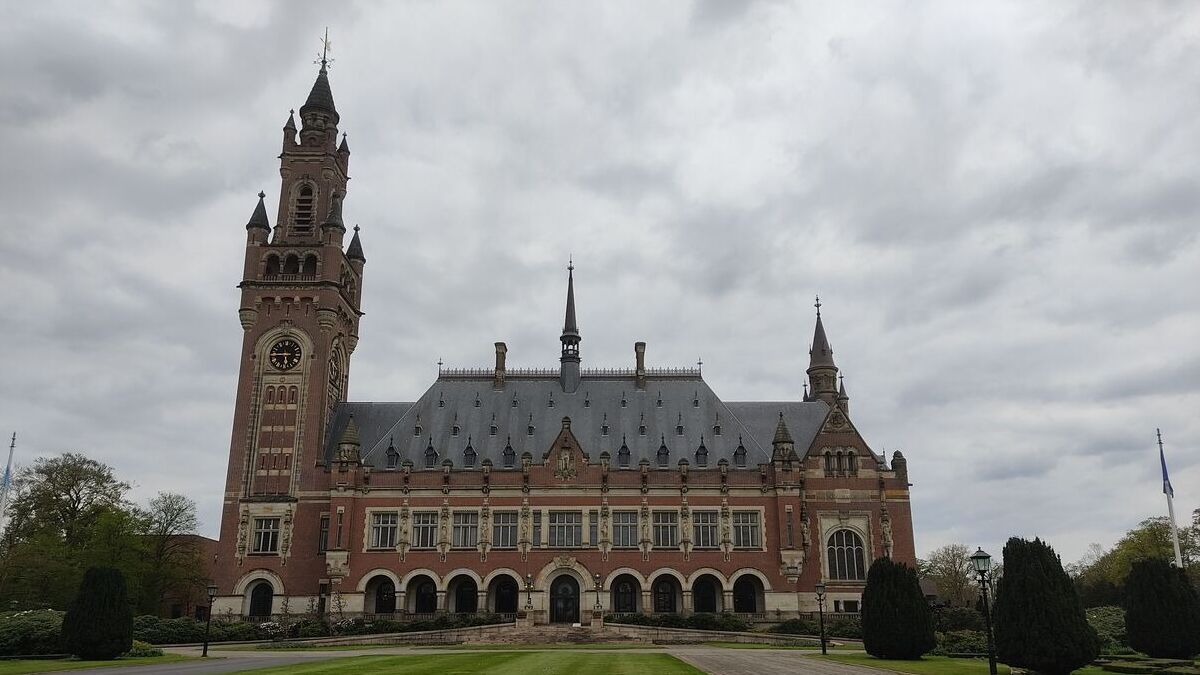
The court announced on 3 November that judges would deliver the ruling at a public sitting at the Peace Palace in The Hague at 10am local time.
The case concerns allegations that Myanmar’s security forces committed genocidal acts against the Rohingya in Rakhine State, particularly during military operations in 2016 and 2017.
The proceedings began in November 2019, when The Gambia filed an application alleging that Myanmar had failed to fulfil its obligations under the 1948 Convention on the Prevention and Punishment of the Crime of Genocide.
The judgment will determine whether Myanmar bears state responsibility for violations of the convention.
It will not determine the individual criminal responsibility of military officers or other officials, which falls outside the ICJ’s jurisdiction.
Seven years of proceedings
The Gambia filed the case on 11 November 2019 on behalf of the 57 members of the Organisation of Islamic Cooperation (OIC).
It argued that Myanmar had violated its obligations to prevent and punish genocide against the Rohingya, a predominantly Muslim minority concentrated in Rakhine State in western Myanmar.
The case followed the military operations launched in August 2017, when attacks by the Arakan Rohingya Salvation Army (ARSA) on security posts were followed by a major security crackdown.
More than 750,000 Rohingya fled to Bangladesh after the operations, joining earlier waves of refugees who had left Myanmar in previous decades. Refugees reported killings, sexual violence, village burnings and the destruction of homes.
Myanmar has consistently denied committing genocide. Its authorities have maintained that the military operations were counter-insurgency measures conducted in response to attacks by armed groups.
In December 2019, Aung San Suu Kyi, then Myanmar’s de facto civilian leader and state counsellor, personally represented the country at the ICJ. She rejected allegations of genocidal intent and said the military operations should be considered in the context of the armed conflict with ARSA.
Myanmar’s position was also defended during the January 2026 hearings by Ko Ko Hlaing, a minister in the President’s Office, who led the country’s delegation. Myanmar described The Gambia’s allegations as unsubstantiated and argued that the case did not present a rigorous account of the facts.
The Gambia says the Rohingya were targeted for destruction
During the public hearings on the merits of the case, held from 12 to 29 January 2026, The Gambia’s Attorney General and Justice Minister Dawda Jallow led the delegation.
Jallow told the court that the Rohingya had endured some of the most horrific violence and destruction imaginable.
He said the case concerned real people and their experiences, rather than abstract questions of international law.
Jallow argued that the alleged violations of the Genocide Convention were a matter of international concern and that states could not disregard their responsibility to prevent and punish genocide.
The hearings included two rounds of oral arguments, the examination of three witnesses and one expert called by The Gambia, and the examination of one witness called by Myanmar.
The ICJ announced on 29 January that the public hearings had concluded and that the judges would begin their deliberations.
ICJ ordered Myanmar to prevent genocidal acts in 2020
The 19 November judgment follows an earlier ruling in January 2020, when the ICJ ordered Myanmar to take all measures within its power to prevent acts prohibited under the Genocide Convention.
The provisional measures required Myanmar to ensure that its military and any irregular armed units did not commit acts including killing members of the Rohingya group, causing serious bodily or mental harm, or deliberately inflicting conditions of life calculated to bring about the group’s physical destruction, in whole or in part.
The court also ordered Myanmar to preserve evidence relating to the allegations and submit regular reports on the measures taken to comply with the order.
In 2022, the ICJ rejected Myanmar’s preliminary objections to the court’s jurisdiction and ruled that The Gambia had the right to bring the case.
The court relied on Article IX of the Genocide Convention, which allows disputes between states concerning the interpretation, application or fulfilment of the convention, including disputes relating to a state’s responsibility for genocide, to be submitted to the ICJ.
Myanmar ratified the convention in 1956.
The case has attracted the intervention of 11 other countries: Canada, Denmark, France, Germany, the Netherlands, the United Kingdom, the Maldives, Slovenia, the Democratic Republic of the Congo, Belgium and Ireland. Their interventions concern the interpretation and application of provisions of the Genocide Convention.
More than one million Rohingya remain in Bangladesh
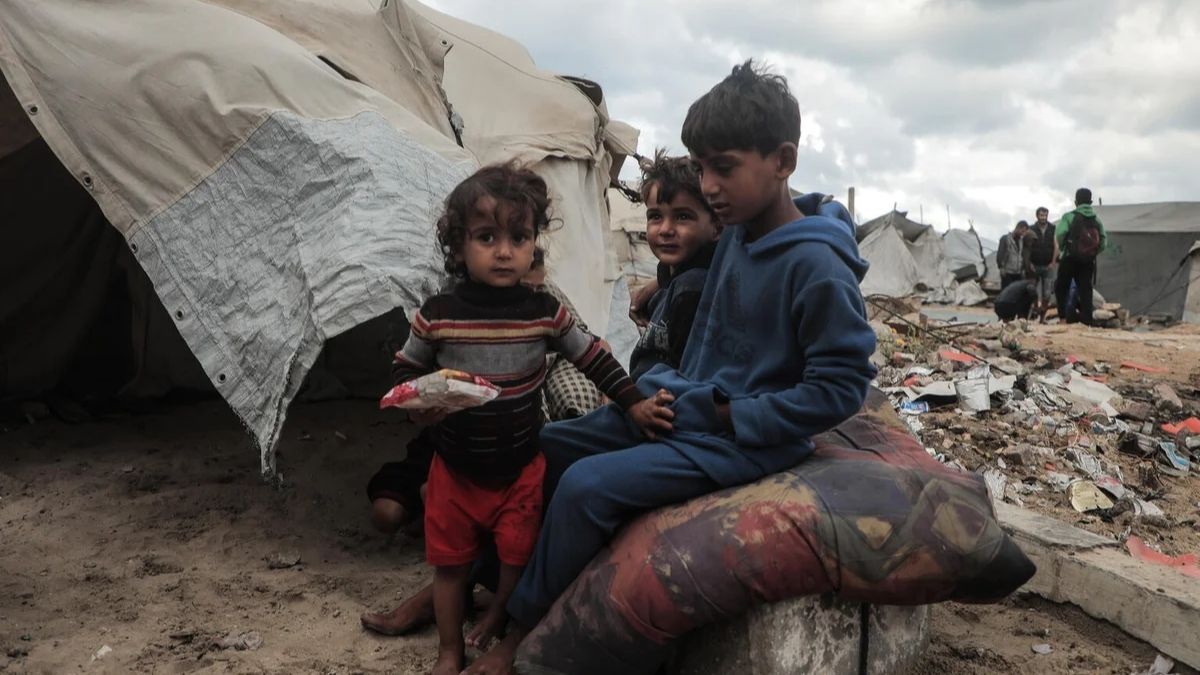
The consequences of the 2017 military operations continue to affect Bangladesh, which hosts the largest Rohingya refugee population.
According to the UN refugee agency UNHCR, more than one million Rohingya refugees live in Bangladesh, most of them in camps in Cox’s Bazar district near the Myanmar border. The agency’s data portal recorded approximately 1.2 million Rohingya refugees in Bangladesh as of 30 June 2026.
The camps remain heavily dependent on international humanitarian assistance, while refugees face restrictions on movement, employment and access to formal education.
The UN has repeatedly said that conditions in Myanmar do not allow for the safe, voluntary and dignified return of Rohingya refugees.
The ICJ case does not directly determine the future of refugee repatriation, but its judgment will address Myanmar’s obligations under the Genocide Convention.
ICC and Argentina pursue separate proceedings
The ICJ is not the only international or national legal body examining alleged crimes against the Rohingya.
The International Criminal Court (ICC), which prosecutes individuals rather than states, is investigating alleged crimes committed during the 2016 and 2017 violence and the subsequent displacement of Rohingya into Bangladesh.
On 27 November 2024, ICC Prosecutor Karim Khan announced that his office had applied for an arrest warrant against Myanmar military leader Min Aung Hlaing. The application alleged crimes against humanity, including deportation and persecution of the Rohingya.
The prosecutor’s application was a request to the court; it was not itself an arrest warrant or a finding of guilt.
Separately, Argentina is investigating alleged genocide and crimes against humanity committed against the Rohingya under the principle of universal jurisdiction.
The case began after the Burmese Rohingya Organisation UK submitted a petition in November 2019 on behalf of Rohingya victims. An Argentine federal judge opened an investigation in November 2021.
In June 2024, the federal prosecutor requested arrest warrants for 25 people from Myanmar’s military, security forces and civilian government. In February 2025, the Federal Criminal Court ordered their arrest as part of the investigation.
The UN’s Independent Investigative Mechanism for Myanmar has assisted the Argentine authorities by sharing evidence and analysis.
The mechanism has also documented alleged crimes against the Rohingya, including sexual and gender-based violence, the destruction and seizure of property, anti-Rohingya hate speech and the detention of Rohingya civilians.
What the ICJ judgment could mean
The ICJ is the principal judicial organ of the United Nations and settles legal disputes between states. Its judgments in contentious cases are binding on the parties, although the court has no independent enforcement force.
Under Article 94 of the UN Charter, parties to a case are required to comply with ICJ judgments. If a party fails to fulfil its obligations, the other party may bring the matter before the UN Security Council, which can make recommendations or decide on measures to give effect to the judgment.
The court’s ruling on 19 November will be closely watched by governments, legal experts and human rights organisations because it will address the application of the Genocide Convention to allegations of state-organised violence against an ethnic and religious minority.
The judgment will also be followed in South Africa’s separate case against Israel, in which Pretoria alleges violations of the Genocide Convention in the Gaza Strip. The two cases are legally distinct, but both concern the interpretation of states’ obligations under the same treaty.