China launches Shenzhou-24 with Pakistan's Muhammad Zeeshan Ali as first foreign astronaut to visit Tiangong
China launched Shenzhou-24 from Jiuquan on 25 November 2026, carrying Pakistani pilot Muhammad Zeeshan Ali, the first foreign astronaut to visit the Tiangong space station. Beijing calls the flight a milestone in China-Pakistan ties as it promotes Tiangong as a hub for cooperation.
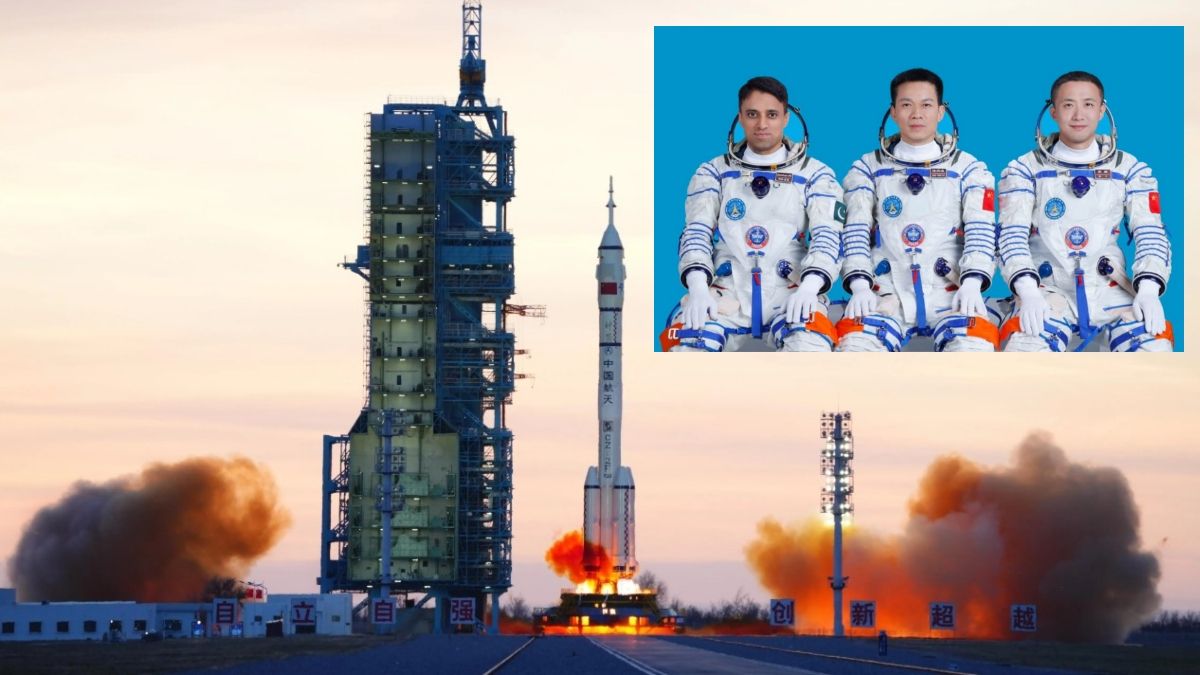
- China launched Shenzhou-24 from Jiuquan on 25 November 2026 with Pakistani pilot Muhammad Zeeshan Ali, the first foreign astronaut to visit Tiangong.
- Ali will spend five to 10 days on the station as a payload specialist, running China-Pakistan science experiments.
- Beijing calls the flight a landmark for China-Pakistan ties as it promotes Tiangong for international cooperation.

GANSU, CHINA: China launched its Shenzhou-24 crewed spacecraft on the morning of Wednesday, 25 November 2026. On board was Pakistani pilot Muhammad Zeeshan Ali (穆罕默德·齐尚·阿里), who is set to become the first foreign astronaut to visit the Tiangong space station.
A Long March-2F rocket lifted off at 8.18am from the Jiuquan Satellite Launch Centre in north-west China.
Ali, 40, is also the first Pakistani to reach orbit. He is flying with Chinese commander Tang Hongbo and flight engineer Wu Yi.
"I'm not flying for myself. I carry the name of Pakistan on my shoulder," Ali told reporters on 24 November.
Beijing hails first joint flight of Chinese and foreign astronauts in orbit
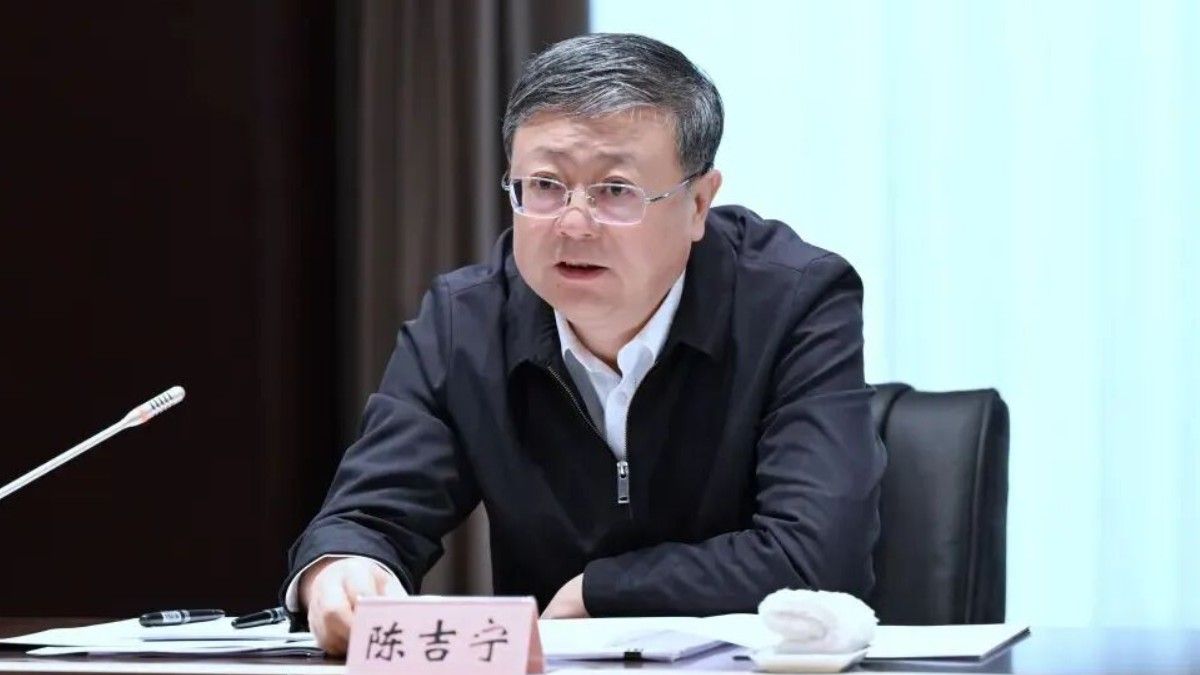
Zhang Jingbo (张静波), spokesperson for the China Manned Space Programme, spoke at a press conference at Jiuquan on 24 November.
He said the Pakistani astronaut's participation was the first joint flight of Chinese and foreign astronauts in the programme's history, state news agency Xinhua reported. It is also the first time a foreign astronaut has visited China's space station.
Zhang called the mission another landmark result of cooperation between the two countries as they mark 75 years of diplomatic relations. He also called it an important expression of the "traditional friendship" between China and Pakistan.
He said the crew's preparations were going well.
"At present, all of the crew's training and preparation work is progressing smoothly, and they have established a good cooperative working relationship. We believe the first joint flight of Chinese and foreign astronauts will be a complete success," Zhang said.
Payload specialist to carry out China-Pakistan science experiments in orbit
Ali is flying a short-term mission as a payload specialist, a crew member whose main job is scientific experiments rather than flying the spacecraft. He is expected to stay on the station for five to 10 days.
According to Xinhua, Ali will join in the crew's daily work. His main task is the China-Pakistan space science experiments: he will install experiment samples and units and carry out the experiments in orbit as planned.
Commander Tang flew on Shenzhou-12 and Shenzhou-17 and is now the first astronaut to visit Tiangong three times, Zhang said at the pre-launch briefing. Wu, from China's third group of astronauts, is on his first spaceflight.
Ali's short visit relies on a change to the crew rotation. Zhang said Zhu Yangzhu, an astronaut who arrived on Tiangong in May, will stay on board for another six months to make room for it. Chinese state media described Zhu's one-year stay in orbit as a first for Chinese astronauts.
Seven months of training in Beijing, from Chinese lessons to calligraphy
Ali trained for seven months in Beijing before the flight. His training included intensive Chinese-language classes, learning Chinese songs and reading Chinese poetry.
He also practised calligraphy and played table tennis.
Pakistani Prime Minister Shehbaz Sharif sent the astronauts his best wishes before the mission.
Tiangong promoted as a hub for cooperation as the ISS nears possible retirement
China is promoting Tiangong as a hub for international cooperation, while the NASA-led International Space Station (ISS) could be retired by 2030.
At the press conference, Zhang said China's crewed space programme had always followed the principles of peaceful use, equality and mutual benefit, and common development. He said it had been active in international exchanges and cooperation.
He listed what China could offer partners. He named the station's rich scientific resources, its stable operations in orbit, a mature system for transport between Earth and orbit, and a complete system for selecting and training astronauts. He added that China's lunar exploration programme was making steady progress.
"We look forward to working with more countries and regions to explore the vast universe and use outer space peacefully, and to move forward hand in hand to advance the common well-being of all humanity," Zhang said.
Ali's flight is the first time Tiangong will take part in such an exchange with a foreign crew member. Ali is expected to return to Earth after his five- to 10-day stay.