Five women killed every hour by partners or relatives, and only 7 per cent report abuse: UN briefs
Some 47,000 women and girls were killed by intimate partners or family members in 2025, an average of 129 a day, UN estimates show. A parallel UN Women brief covering 54 countries finds that only 7 per cent of survivors of physical or sexual violence ever turn to the police.
- 47,000 women and girls killed by partners or relatives in 2025, about 129 each day.
- Africa recorded 22,100 victims and the highest rate, at 2.9 per 100,000 women.
- Only 7 per cent of survivors report to police; most cases end without conviction.

Around 47,000 women and girls worldwide were killed by an intimate partner or another family member in 2025, an average of 129 victims a day, or roughly five every hour, according to new United Nations estimates.
The figure was published on 24 November 2026 in Femicides in 2025, a research brief produced jointly by the United Nations Office on Drugs and Crime (UNODC) and the United Nations Entity for Gender Equality and the Empowerment of Women (UN Women).
It appeared alongside a second UN Women brief, Access to Justice for Women Survivors of Violence, which traces the path survivors take through justice systems in 54 countries and finds that very few reach a courtroom at all.
Together, the two documents set out a pattern of violence that is widespread, largely concealed and seldom punished, with women steadily losing confidence in the institutions meant to protect them.
Private sphere accounts for 60 per cent of all killings of women
Of an estimated 78,000 women and girls intentionally killed worldwide last year, approximately 60 per cent died at the hands of a current or former intimate partner, or a relative such as a father, uncle, mother or brother.
The 2025 estimate carries an uncertainty range of 37,100 to 56,700 victims. It is lower than the 2024 estimate of 50,000, but the brief cautions that this should not be read as a decline.
The difference, the authors state, is largely explained by improvements in the availability of national data rather than by any measurable reduction in lethal violence.

Africa records the highest number of victims and the highest rate
Africa recorded the highest estimated number of victims in 2025, at 22,100, followed by Asia with 15,100, the Americas with 7,400, Europe with 2,100 and Oceania with 300.
Measured against population, the global rate was an estimated 1.1 victims per 100,000 women and girls. Africa again ranked highest at 2.9, ahead of the Americas at 1.4, Oceania at 1.1, Asia at 0.6 and Europe at 0.5.
UNODC and UN Women urge caution in reading the regional figures, noting persistent data gaps in Africa, Asia and Oceania that widen the margin of error considerably.
In the two regions where perpetrator data were available, intimate partners accounted for 70 per cent of such killings in the Americas and 63 per cent in Europe.

Home remains the most dangerous place for women and girls
The brief sets the figures against a broader homicide picture in which men predominate.
An estimated 81 per cent of all homicide victims in 2025 were men and 19 per cent were women.
The distribution of those deaths differs sharply.
Almost 60 per cent of women intentionally killed in 2025 died in the private sphere, compared with 11 per cent of men and boys.
That share varied by region, running from 75 per cent in Africa to 57 per cent in Oceania, 54 per cent in Asia, 51 per cent in Europe and 48 per cent in the Americas.
The findings, the authors write, underline the urgency of ensuring that domestic violence prevention addresses both intimate relationships and wider family structures.

Femicide rates fall more slowly than overall homicide rates
Long-term trends could be calculated only for the Americas and Europe.
Between 2010 and 2025, the rate in the Americas fell from 1.6 to 1.4 per 100,000 women, a decline of 12 per cent.
In Europe, the rate fell from 0.7 to 0.5 over the same period, a decline of 28 per cent, driven by reductions in Northern, Eastern and Southern Europe.
Both figures lag well behind the fall in overall intentional homicide, which dropped by 23 per cent in the Americas and 43 per cent in Europe across the same years.
That divergence, the brief argues, suggests such crimes are "deeply rooted in social norms and gender stereotypes" and points to specific barriers women face in reaching the justice system.
In some subregions, intimate partner and family killings now form a larger share of all female homicides. In Eastern Europe the proportion rose from 34 per cent in 2015 to 48 per cent in 2024, and in South America from 36 per cent in 2010 to 49 per cent in 2025.
Only seven in every hundred survivors turn to the police
The companion UN Women brief examines what happens before a killing.
Globally, about one in three women aged 15 to 49, or 32 per cent, have experienced physical or sexual violence since the age of 15.
Across countries with available data, only about 23 per cent of women who had ever experienced such violence sought any form of help to stop it. Only 7 per cent approached the police.
Briefing correspondents at United Nations Headquarters in New York on 23 November 2026, UN Women Deputy Executive Director Nyaradzayi Gumbonzvanda said the figures reflected a collapse of trust.
"Women are telling us very precisely that they do not trust our systems to protect them," she said, adding that help-seeking is falling in most countries that have tracked it over time. "We are going backwards."
She said the data showed that justice systems globally "make silence the safest choice a woman can make", because speaking out can cost a woman her home, her children, her income and the support of her family and community.
Help-seeking varies sharply across regions and institutions
Regional averages diverge widely.
Just 16 per cent of survivors in Asia sought help, compared with 31 per cent in Africa and 40 per cent in Latin America and the Caribbean.
Evidence from the 27 European Union member states illustrates the gap between informal and formal support. About 64 per cent of women who had experienced physical violence, threats or sexual violence spoke to someone close to them, while only 14 per cent contacted the police.
Rates of reporting to police do not vary significantly across regions, the brief notes, suggesting that law enforcement is not widely regarded as a viable source of protection.
Most reported cases never reach a conviction
Research on intimate partner violence cited in the brief found that between 63 and 97 per cent of reported cases do not result in a conviction. Violence against women remains among the most under-reported crimes and the least likely to end in a conviction.
Kalliopi Mingeirou, Chief of the Ending Violence Against Women and Girls Section at UN Women, said cases leak out of the system at every stage.
"Cases fall out of the system along the way. Survivors face repeated questioning and intimidation," she said, adding that perpetrators in positions of power are often never convicted, feeding a culture of impunity.
Attrition is attributed to limited specialist training, entrenched gender bias, narrow offence definitions, inadequate investigative protocols and difficulties in collecting and storing forensic evidence.
Protection orders, the brief adds, are repeatedly undermined by a lack of enforceability across countries.
Online abuse and artificial intelligence open a new front
UN Women's tipping point research, supported by the European Union, found that 70 per cent of surveyed women in public life, including human rights defenders, activists and journalists, had experienced online violence.
Rather than perpetrators being held to account, Mingeirou said, women are being pushed out of digital spaces and out of public life altogether.
Fewer than 40 per cent of countries have laws on cyber harassment or cyberstalking, leaving an estimated 1.8 billion women and girls without such legal protection.
Gumbonzvanda said artificial intelligence had made abuse faster and cheaper, with a deepfake image of a woman's body produced in seconds and capable of following her for life. Survivors and emerging legal provisions, she said, increasingly name virtual sexual violence as rape.
Laws are in place, but budgets and case data are not
A global review found that many national laws on violence against women make no provision for budget allocations, while public spending on survivors' justice needs remains severely underreported.
Administrative records in many countries cannot trace a case from a survivor's first complaint to its final resolution, limiting accountability and obscuring how justice systems actually perform.
According to World Bank data cited in the femicide brief, 29 of 190 countries examined had enacted laws addressing femicide as of 2023, most of them in Latin America and the Caribbean.
Women still face greater barriers to justice than men in nearly 70 per cent of the countries surveyed by the United Nations.
Call to begin from belief as 16 Days of Activism opens
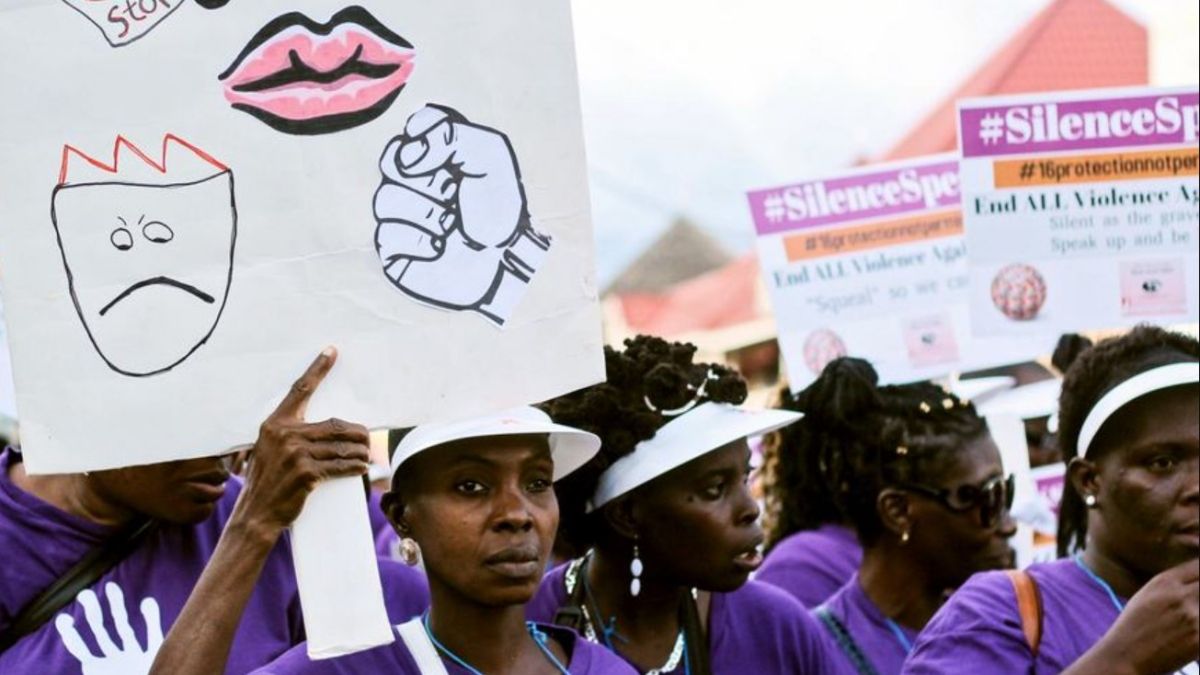
The two briefs were released ahead of the International Day for the Elimination of Violence against Women on 25 November 2026, which opens the 16 Days of Activism against Gender-Based Violence running to Human Rights Day on 10 December.
This year's campaign theme is UNiTE to End Violence against Women and Girls: Ensure Justice, Protect Survivors, End Impunity, building on the 70th session of the Commission on the Status of Women held in New York in March 2026.
Gumbonzvanda called on police to receive complaints and investigate, on courts to hear survivors without putting them on trial, on governments to fund services that keep women alive, and on technology companies to remove abusive material immediately.
"It costs nothing to believe someone, and it changes everything to believe a survivor," she said.
She opened the briefing by paying tribute to Phumzile Mlambo-Ngcuka, UN Women's second Executive Director from 2013 to 2021, who died on 20 November 2026.