UN General Assembly backs end to US embargo on Cuba with lowest support in decades
The UN General Assembly has called for the 34th time for an end to the US embargo on Cuba, but the resolution drew 130 votes in favour, its weakest backing in decades, amid a US lobbying push and a heated floor confrontation.
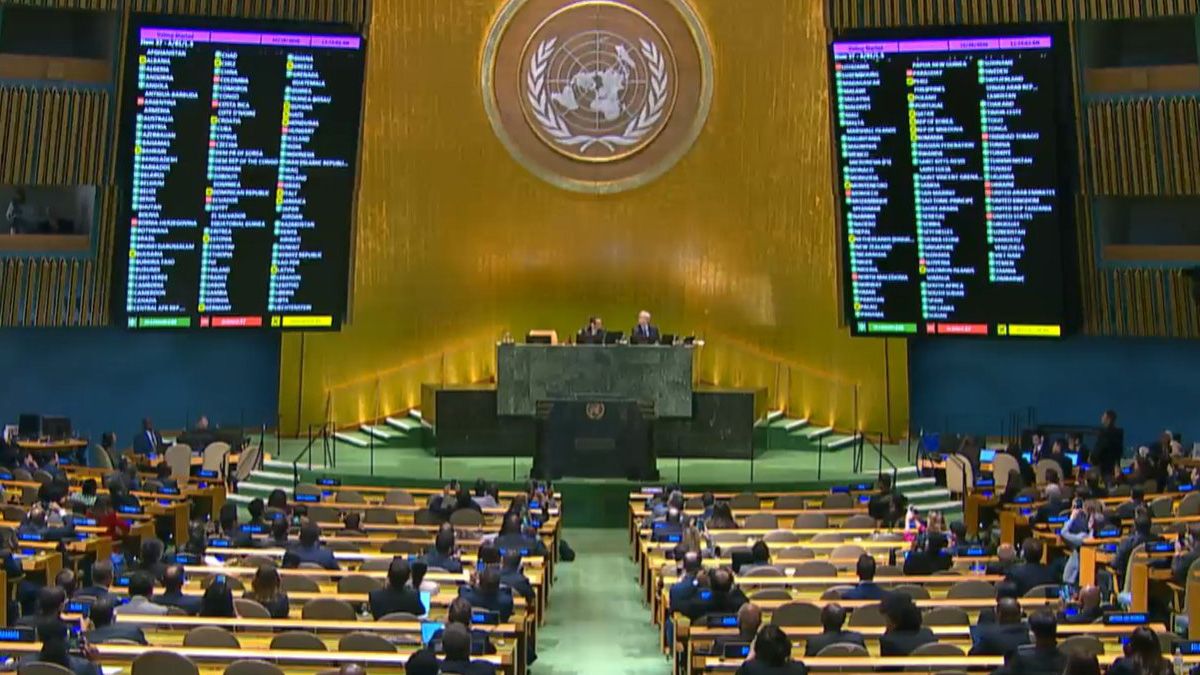
- UN resolution against the US embargo on Cuba passed 130 to 17, with 25 abstentions.
- Support fell from 165 votes last year, with Germany and Italy among new abstainers.
- US says it will expel a Cuban diplomat after a confrontation during Tuesday’s debate.

The United Nations General Assembly (UNGA) on Wednesday, 28 October 2026, adopted a resolution calling for an end to the United States’ economic, commercial and financial embargo on Cuba, but with markedly weaker support than in previous years.
The resolution passed with 130 votes in favour, 17 against and 25 abstentions. According to UN News, it was the 34th time the assembly has called for the embargo to be lifted.
Last year, the same resolution was adopted by 165 votes to seven, with 12 abstentions.
UN News described the result as the weakest backing for the resolution in two decades. Agence France-Presse (AFP) reported that it was the lowest level of support since 1995.
The vote followed a two-day debate that included a heated confrontation between the US and Cuban delegations. It also came amid an intensified US pressure campaign against Havana, which AFP reported includes an oil blockade and broad sanctions.
Abstentions rise as US claims diplomatic gains
The 17 countries voting against the resolution included the US and Israel.
The 25 abstaining countries included Germany and Italy, both of which had previously voted in favour of the resolution.
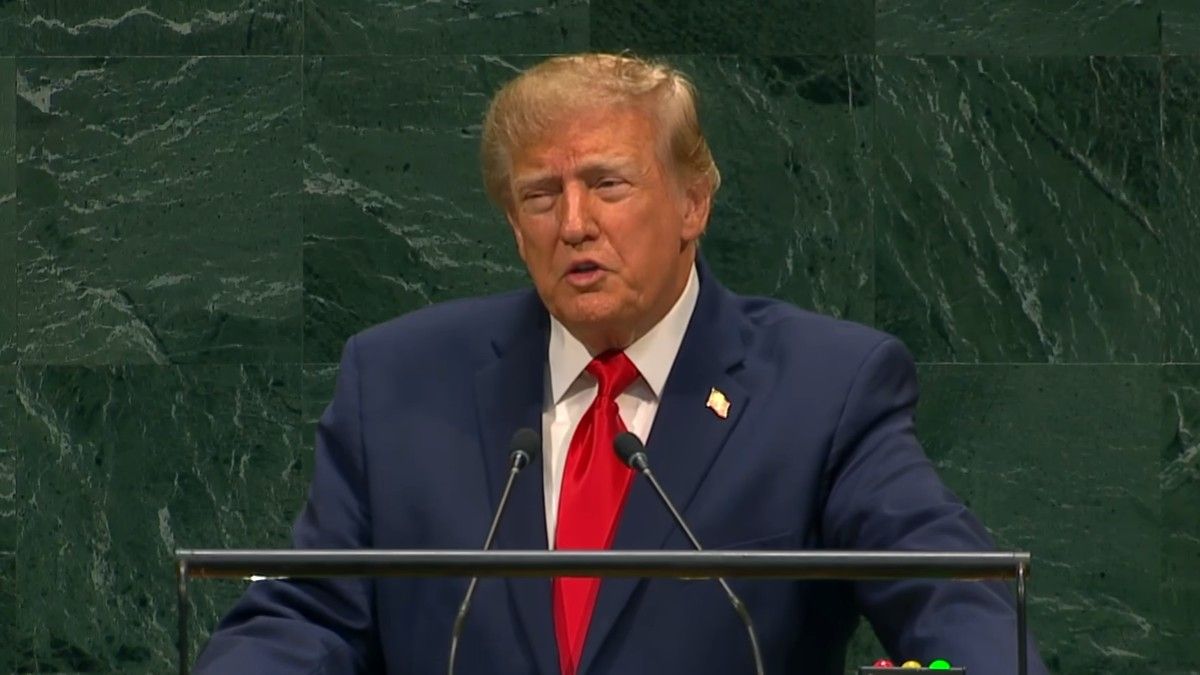
US Ambassador to the UN Mike Waltz told reporters after the vote that he was satisfied that “so many countries now, including major economies like Korea, like Germany and others have shifted their position”.
“Diplomacy takes time, but now that we’ve had a tripling of countries that have shifted, we expect that to only continue to grow,” Waltz added.
US officials said the increase in abstentions demonstrated that their diplomatic effort to further isolate Havana was taking effect, Al Jazeera reported.
Cuban officials had earlier accused Washington of threatening countries with tariffs, visa restrictions and other penalties if they voted to condemn the embargo.

Cuba claims victory despite pressure
AFP reported that, in recent weeks, Havana had accused Washington of mounting a diplomatic offensive to pressure countries into withdrawing their support for the Cuban resolution.
Cuban President Miguel Díaz-Canel nonetheless described the outcome as a success in a post on X on Wednesday.
“The world has once again spoken out overwhelmingly against the blockade, even despite the most blatant pressure and blackmail from the US to change the course of this vote,” Díaz-Canel wrote, later adding that the US engages in “gangster-like coercion”.
Cuban Foreign Minister Bruno Rodríguez Parrilla said in a social media post after the vote that the US was “once again isolated in its attempt to continue strangling the Cuban people”.
“Neither its most insane pretexts nor its pressures nor media circus will prevail over the force of facts and truth,” Rodríguez added.
US envoy rejects blockade claim
During the debate, Waltz rejected the premise of the resolution, arguing that Cuba’s difficulties stem from its own government.
“There is no blockade,” Waltz said, according to UN News.
He cited more than US$876 million in US exports to Cuba in the first eight months of 2026. He also pointed to shipments from Canada, Spain, Mexico, China, Russia, the European Union (EU) and UN agencies.
Waltz said the country’s wealth had not vanished but had “changed hands” from ordinary Cubans to a ruling elite. He accused Cuba’s military-run business monopoly of hoarding resources.
He told delegates that a vote against the resolution was “the only thing standing between the communist kleptocratic regime and another propagandistic victory at the expense of the Cuban people”.
In the minutes before the vote, AFP reported, Waltz said that “the plight of the Cuban people is exclusively the fault of this corrupt communist regime”.
“The reality is, today as we speak, there is no ring of US Navy warships around Cuba. Their ports are open,” Waltz said, adding that data showed shipments had arrived from around the world in recent months.
Cuba cites humanitarian toll
Rodríguez responded with an on-screen counter showing what he said the embargo had cost Cuba since the debate opened on Tuesday, 27 October 2026. The figure exceeded US$22.9 million, according to UN News.
He blamed the embargo for strangling Cuba’s health system, stating that infant mortality had doubled and that tens of thousands of surgeries had been delayed or cancelled.
Rodríguez said cancer medicines could not enter the country, while Cuban-made treatments for Alzheimer’s disease and dementia could not be exported.
He also said the US was in the hands of a plutocracy and had no standing to speak about democracy.
“What Cuba demands is to be left in peace,” Rodríguez said. “Cuba is not a threat, the blockade is.”
According to AFP, Rodríguez also accused Washington of seeking to “determine the nation’s destiny” and “seize” its wealth.
Heated exchanges on the assembly floor
The vote came a day after a confrontation on the floor of the General Assembly during Tuesday’s debate.
In his speech opposing the resolution, Waltz held up pictures of Cuban leaders past and present, including Díaz-Canel, wearing luxury watches.
The Cuban delegation repeatedly struck their desks in protest and interrupted the speech.
Waltz later held up satellite images and described luxury estates, boats and holidays that he claimed members of the Castro family and Cuban officials enjoy.
“The regime can never find enough fuel for Cuban ambulances. They can never find enough fuel for Cuban busses. But when the Castro family, the elites that are sitting at that table, want to go yachting, suddenly, it’s no problem,” Waltz said.
At one point, Rodríguez approached Waltz and shouted, “You are a liar!”, while Waltz shouted for him to back away.
The chair briefly suspended the session and instructed representatives of both countries to return to their places. The exchange was described by media as involving an apparent shoving match.
Speaking on Fox News after Wednesday’s vote, Waltz said the previous day’s debate “got a little spicy”.
Waltz also said that Richard Tur de la Concepción, a first secretary at Cuba’s mission to the UN, would be expelled from the US for “assaulting an American diplomat”, according to Al Jazeera.
Mounting pressure on Havana
The vote took place as Cuba grapples with a severe energy crisis. According to UN News, the crisis has been worsened by a US fuel embargo imposed following the rendition of Venezuela’s president to New York.
Al Jazeera reported that the administration of US President Donald Trump has implemented a series of additional economic restrictions on Cuba, including an energy blockade.
The broader embargo, which has lasted more than six decades, has been widely condemned internationally and linked to worsening hardship on the island, the report said.
Al Jazeera has separately reported that Florida issued an arrest warrant for former Cuban leader Raúl Castro on 19 October 2026.
On 24 October 2026, the outlet reported that US Secretary of State Marco Rubio had called on Cubans to partner with the Central Intelligence Agency (CIA) “to create positive change”.
Three decades of votes
The annual tally has tracked the changing relationship between Washington and Havana. Similar resolutions have been put to a vote and passed nearly every year since 1992.
When the assembly first voted in 1992, 59 countries backed the resolution, three opposed it and 71 abstained, according to UN News.
Support peaked at 191 votes in 2015 and 2017, during and shortly after the diplomatic thaw under President Barack Obama. In 2016, the US abstained for the first time.
The resolution, presented by Cuba, cites the UN Charter principles of sovereign equality, non-interference in internal affairs, and freedom of trade and navigation.
It names the US Helms-Burton Act of 1996, whose extraterritorial reach affects companies and individuals in other countries, and urges states with similar laws to repeal them.
The resolution also states that the tougher measures applied since 2017 have reversed the easing of restrictions introduced in 2015 and 2016.