Musk says he feels ‘pretty foolish’ about midterm spending after Republican rout
Elon Musk says he regrets spending at least US$445 million to help Republicans in the 2026 US midterms. Democrats won both chambers of Congress and flipped Texas, where most of his money went.
- Musk spent at least US$445 million backing Republicans, making him the largest known donor of the cycle.
- Democrats won both chambers of Congress and swept Texas, beating Musk-backed Ken Paxton and Greg Abbott.
- Musk said he would “probably” have spent less but argued Republicans might have done worse without it.

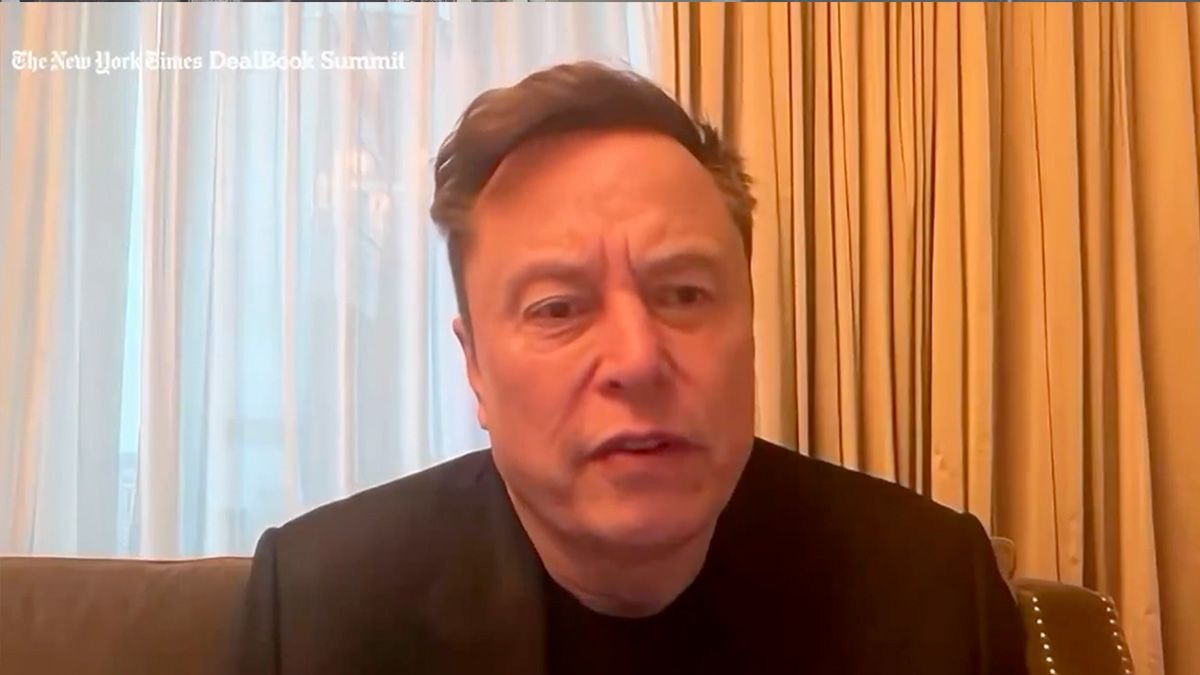
Elon Musk, the world’s richest man, said on 18 November 2026 that he felt “pretty foolish” about how much he spent on this year’s US midterm elections, after Republicans lost heavily across the country.
“I feel pretty foolish about having spent so much money and not seeing much for it,” Musk said, speaking by video link at the New York Times DealBook Summit.
The chief executive of Tesla and SpaceX said Republican candidates might have done worse without his spending. He added, however, that the outcome showed campaign money alone could not decide an election.
“Probably, if I could rewind the clock, I would have spent less money,” he said.
At least US$445 million spent
According to an Associated Press (AP) tally published after the 3 November 2026 vote, Musk spent at least US$445 million trying to help Republicans keep control of Congress.
AP put the sum in perspective: someone earning US$100,000 a year would need to save every penny for about 4,400 years to match it.
Reuters described the total as nearly half a billion dollars, spent to back Republican candidates and keep Texas red. Texas is home to Tesla, SpaceX and a chipmaking venture the two companies are planning.
By mid-October, Musk had already become the largest known donor of the midterm cycle. According to figures first reported by the New York Times and confirmed by his super PAC, he had given more than US$276 million since July.
Where the money went
The largest single amount was US$158 million to the Senate Leadership Fund (SLF), the main super PAC supporting Republican Senate candidates. The New York Times called it one of the largest known political donations in American history.
Musk also gave about US$20 million to the Congressional Leadership Fund (CLF), its counterpart for House races. Earlier, in June 2025, he had split US$10 million evenly between the two groups.
His own super PAC, America PAC, received about US$76 million by October. It used the money to build a voter turnout operation like the one that helped elect President Donald Trump in 2024.
America PAC first reported spending for the 2026 cycle in early September. Between 19 and 31 August, it spent just over US$800,000 on direct mail for about 15 House and Senate candidates.
Those early beneficiaries included Senator Susan Collins of Maine and Senator Jon Husted of Ohio. The PAC also spent in Senate races in Iowa, New Hampshire and Michigan.
At House level, it backed candidates in competitive districts in New Jersey, New York, Pennsylvania and Virginia.
Musk also gave US$10 million to a super PAC supporting Nate Morris in the Kentucky Senate race.
Texas: the centre of the spending
Musk’s biggest focus was the Texas Senate race. There, Republican Attorney General Ken Paxton faced Democrat James Talarico, a state representative.
Musk gave US$10 million directly to Lone Star Liberty PAC, a group backing Paxton. According to AP, Paxton effectively benefited from US$158 million of Musk’s spending overall, much of it on negative advertising against Talarico.
Paxton lost. Talarico’s win was the first statewide victory for Democrats in Texas in more than 30 years.
Musk also spent at least US$5 million supporting Governor Greg Abbott’s re-election. Abbott lost to Democrat Gina Hinojosa, the first Democrat elected governor of Texas in more than three decades.
Texas Democrats made Musk a central target of their campaigns. They attacked the tax breaks and grants his companies receive, and his ties to Republican officials.
Hinojosa said Musk had received a US$1.7 billion property tax break in Texas. “Let me be clear: Texas is not for sale,” she said in October.
Talarico repeatedly described Paxton as being “funded by one dude”.
An AP Voter Poll of more than 5,000 Texas voters found that slightly more than half viewed Musk unfavourably.
From a pledge to cut back to record spending
The spending reversed Musk’s position from 2025. In May that year, he told a Bloomberg forum in Doha that he would do “a lot less” political spending in future, saying: “I think I’ve done enough.”
That came shortly after his preferred candidate lost the April 2025 Wisconsin Supreme Court race by about 10 points, despite Musk putting a record US$21 million into the contest.
Musk spent at least US$290 million in the 2024 election helping Trump and other Republicans win office. America PAC alone spent more than US$260 million in that cycle.
Early in Trump’s second term, Musk led the Department of Government Efficiency (DOGE). The two fell out publicly after he left the post, and Musk at one point threatened to start his own political party.
They later reconciled. In October 2026, Trump presented Musk with the National Medal of Science.
Consequences for Musk’s businesses
The election results hit Musk’s companies quickly. On the day after the vote, Forbes estimated that his net worth fell by about US$45 billion to US$865.6 billion, as shares of Tesla and SpaceX dropped while the Nasdaq rose.
Democrats in Congress have signalled possible subpoenas and investigations into Musk’s time at DOGE and the restriction of Starlink services in Ukraine.
In Texas, Musk will now have to deal with Hinojosa as governor and Talarico in the US Senate.
Anthropic and SpaceX computing capacity
Also at the summit, Musk said Anthropic was “extremely likely” to keep renting computing capacity from SpaceX and wanted significantly more.
He said the most likely outcome was that Anthropic would seek another 10 gigawatts of computing capacity from SpaceX.