Nearly one in four children worldwide lived in conflict zones in 2025
A record 589 million children lived in areas affected by armed conflict in 2025, representing 23.4 per cent of the world's child population, according to a new Save the Children report.
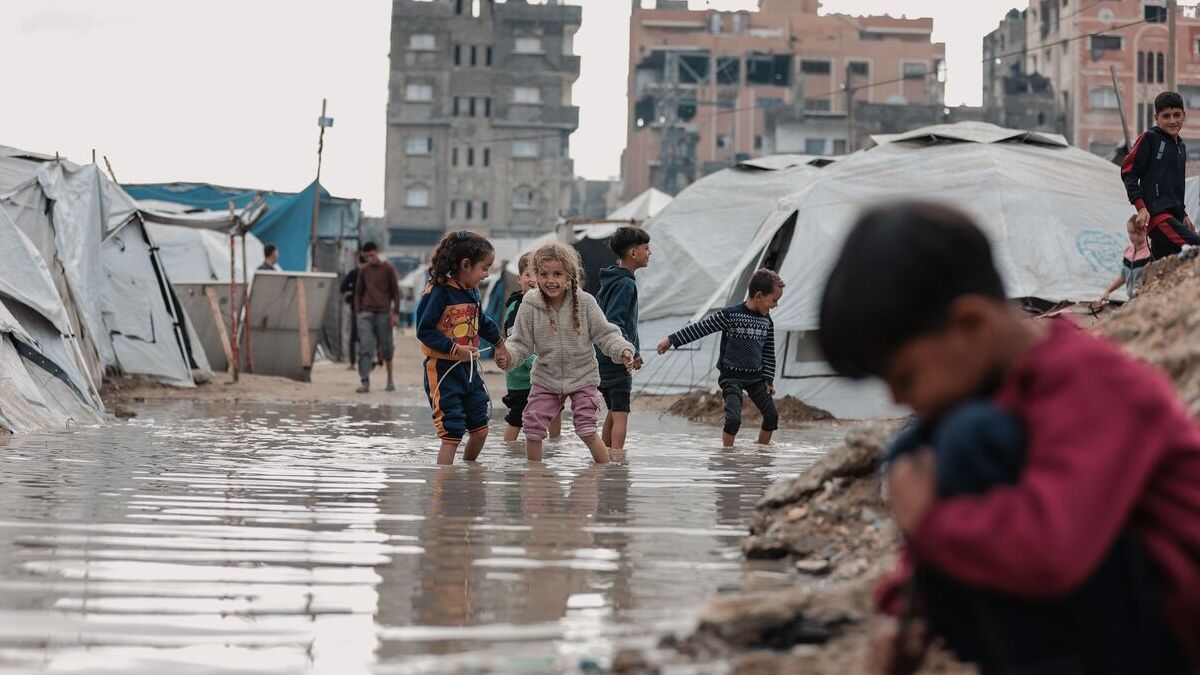
- A record 589 million children lived in conflict-affected areas in 2025, representing 23.4 per cent of children worldwide.
- Africa recorded approximately 260 million children in conflict zones, while the Middle East recorded 67 million.
- The United Nations verified 38,558 grave violations affecting 24,174 children in 2025.

Nearly one in four children worldwide lived in areas affected by armed conflict in 2025, representing a record 589 million children and the highest proportion since records began in 1990, according to a new report by international humanitarian organisation Save the Children.
The figure represents an increase of more than 50 per cent over the past decade, rising from 378 million children in 2015 to 589 million in 2025.
The findings are contained in Stop the War on Children: Changing the Odds, published on 19 November 2026. The report draws on conflict data from the Peace Research Institute Oslo (PRIO) and United Nations-verified records of serious violations against children.
The proportion of children living in conflict zones has more than doubled, from approximately 10 per cent in the mid-1990s to 23.4 per cent in 2025.
The report highlights the growing exposure of children to armed violence, displacement and restrictions on humanitarian assistance, alongside killings, sexual violence, abductions and attacks on schools and hospitals.
Africa and the Middle East account for the largest share
Africa recorded the highest number of children living in conflict zones, with approximately 260 million, accounting for 44 per cent of the global total.
The number represents an increase from 218 million in 2024, or nearly 20 per cent in one year.
The proportion of children living in conflict zones in Africa has more than tripled since 2010, rising from approximately one in eight to around two in five children in 2025.
The Middle East recorded a similarly high proportion, with approximately two in five children living in conflict zones. The number increased by nearly 29 per cent, from 52 million in 2024 to 67 million in 2025.
Other regions also recorded substantial exposure to armed conflict.
In the Americas, 24.2 per cent of children lived in conflict zones in 2025, compared with 14.3 per cent in Asia and 10.6 per cent in Europe.
The figures illustrate the geographical spread of conflict-related risks to children, with Africa and the Middle East accounting for the largest proportions of affected children.
United Nations records thousands of serious violations
The report also examines serious violations against children in armed conflict using United Nations-verified data covering the period from 2005 to 2025.
These violations include the killing and maiming of children, recruitment and use by armed forces or armed groups, sexual violence, abductions, attacks on schools and hospitals, and the denial of humanitarian access.
The United Nations' 2025 annual reporting on children and armed conflict recorded 38,558 grave violations affecting 24,174 children. This was the highest number of children affected since the monitoring mandate was established.
The figures were published by the Office of the Special Representative of the UN Secretary-General for Children and Armed Conflict in June 2026.
Killing and maiming remained among the most frequently documented violations, affecting 14,224 children in 2025. Of these, 6,266 were killed and 7,958 were injured.
The UN also verified 8,322 incidents involving the denial of humanitarian access, while 6,607 children were recruited or used by armed forces or armed groups.
A further 5,129 children were abducted, and 1,783 were subjected to rape or other forms of sexual violence.
The UN reported that 3,176 children experienced multiple grave violations during the reporting period, while approximately one-third of the children affected were girls.
The Occupied Palestinian Territory and Israel, the Democratic Republic of the Congo, Nigeria, Myanmar and Somalia were among the situations with the highest numbers of verified violations.
For the first time since the establishment of the UN's Children and Armed Conflict mandate, government forces were identified as the main perpetrators of grave violations against children overall.
They were also responsible for the majority of verified cases involving the killing and maiming of children, attacks on schools and hospitals, and the denial of humanitarian access.
UN Under-Secretary-General and Special Representative for Children and Armed Conflict Vanessa Frazier said the findings reflected a serious deterioration in the protection of children.
She called on all parties to armed conflicts to comply with international humanitarian and human rights law.
Denial of humanitarian assistance rises sharply
One of the most significant findings in the report concerns the growing obstruction of humanitarian assistance to children living in conflict zones.
A total of 8,322 verified incidents of denial of humanitarian access were recorded in 2025, compared with 509 in 2015. This represents a more than 16-fold increase over the decade.
The Occupied Palestinian Territory accounted for 5,946 incidents, representing more than 70 per cent of the global total.
The proportion of all verified grave violations involving the denial of humanitarian access also increased substantially, from approximately 2 per cent in 2015 to more than 21 per cent in 2025.
The obstruction of humanitarian assistance has affected children's access to food, clean water, medical treatment and other essential services.
According to the report, the denial of humanitarian access became the second most frequently recorded category of grave violation in 2025, after the killing and maiming of children.
Save the Children said the verified figures represented only part of the actual scale of violations, as many incidents could not be independently documented.
Killing and maiming remain the most widespread violations
The report also examined two decades of United Nations monitoring of serious violations against children.
Since 2005, the UN has verified 171,712 cases of children being killed or maimed in armed conflicts.
More than 70 per cent of these cases were recorded in five countries or territories: the Occupied Palestinian Territory, Afghanistan, Somalia, Syria and Yemen.
Other violations documented over the same period include the recruitment of children into armed groups, sexual violence, abductions and attacks on educational and medical facilities.
Attacks on schools and hospitals have particularly serious consequences because they threaten children's immediate safety while disrupting their access to education and healthcare.
The UN's monitoring system covers violations that can be independently verified. Its figures therefore do not represent a complete count of all children affected by violence.
The UN has also warned that restrictions on access to conflict areas, difficulties in obtaining testimony and threats against monitors can prevent incidents from being documented.
Save the Children calls for stronger international action
Save the Children International chief executive Inger Ashing said the growing number of children living in conflict zones reflected a rapidly escalating child-protection crisis.
"Almost one in four children around the world now lives in a conflict zone. What could be more important than their protection?" she said.
Ashing also highlighted the difficulties faced by humanitarian organisations in reaching children, including restrictions on aid delivery, attacks on humanitarian operations and reductions in available funding.
She called on parties to armed conflicts to respect international humanitarian law and ensure that humanitarian organisations could deliver assistance safely and without obstruction.
The organisation also urged governments to strengthen accountability for violations against children, implement international agreements protecting children and education during conflicts, and use diplomatic and political pressure to influence parties responsible for abuses.
It further called for children to have a greater voice in decisions affecting their safety and future.
In 2025, Save the Children worked in 107 countries, reaching more than 58.2 million people, including 37.8 million children.
The organisation also responded to 113 humanitarian crises across 63 countries, providing assistance to more than 24 million people, including 13.6 million children.
The Stop the War on Children report forms part of Save the Children's continuing campaign to improve the protection of children affected by armed conflict.