Man and dog swept into surf at Cannon Beach, Oregon, United States, during king tides
A man and his dog were swept into the Pacific Ocean at Cannon Beach, Oregon, United States, on 24 November 2026, after a surge of water knocked the man off beach-access stairs. Both escaped without serious injuries. Police had cited the man earlier that morning and warned him to stay off the beach.
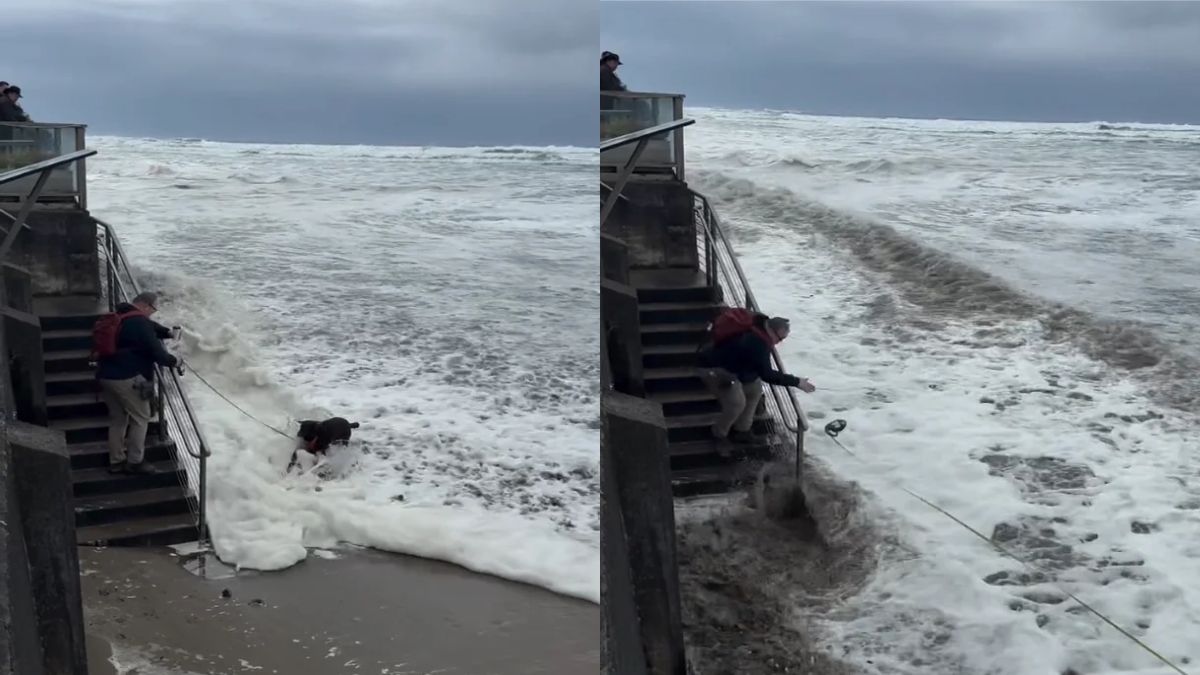
- A surge of water swept a man and his leashed dog into the surf at Cannon Beach, Oregon, United States, on 24 November 2026.
- Police had cited the man earlier that morning for driving on the beach and warned him to stay off it.
- Police urged the public to watch king tides from safe, elevated locations and to keep pets away from the surf.

A man and his dog were swept into the Pacific Ocean at Cannon Beach, Oregon, United States, on 24 November 2026, after an incoming surge of water knocked the man off a set of beach-access stairs.
Both eventually escaped the surf. The Cannon Beach Police Department (CBPD) said neither was injured.
According to the CBPD, an officer first contacted the man at about 8:50 a.m. that morning after seeing him drive on the beach just south of Tolovana Wayside, Cannon Beach, Oregon, United States.
The man told the officer that he wanted a better look at the king tides. He was cited for driving on the ocean shore and was told to stay off the sand.
Cannon Beach Police Chief Rob Shultz told CBS Austin that watching the tides was welcome, provided people showed respect for the ocean. He described the sea as unforgiving and unpredictable, and urged people to observe it from a distance.
Surge sweeps man and dog into the surf
At about 10:30 a.m., the CBPD and the Cannon Beach Fire Department (CBFD) were dispatched to the area near Ecola Creek, Oregon, United States, after reports that a person and a dog had been swept into the surf.
The CBPD said it was the same man who had been contacted earlier. He had been standing on the stairs at the Second Street beach access while his leashed dog walked on the sand.
A surge of water then rushed toward the shore, sweeping the dog into the turbulent water before pulling the man from the stairs.
A bystander's video, which the CBPD posted to Facebook on 25 November 2026, shows the man struggling to regain his footing. He briefly lost hold of the leash as the water churned around him.
The footage also shows the dog being carried through the surf.
Rescue and recovery
Both the man and the dog eventually reached another set of stairs and got out of the water.
According to CBS Austin, Shultz said bystanders rescued the dog farther down the seawall. They climbed down a ladder, grabbed the dog by its harness and lifted it to safety.
The incident took place during the November king tides, which brought some of the highest astronomical tides of the year to the West Coast of the United States.
According to reports, the tides ran from about 23 to 27 November. They coincided with strong ocean swells and an approaching storm system, which raised the risk of dangerous surges and sneaker waves.
The effects also reached California, United States. According to reports, San Francisco, California, United States, recorded water levels of about 8.23 feet (2.51 metres), exceeding the previous November record of around 7.97 feet (2.43 metres) set in 1982.
Several low-lying waterfront areas faced flooding concerns, prompting authorities to install temporary protective barriers.
King tides occur when the Sun, Moon and Earth align to produce exceptionally high tides. Storm surges, strong swells and elevated sea levels can intensify their impact.
Police safety advice
The CBPD urged residents and visitors to watch king tides from a safe, elevated location. It also said beach-access stairs are not necessarily a safe vantage point.
Police also advised keeping pets away from the surf, staying clear of driftwood that waves can move, never turning one's back on the ocean, and heeding instructions from public safety personnel.
The department said no photograph or closer look was worth risking a person's life, a pet's life or the lives of the first responders who might have to perform a rescue.