John Mearsheimer argues 7 October attack was rooted in Israel’s founding, not antisemitism
Political scientist Prof John Mearsheimer says Hamas’s 7 October 2023 attack was a revolt by Palestinians confined in Gaza, not a “new Holocaust”, and argues the decision to attack Israel was lawful under international law.

- Prof John Mearsheimer rejects framing Hamas as “the new Nazis”, calling 7 October a breakout from Gaza.
- He cites Israel’s founding, the Gaza blockade and past military operations as the attack’s root causes.
- He argues Hamas’s attack was lawful as resistance to occupation, excluding the killing of civilians.

Prof John Mearsheimer, the University of Chicago political scientist, has argued that the Hamas-led attack on Israel on 7 October 2023 was a revolt by Palestinians confined in Gaza, rather than an act of genocidal antisemitism comparable to the Holocaust.
He made the case in a video lecture on his personal YouTube channel, released shortly after the third anniversary of the attack. Within hours of publication, the video had drawn more than 130,000 views and over a thousand comments.
Prof Mearsheimer said public debate since the attack had centred on three questions: what happened that day, why Israel was caught by surprise, and what the consequences are for Israel, the Palestinians and the wider region.
The root causes of Hamas’s decision to attack, he said, have received comparatively little attention.
“What happened on October 7th is basically the inmates broke out of the concentration camp,” he said.
Rejecting the ‘new Nazis’ framing
Prof Mearsheimer contrasted his argument with what he described as the dominant narrative among Israel and its supporters, which ties the attack closely to the Holocaust.
He cited Prime Minister Benjamin Netanyahu’s statement, about ten days after the attack, that Hamas was “the new Nazis”, as well as the frequent description of 7 October as the deadliest day for Jews since the Holocaust.
He said this perspective was “fundamentally flawed” as an explanation of the attack’s deep causes, and that understanding them required starting with how Israel was created.
Population and land before 1948
Prof Mearsheimer said the slogan describing Palestine as “a land without people for a people without land” had long since been shown to be untrue.
According to the figures he presented, about 96 per cent of Palestine’s population in 1900 was Arab. By 1947, there were around 1.4 million Palestinians and roughly 608,000 Jews, with Palestinians making up 70 per cent of the population.
He added that, by most accounts, Jews owned about 6.6 per cent of the land when Israel was established in 1948.
He said his own early understanding of the conflict had been shaped by Leon Uris’s novel Exodus and its film adaptation starring Paul Newman and Eva Marie Saint, which cast the Zionists as the “good guys”.
That view, he said, was overturned from the early 1990s by Israel’s “new historians”, who used archival records to tell a story he described as “almost completely at odds with the conventional wisdom”.
Citing Jabotinsky and Ben-Gurion
Prof Mearsheimer argued that leading Zionists themselves understood that Palestinians would resist. He quoted the right-wing Zionist intellectual Ze’ev Jabotinsky: “Every native population, civilised or not, regards its land as its national home.”
He also cited remarks attributed to David Ben-Gurion, Israel’s first prime minister: “If I were an Arab leader, I would never make terms with Israel,” and “We have come here and stolen their country. Why should they accept that?”
The Ben-Gurion remarks are commonly sourced to The Jewish Paradox, a memoir by Zionist leader Nahum Goldmann recounting a private conversation.
Three strategies for managing a Palestinian population
Prof Mearsheimer said Israel and its Zionist predecessors had relied on three approaches. The first was the “iron wall” set out in Jabotinsky’s 1923 essay, which he described as beating Palestinians into submission.
The second was ethnic cleansing. He said between 700,000 and 750,000 Palestinians were expelled in 1948, many of them to Gaza, leaving Palestinians as about 20 per cent of the new state’s population.
After Israel captured Gaza and the West Bank in the 1967 Six-Day War, he said, the population under Israeli control became roughly evenly split, at about 7.3 million Palestinians and 7.3 million Israeli Jews.
The third approach, he said, was concentrating Palestinians in isolated enclaves. He likened those in the West Bank to the Bantustans of apartheid South Africa and described Gaza as “basically a concentration camp”.
He dismissed the two-state solution, saying Israel had never had “serious interest” in it, including at the Camp David talks of 2000 involving Ehud Barak, Bill Clinton and Yasser Arafat.
Blockade, assassinations and ‘mowing the lawn’
Turning to Gaza, Prof Mearsheimer noted that Israel withdrew its settlers in 2005 under Prime Minister Ariel Sharon. He said the move was not intended to pave the way for Palestinian statehood.
He cited Dov Weissglass, a senior adviser to Sharon, who said the disengagement would put the political process in “formaldehyde”, freezing the status quo.
Hamas won Palestinian legislative elections in January 2006 and took control of Gaza in June 2007. Prof Mearsheimer said Israel then imposed a blockade designed to keep Gazans on minimal food rations without starving them.
He also pointed to Israel’s targeted killings of Palestinian leaders, citing the 2004 helicopter strike that killed Sheikh Ahmed Yassin, a Hamas co-founder who was quadriplegic and nearly blind.
Finally, he referred to periodic military operations known as “mowing the lawn”. He said 1,391 Palestinians were killed in Operation Cast Lead in 2008 and 2009, and 2,203 in Operation Protective Edge in 2014.
By comparison, he said, about 1,100 Israelis and around 100 foreign nationals were killed on 7 October 2023, a total of roughly 1,200.
“I don’t mean to make light of those Israelis who were killed on October 7th for one second,” he said, adding that he equally did not wish to dismiss the Palestinians killed over the years.
Comparison with Nat Turner’s revolt
Prof Mearsheimer endorsed Dr Norman Finkelstein’s comparison of the attack with the 1831 slave revolt led by Nat Turner, saying the attackers “were not Nazis”.
He said the attackers had two goals: freedom from the conditions in Gaza, and the recovery of land they believe Israel took. He said it was “perfectly legitimate” to describe them as freedom fighters.
He noted that many Gazans still hold the keys to homes their families lost in 1948.
Claim on international law
In his final point, Prof Mearsheimer asserted that Hamas’s decision to attack into Israel was lawful under international law, as Israel was an illegal occupying force and occupied peoples may engage in armed resistance.
He stressed that this did not extend to the killing of civilians or to the conduct of the fighting once Hamas entered Israeli territory.
Israel maintains that it ended its occupation of Gaza with the 2005 disengagement. The United Nations has continued to regard Gaza as occupied, citing Israel’s control of its borders, airspace and coastline.
In July 2024, the International Court of Justice found in an advisory opinion that Israel’s continued presence in the Occupied Palestinian Territory was unlawful.
Background
About 1,200 people were killed in Israel during the Hamas-led attack on 7 October 2023, and around 250 were taken hostage into Gaza, according to Israeli figures.
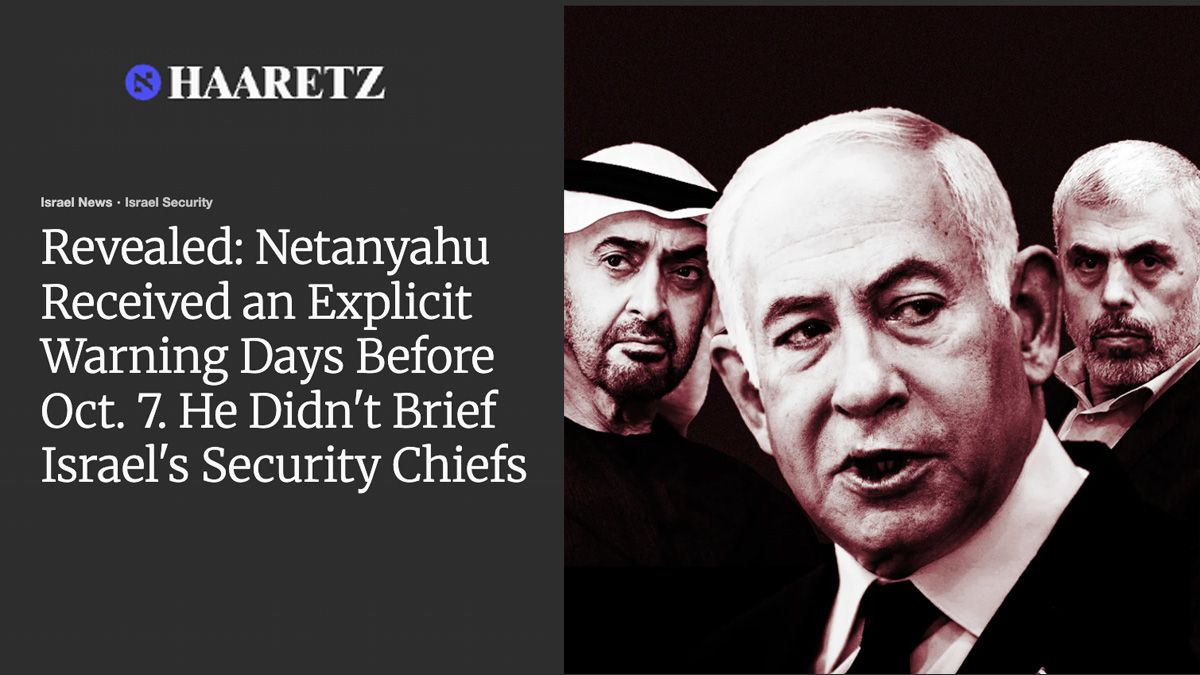
The number of those deaths caused by Israeli fire remains disputed. In July 2024, Israeli newspaper Haaretz reported that documents and soldiers’ testimony showed the Israeli military had invoked the “Hannibal directive” at several locations that day.
The directive, first introduced in 1986, permits the use of force to prevent soldiers from being captured, even at the risk of their lives. Israeli officials had said it was abolished in 2016.
Haaretz said it did not know whether or how many civilians and soldiers had been hit because of the procedure. A United Nations commission of inquiry concluded in June 2024 that the military had likely applied the directive in some instances.
The most widely reported case took place at Kibbutz Be’eri. There, Brig-Gen Barak Hiram ordered a tank to fire on a house where Hamas gunmen were holding 14 Israeli hostages, 13 of whom died.
Separately, an Israeli Air Force probe found that a Kibbutz Nir Oz resident was likely killed by helicopter fire during an attempt to take her hostage. Fact-checkers have said there is no basis for claims that Israeli fire caused most civilian deaths that day.
The attack became the basis for Israel’s military campaign in Gaza. On 8 October 2023, Israel’s security cabinet formally declared war. Netanyahu said the aims were to destroy Hamas’s military and governing capabilities and to return the hostages.
On 9 October 2023, then Defence Minister Yoav Gallant announced a “complete siege” of Gaza, cutting off electricity, food and fuel. Israel launched a ground invasion later that month after weeks of intensive air strikes.
Israel has consistently said its operations are an act of self-defence in response to 7 October. It says Hamas bears responsibility for civilian casualties because it operates from within residential areas, hospitals and tunnels beneath civilian infrastructure.
The scale of the campaign has drawn international legal scrutiny. In December 2023, South Africa brought a case at the International Court of Justice (ICJ) accusing Israel of breaching the Genocide Convention. Israel rejects the accusation.
In January 2024, the court ordered Israel to take measures to prevent genocidal acts and to allow humanitarian aid into Gaza. The case on the merits has not yet been decided.
In November 2024, the International Criminal Court (ICC) issued arrest warrants for Netanyahu and Gallant over alleged war crimes and crimes against humanity, including the use of starvation as a method of warfare. Israel disputes the court’s jurisdiction.
The court also issued a warrant for Hamas military commander Mohammed Deif over the 7 October attack. Israel says it killed Deif in July 2024.
A ceasefire agreed in January 2025 collapsed in March that year, when Israel resumed its offensive. A further ceasefire took effect on 11 October 2025.
Gaza’s health ministry said in September 2026 that at least 73,783 Palestinians had been killed and 174,738 wounded since the war began. The ministry’s figures do not distinguish between civilians and combatants.
The ministry said 1,369 of those deaths had occurred since the ceasefire that took effect on 11 October 2025.
Prof Mearsheimer is the R Wendell Harrison Distinguished Service Professor of Political Science at the University of Chicago. In 2007, he co-authored The Israel Lobby and US Foreign Policy with Prof Stephen Walt of Harvard University.
His positions on Israel and on Russia’s invasion of Ukraine have drawn sustained criticism. He has previously said that Israel is committing genocide in Gaza, an allegation Israel rejects.