Democrats seize both chambers of US Congress in a night of historic firsts
Democrats have won control of the US Senate and House of Representatives in a sweeping midterm defeat for President Donald Trump’s party, electing the first Muslim senator, the first openly gay male senator and the first Black woman governor.
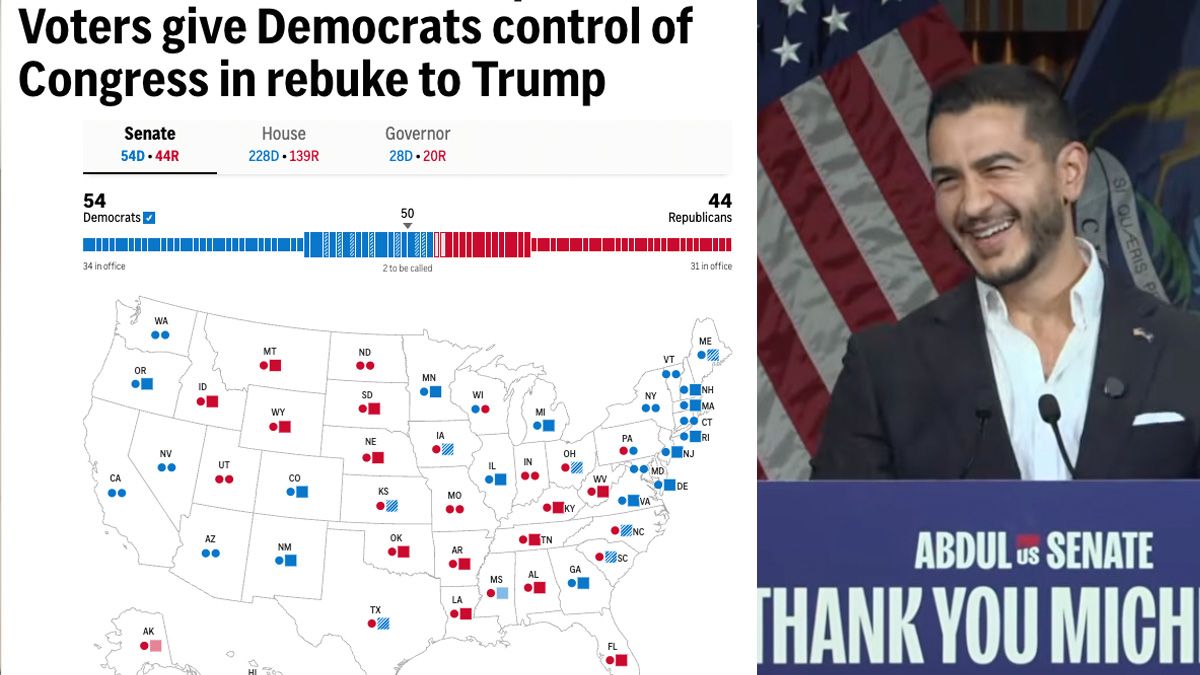
- Democrats won the Senate and House, flipping seven Senate seats and ending Republican control of Congress and the presidency.
- Historic firsts include the first Muslim senator, first openly gay male senator and first Black woman elected governor.
- Trump says he accepts the results, but can still use his veto and executive powers to limit Democrats.

The Democratic Party has won control of both chambers of the US Congress, ending Republican control of Congress and the presidency in midterm elections held on 3 November 2026. The New York Times described the result as a landslide.
Associated Press (AP) figures on the morning of 4 November 2026 showed Democrats with 54 Senate seats to the Republicans’ 44, with two races uncalled.
In the House of Representatives, where 218 seats are needed for a majority, Democrats held 228 seats to 139 for the Republicans, with counting still under way.
The elections also produced a run of historic firsts, including the country’s first Muslim senator, its first openly gay male senator and the first Black woman elected as a state governor.
President Donald Trump told The New York Times he was “absolutely willing to accept those results”. He also said he had “total veto power”, adding that Democrats would “have to come to us”.
According to the Canadian Broadcasting Corporation (CBC), Trump’s party is the first since 2006 to lose both chambers at a midterm election. George W Bush suffered that outcome in 2006, as did Bill Clinton in 1994 and Harry Truman in 1946.
A night of historic firsts
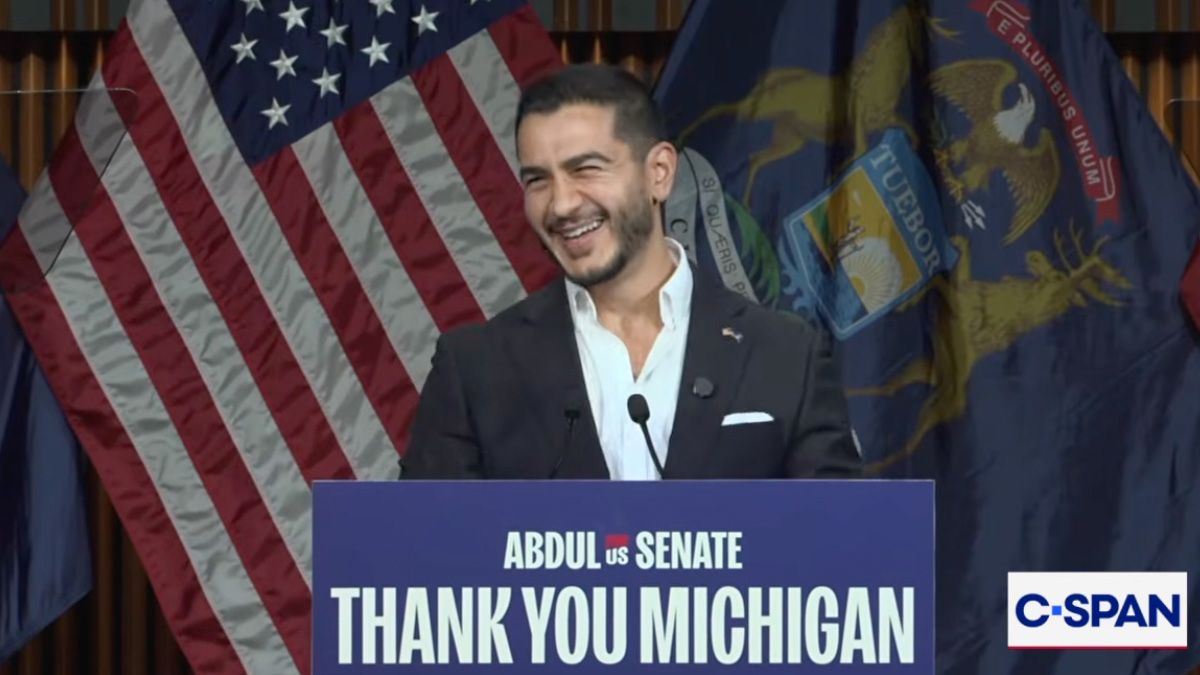
In Michigan, Dr Abdul El-Sayed defeated former Representative Mike Rogers to become the first Muslim elected to the US Senate. He is a 42-year-old former public health official and the son of Egyptian immigrants.
His victory followed one of the country’s most bitter contests. According to AP, Trump and other Republicans repeatedly sought to link him to terrorist organisations, although there was no evidence of such ties.
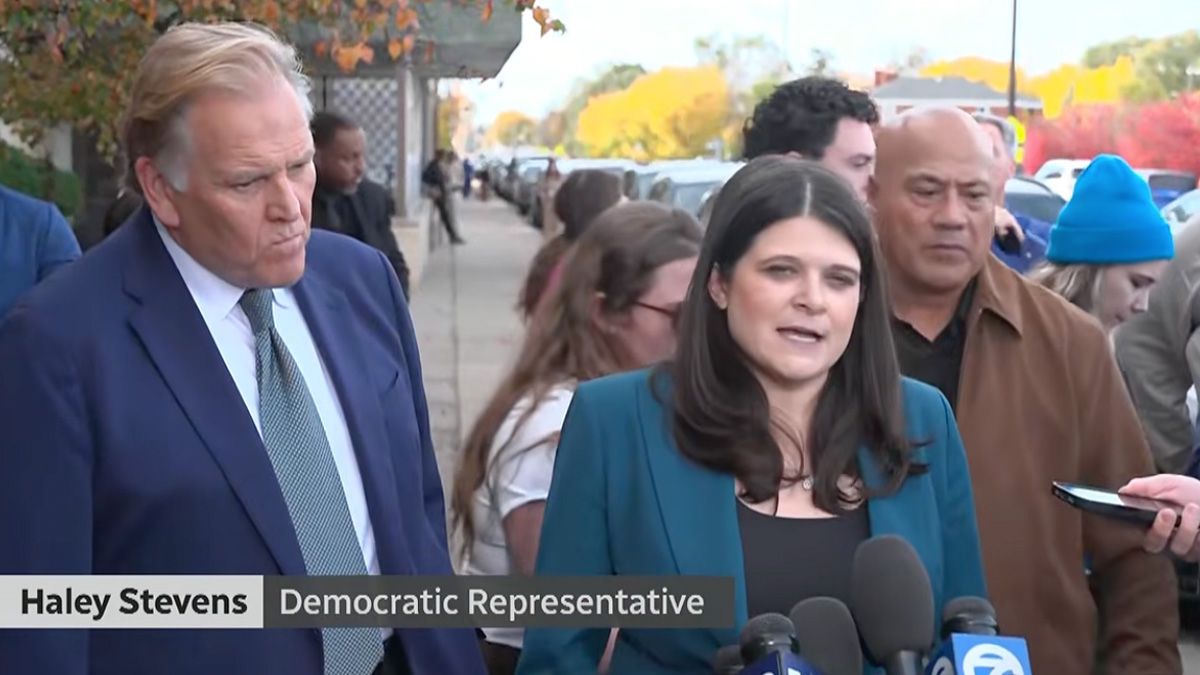
His former primary rival, Representative Haley Stevens, endorsed Rogers on 1 November 2026. El-Sayed nevertheless held the open seat for his party, campaigning on universal healthcare, removing outside money from elections and sharp criticism of Israel.
El-Sayed addressed Trump directly in his victory speech, saying: “You can just go on and call me senator.”
In New Hampshire, Representative Chris Pappas defeated former Senator John E Sununu and will become the first openly gay man to serve in the Senate. Tammy Baldwin of Wisconsin became the first openly gay person elected to the chamber in 2012.
Minnesota Lieutenant Governor Peggy Flanagan beat Republican Michele Tafoya to become the first Native American woman elected to the Senate. Mary Peltola of Alaska could join her if she wins a race that remains undecided.
Dr Annie Andrews, a paediatrician, became the first woman elected to the Senate from South Carolina. Iowa’s Josh Turek, a Paralympic gold medallist, is expected to become the first former Paralympian to serve as a US senator.
In Georgia, former Atlanta mayor Keisha Lance Bottoms defeated billionaire Rick Jackson to become the first Black woman elected governor of any US state. She is also the first Democrat elected governor of Georgia in more than 25 years.
Republican Byron Donalds will be Florida’s first Black governor, and Democrat David Crowley will be the first in Wisconsin. Only three Black governors had previously been elected in US history: L Douglas Wilder, Deval Patrick and Wes Moore.
Gina Hinojosa became the first Latina elected to lead Texas, while Xavier Becerra became the first Latino elected governor of California. Deb Haaland will be the country’s first female Native American governor after winning in New Mexico.
Amy Klobuchar, a Democrat, will be Minnesota’s first female governor, and Marsha Blackburn, a Republican, will be the first in Tennessee.
In Washington, House Democratic Leader Hakeem Jeffries is poised to become the first Black Speaker of the House. House Democrats are also on track to have more than 100 women in their caucus for the first time.
Seven Senate seats flipped
Democrats flipped Republican-held Senate seats in Iowa, Kansas, Maine, North Carolina, Ohio, South Carolina and Texas. They also won competitive races in Georgia and New Hampshire, according to The New York Times.
Before the election, Democrats held no Senate seat in a state Trump had won in all three of his presidential campaigns. They now have senators-elect in six such states, five of which he carried by double digits in 2024.
The most striking result came in Texas, where James Talarico defeated state Attorney General Ken Paxton by 55.1 per cent to 43.0 per cent. No Democrat had won a Texas Senate race since 1988.
Trump had endorsed Paxton over the incumbent, Senator John Cornyn, and carried the state by nearly 14 points in 2024. The New York Times reported that Elon Musk spent more than US$200 million trying to keep Texas Republican.
“We just took back Texas,” Talarico told supporters in Austin. Hinojosa also ousted three-term Governor Greg Abbott, giving Democrats both of the state’s marquee contests on a record midterm turnout of about 10 million ballots.
In Kansas, pastor Adam Hamilton defeated Senator Roger Marshall by 50.9 per cent to 46.1 per cent, becoming the first Democrat to win a Senate race in the state since 1932.
Hamilton, who founded the state’s largest church, had been registered as a Republican until February. He pledged to oppose Senator Chuck Schumer’s bid to become majority leader and was endorsed by two former Republican governors of Kansas.
In Maine, Troy Jackson, a logger and former state legislator, ended Senator Susan Collins’s 30-year tenure. Jackson entered the race only in July, after the Democratic primary winner, Graham Platner, withdrew.
In North Carolina, former Governor Roy Cooper became the first Democrat to win a Senate race in the state since 2008. In Ohio, former Senator Sherrod Brown returned to the chamber by defeating Senator Jon Husted.
House majority despite redistricting
Democrats needed a net gain of only three seats to win the House. The New York Times reported that they won in rural North Carolina, central Kentucky, along the Texas border and in the suburbs of St Louis and Omaha.
The results came despite a redistricting drive that began at the White House’s urging in 2025 and spread across several Republican-led states. Some of the newly drawn districts still fell to Democrats.
Katy Padilla Stout won a Texas border district that includes Uvalde and that Trump carried by 15 points in 2024. Bobby Pulido, a Tejano musician, ousted Representative Monica De La Cruz, while Johnny Garcia won a redrawn San Antonio district.
Representative Brian Fitzpatrick of Pennsylvania, who had repeatedly won a district Trump lost, was also defeated. The New York Times reported that Democrats were projected to record the largest popular vote victory for either party since 1976.
Voter shifts across Trump’s coalition
The New York Times’ election data pointed to broad movement away from the Republicans. Counties that had reported most of their votes shifted towards Democrats by an average of about 16 percentage points compared with 2024.
Majority-Hispanic counties moved more than 22 points against Republican Senate candidates. Counties with large numbers of voters aged 18 to 34 swung nearly 23 points to the left, and Black-majority counties nearly 16 points.
Counties with majority white populations without bachelor’s degrees, long a source of Republican support, swung more than 15 points towards Democrats in states with a major Democratic Senate candidate.
The New York Times linked the result to rising prices, tariffs and the war in Iran. It said Democrats also capitalised on voter concern over corruption and Republican cuts to Medicaid and healthcare subsidies.
Trump entered the elections with approval ratings in the mid-30s, according to CBC, having urged voters to treat the contest as though he were on the ballot.
Governors and campaign money
Democrats also reclaimed a majority of the country’s governorships for the first time in two decades. In Nevada, Attorney General Aaron Ford defeated Governor Joe Lombardo, while Oregon Governor Tina Kotek won re-election.
Republicans recorded some successes. Kelly Ayotte won in New Hampshire, Phil Scott secured a record sixth term in Vermont, and Kurt Alme held an open Senate seat in Montana after Democratic-leaning votes split between two candidates.
Heavy spending did not prevent the losses. The New York Times reported that Musk spent about US$500 million on the midterms, while Trump’s super PAC had US$400 million. Republicans outspent Democrats in this year’s Senate races.
Trump and Republicans respond
Trump appeared to reject responsibility for the defeat. CBC reported that he posted on social media that he would have won “IN A LANDSLIDE” had he been on the ballot, and also shared an image of a red cap bearing the word “VETO”.
He told Fox News anchor Bret Baier that the result was “just a point in time” and that he did not intend to change his Cabinet.
House Speaker Mike Johnson said he was “disappointed”, but vowed to keep fighting what he called an “insurgent socialist movement”. He warned that Democrats might try to turn Congress into a “circus”.
Senate Republican leader John Thune said his party would “not stand idly by” and would work with Trump to oppose what he called Democrat extremism.
Republican strategist Chet Love told CBC Radio that the result was “beyond a blue wave”, saying his party would have to do “a lot of soul-searching”.
What Democrats can do next
Schumer told reporters: “Relief is on the way.” Jeffries said Americans were “crying out for transformational change”, and described the moment as not a partisan one.
The New York Times reported that Democrats plan to advance bills restoring healthcare subsidies and Medicaid funding, addressing food and fuel costs, and seeking to force a rollback of tariffs and an end to the war with Iran.
Senate control will also give Democrats power over Trump’s judicial and administration nominees, along with committee subpoena authority. Representative Robert Garcia, who is poised to chair the House Oversight Committee, issued a two-word warning: “Lawyer up.”
CBC reported that Democrats could use their House majority to investigate allegations that Trump’s family and friends have profited from his presidency, and could potentially begin impeachment proceedings against him and Secretary of War Pete Hegseth.
The party’s power remains limited. Trump can veto legislation and retains broad executive authority, and CBC noted that overriding a veto requires a two-thirds majority in both chambers. Senate Republicans also retain the ability to block major measures.
Abroad, The New York Times reported that some students in Tokyo and Sydney hoped the result would check Trump’s power. Others questioned whether it might push him towards more aggressive action overseas.
CBC reported that Canada could also benefit, as Democrats have proposed legislation to remove 50 per cent tariffs on some Canadian goods, although any such bill would be likely to face a veto.
Races still undecided
Two Senate contests remained uncalled. In Alaska, Senator Dan S Sullivan led Peltola by 48.49 per cent to 47.68 per cent with 75 per cent of votes counted. Mail-in ballots are expected to lean towards Peltola.
The deadline for counting those ballots is 18 November 2026. If neither candidate passes 50 per cent, the race will go to ranked-choice tabulation.
In Mississippi, Democrat Scott Colom led Senator Cindy Hyde-Smith by 43 votes in AP figures published by The New York Times. Provisional ballots can be counted for up to five business days after the election.
The new Congress will convene in January 2027, with Trump facing the final two years of his presidency without a Republican majority in either chamber.