Indonesia faces public backlash over proposal to relocate endangered Javan rhinos
Indonesia's proposal to establish a second wild habitat for critically endangered Javan rhinoceroses has drawn opposition from residents, environmental advocates and lawmakers, amid questions over scientific assessments, mining plans and conservation priorities.
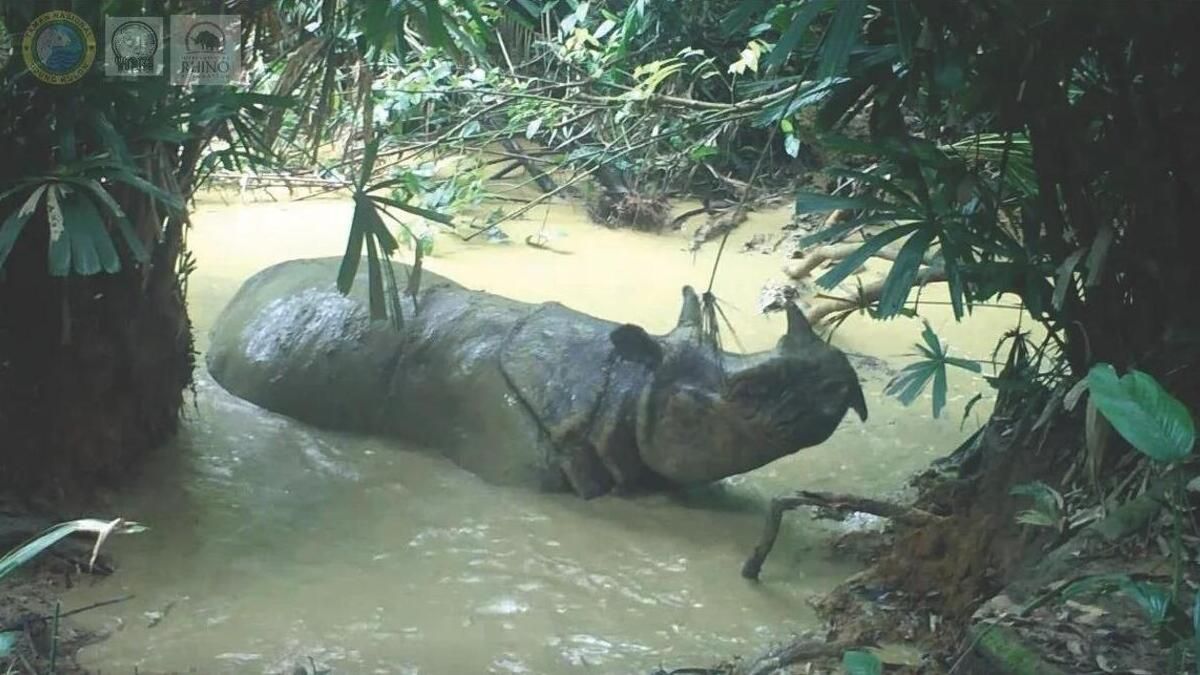
- Indonesia is considering a second wild population of Javan rhinoceroses to reduce the risks of concentrating the species in Ujung Kulon.
- Residents, lawmakers and environmental advocates have questioned the suitability of Alas Purwo and the scientific basis for relocation.
- The government says Ujung Kulon will remain the principal habitat and no animals will be moved without scientific recommendations.

Indonesia's proposal to establish a second habitat for the critically endangered Javan rhinoceros has triggered opposition from residents, environmental advocates and social media users, following remarks by President Prabowo Subianto's Special Envoy for Climate and Energy, Hashim Djojohadikusumo, at the United Nations climate conference in Turkey.
The proposal involves relocating some Javan rhinoceroses (Rhinoceros sondaicus) from Ujung Kulon National Park in Banten, western Java, to Alas Purwo National Park in Banyuwangi, East Java.
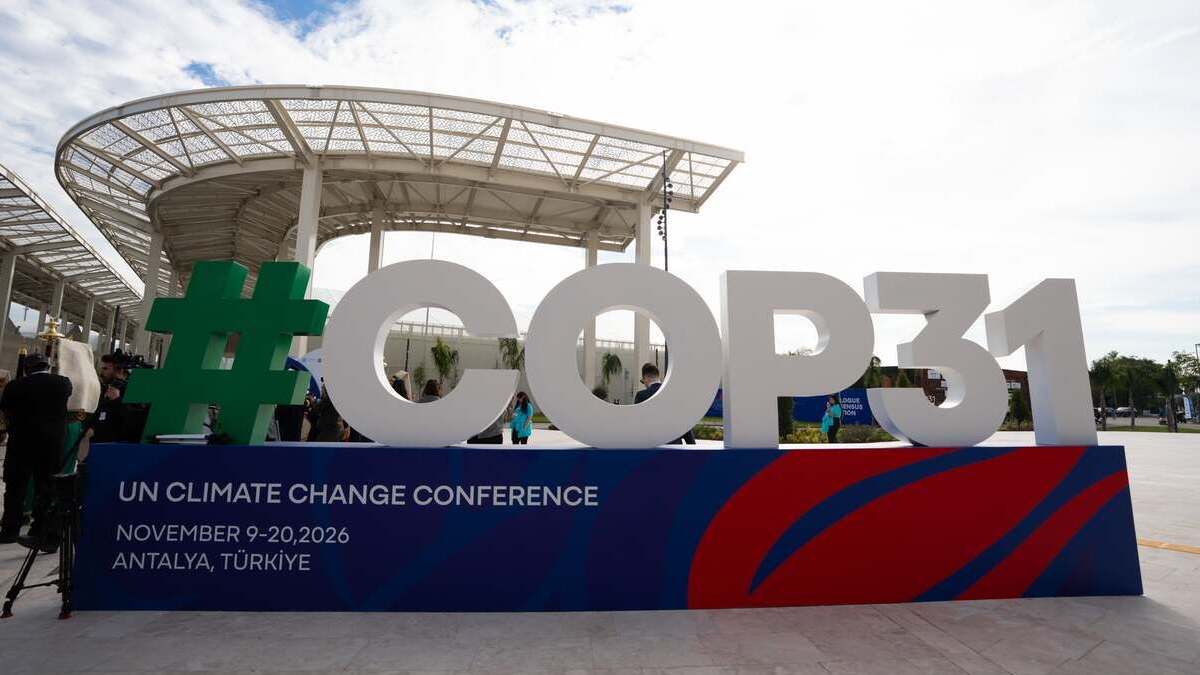
Hashim raised the idea during a media briefing at the 31st United Nations Climate Change Conference (COP31) in Antalya, Turkey, on 12 November 2026.
He cited the risks of earthquakes, tsunamis and volcanic activity around the Sunda Strait, including eruptions of Mount Anak Krakatau, which could threaten the animals' only remaining natural habitat.
The proposal prompted questions about the scientific basis for selecting Alas Purwo, the authority responsible for approving the relocation and the ecological suitability of the proposed destination.
Following the public reaction, the government clarified that no relocation would take place before comprehensive scientific assessments established that the proposed area could support the species.
On 17 November, the Government Communications Agency (Bakom RI) stated that Alas Purwo remained a potential site under consideration rather than an approved destination.
Hashim raises concerns over the risks facing Ujung Kulon
Hashim Djojohadikusumo introduced the proposal during COP31, where he discussed the vulnerability of Indonesia's Javan rhinoceros population.
He pointed to the possibility of a tsunami triggered by an earthquake or volcanic activity around Mount Anak Krakatau.
"At Ujung Kulon, there is a Javan rhino sanctuary. There is a new problem with Mount Anak Krakatau. If there is a tsunami caused by an earthquake or volcanic eruption, our Javan rhinos could become extinct," Hashim said during the briefing on 12 November, as reported by Indonesian media.
He suggested moving some of the animals to Alas Purwo, at the eastern tip of Java, facing Bali.
Hashim also discussed using conservation financing to support the proposed relocation. He expressed confidence that international donors and investors could be interested in funding the project.
He referred to Indonesia's 57 national parks and suggested that conservation funding could follow a model similar to the country's cooperation with Norway.
The remarks brought renewed attention to the question of whether Indonesia should establish a second wild population of Javan rhinoceroses outside Ujung Kulon.
The species is among the world's rarest large mammals, with its entire surviving wild population concentrated in one national park.
Raja Juli says the second-habitat proposal predates Hashim
Forestry Minister Raja Juli Antoni subsequently rejected suggestions that the idea of relocating Javan rhinoceroses originated with Hashim.
In a statement reported by ANTARA on 22 November, Raja Juli said the development of an alternative habitat had been discussed by the government and conservation researchers since the early 1990s.
He said Pulau Panaitan and Gunung Honje were considered in 1991 as potential locations for expanding the Javan rhinoceros population within the Ujung Kulon area.
"The idea of relocating or translocating Javan rhinoceroses from Ujung Kulon to Alas Purwo is being presented as if it were Mr Hashim's idea. It is not. This is a study that has been conducted for a long time," Raja Juli said.
He also referred to research and conservation planning undertaken between 1996 and 1997.
The minister said the development of a second habitat or second wild population was intended to reduce the risks associated with concentrating the entire species in one location.
In separate remarks reported by CNN Indonesia on 19 November, Raja Juli said scientific discussions about a second habitat had been taking place since the 1980s and had continued through subsequent research, including studies from 2015 onwards.
He identified natural disasters, disease outbreaks, limited habitat, population pressure and inbreeding as concerns facing the species.
Raja Juli also defended Hashim's conservation credentials, describing him as a businessman with a longstanding commitment to wildlife protection.
The minister said it was unreasonable to portray Hashim as someone seeking to destroy the Javan rhinoceros's habitat.
Bahlil responds to concerns over mining areas near Ujung Kulon
The controversy has also drawn attention to a separate issue involving the protection of Ujung Kulon: the designation of waters around the national park as a mining business area.
The designation was made under Energy and Mineral Resources Ministerial Decree No. 65.K/MB.01/MEM.B/2026, signed by Energy and Mineral Resources Minister Bahlil Lahadalia in February 2026.
The decision became a subject of public scrutiny after Hashim's remarks about the possible relocation of the rhinoceroses.
Critics questioned why the government was considering moving an endangered species from its only remaining natural habitat while waters surrounding the conservation area had been included in mining planning.
On 23 November, Bahlil issued a statement assuring the public that no mining permits would be issued inside Ujung Kulon National Park.
"Once again, no permits will ever be issued in those areas. We must protect the area. If anyone wants to issue a permit, I will make sure I do not approve it," Bahlil said at the first press conference of the Coordinating Ministry for Economic Affairs and Energy.
He explained that the government had mapped areas with potential mineral reserves since 2014, with subsequent updates in 2017 and 2022. The mapping process, he said, did not include the national park itself.
Bahlil distinguished between the designation of a mining area and the granting of an actual mining permit.
He explained that the government first identifies areas with mineral reserves. This is followed by the designation of a Mining Business Licence Area (WIUP), before a Mining Business Licence (IUP) can be issued.
He said neither a WIUP nor an IUP had been issued inside Ujung Kulon.
The minister added that the existence of mapped mineral resources did not automatically authorise mining activities.
However, the mining designation itself has prompted environmental concerns.
Environment Minister Moh Jumhur Hidayat had called on the Energy and Mineral Resources Ministry to review the designation of mining business areas in waters surrounding Ujung Kulon.
In a statement issued on 19 November, Jumhur said the area should be removed from the mining business designation to prevent potential disturbance to the ecosystem.
He warned that future mining-related activities could create noise, vibration, sedimentation, pollution and changes in water quality, potentially affecting the ecological integrity of the area.
The ministry acknowledged that no mining operations had taken place in the designated waters and that the direct impact on the rhinoceroses had not been measured. Nevertheless, it argued that potential risks should be considered at the planning stage.
Jumhur said natural resource development should not come at the expense of ecosystem integrity and the survival of endangered species.
Forestry Ministry insists relocation requires scientific approval
On 19 November, Forestry Minister Raja Juli Antoni issued an official statement confirming that the proposed establishment of a second habitat for Javan rhinoceroses remained under scientific assessment.
In a press release, the ministry said relocation would not proceed without research findings and recommendations from scientists.
"We will never make a decision without recommendations from scientists," Raja Juli said during a parliamentary meeting.
He explained that the proposed second habitat was intended to reduce the risks facing the population in Ujung Kulon, including volcanic activity, tsunamis, disease outbreaks, limited habitat, population pressure and inbreeding.
The ministry also said it was developing the Java Rhino Study and Conservation Area in Ujung Kulon to study the animals' behaviour and genetics.
A biobank was being developed in cooperation with IPB University to preserve genetic material, including sperm samples, as part of efforts to safeguard the species against a possible catastrophic event.
The minister reiterated that Ujung Kulon would remain the species' principal home.
On 23 November, the Forestry Ministry issued another statement setting out three points about the government's conservation policy.
It reaffirmed Ujung Kulon's status as the Javan rhinoceros's main habitat and said conservation management would continue to be strengthened through scientific research and a precautionary approach.
Government says Alas Purwo is only a potential location
The Government Communications Agency also sought to clarify the status of the proposed relocation.
On 17 November, its senior expert Muhamad Hidayat said Alas Purwo had not been formally selected as a new habitat.
He said the government would require comprehensive research covering several ecological and security conditions before considering any transfer.
These include:
-
Availability of natural food throughout the year.
-
Adequate and reliable water sources.
-
Suitable mud wallows, which rhinoceroses use for bathing and regulating their body temperature.
-
Sufficient space for the animals to roam.
-
Protection against poaching and other threats.
-
Assessment of possible conflicts with surrounding communities.
-
Assessment of competition for resources with existing wildlife, particularly banteng.
Hidayat said the government would not rush into a decision that could endanger the remaining Javan rhinoceroses.
He also stressed that Ujung Kulon would remain the principal habitat while the research continued.
The head of Alas Purwo National Park, Probo Wresni Adji, separately said the park administration was waiting for instructions from the central government.
He said the park had experience releasing or rehabilitating other wildlife, including deer, porcupines and eagles, but had no previous experience with Javan rhinoceroses.
The park therefore required further assessment before any decision could be made.
Banyuwangi residents submit formal objection
Opposition has also emerged among residents of Banyuwangi, where Alas Purwo National Park is located.
On 16 November, Raden Bomba Sugiarto, a local resident and legal practitioner, submitted an open legal objection, known as a somasi, to the Alas Purwo National Park management office for forwarding to the Forestry Ministry.
Bomba identified three principal objections.
The first concerned what he described as possible administrative overreach by a presidential special envoy in discussing a wildlife relocation proposal that falls under the responsibilities of the Forestry and Environment ministries.
The second concerned the potential commercialisation of climate policy through carbon-related financing.
The third questioned the scientific basis for selecting Alas Purwo as a destination.
Bomba said the two national parks had different ecological characteristics. Alas Purwo was already home to Javan banteng, while he questioned whether the park had suitable natural mud wallows required by rhinoceroses.
He also questioned the source of the scientific information behind Hashim's proposal.
"Where did the data for Mr Hashim's study come from? Where did he get the information he presented at the international forum in Antalya?" Bomba asked, according to detikJatim's report on 19 November.
He described the proposed relocation as ambiguous and potentially misleading in the absence of adequate research.
Religious and spiritual communities also raise objections
Abdul Fatah Hasan, a local spiritual practitioner, also opposed the proposal.
He argued that human activity in Alas Purwo was already considerable because the national park attracted nature tourists as well as visitors conducting religious and spiritual rituals.
He said thousands of people could visit during certain periods, raising concerns about the suitability of introducing an extremely rare animal into an area with substantial human activity.
"I do not agree with the plan to move the rhinoceroses to Alas Purwo. One of the reasons is the high level of human activity in the area," Abdul Fatah said on 19 November.
His objections added another dimension to the debate over whether the proposed national park could provide the environmental conditions required by the species.
Banten officials and lawmakers oppose the proposal
Opposition has also come from officials in Banten, where Ujung Kulon is located.
Banten Governor Andra Soni called on the central government not to experiment with moving the animals away from their established habitat.
"We hope that no one will try or experiment with moving them to a place that is not their habitat," Andra said, according to a public statement cited in an IMPRESI media-monitoring report.
Pandeglang Deputy Regent Iing Andri Supriadi also rejected the proposal, describing the Javan rhinoceros as an important symbol of the regency.
"I strongly oppose the relocation of the Javan rhinoceros, which is an icon of Pandeglang Regency," he said.
Members of the House of Representatives' Commission IV, which oversees agriculture, forestry and environmental affairs, also questioned the urgency of the proposal.
Commission IV Deputy Chairman Alex Indra Lukman pointed out that the Javan rhinoceros population in Ujung Kulon had survived the devastating 1883 Krakatau eruption.
He argued that the government should concentrate on protecting the existing ecosystem.
Commission IV Chairwoman Siti Hediati Hariyadi also called for a thorough assessment before any relocation decision was made.
Netizens criticise the proposal and question its motives
The controversy has generated substantial discussion on social media, including YouTube, Instagram, X and Threads.
A media-monitoring analysis published by IMPRESI on 20 November examined 116 news reports from 34 media sources and 1,428 comments across 47 YouTube posts.
Its findings showed that 67.2 per cent of the news coverage had a negative tone, while 80 per cent of the analysed YouTube comments were negative.
Of the 1,428 comments, 1,142 expressed negative reactions. Criticism accounted for 43.1 per cent, while sarcasm represented 31.8 per cent. Supportive comments accounted for 9.3 per cent.
The analysis also found that public criticism was stronger on social media than in mainstream news coverage.
Several recurring concerns emerged from the online discussions:
-
The Javan rhinoceros is closely associated with Banten and Pandeglang, making its removal a sensitive issue for local communities.
-
Users questioned why the government was discussing relocation before publishing comprehensive scientific findings about the proposed destination.
-
Some expressed suspicion about possible commercial interests, including carbon-financing projects and potential land exploitation.
-
Others questioned the government's conservation priorities, particularly in light of mining-related planning around Ujung Kulon.
The report also identified concerns about the government's explanation that the second-habitat proposal had been discussed since the 1980s. Critics questioned why the idea had not been implemented earlier and what had prevented previous proposals from proceeding.
IMPRESI reported no indication of coordinated amplification behind the online debate.
Mining controversy adds to public distrust
The debate over relocation has also become intertwined with concerns about mining and the protection of Ujung Kulon.
The inclusion of waters surrounding the national park in a mining business area under the February 2026 ministerial decree prompted questions about the government's broader environmental policy.
Although the Energy and Mineral Resources Ministry has clarified that the designation does not itself authorise mining, environmental advocates have called for the area to be removed from mining planning.
Environment Minister Moh Jumhur Hidayat's request for a review and Bahlil's subsequent assurance that no mining permits would be issued in the national park have become important parts of the government's response.
On 23 November, Raja Juli also promised that the Forestry Ministry would not issue a Forest Area Use Approval (PPKH) for mining activities inside Ujung Kulon National Park.
He said the government would instead prioritise forest rehabilitation, ecosystem restoration and stronger protection through additional camera traps and more forest rangers.
The minister also clarified that a second wild population would not mean removing all the rhinoceroses from Ujung Kulon. If scientists eventually recommended relocation, only a small proportion of the population would be considered.
No decision had been made on the destination, number of animals, relocation method or implementation schedule.
Ujung Kulon remains the only natural habitat
The Javan rhinoceros is classified as Critically Endangered and is one of the rarest large mammals in the world.
Ujung Kulon National Park, on the western tip of Java in Banten Province, is its last remaining natural habitat.
The concentration of the entire surviving wild population in one location makes the species vulnerable to a single catastrophic event, including a tsunami, volcanic disaster or disease outbreak.
The Environment Ministry said on 19 November that fewer than 50 Javan rhinoceroses remained in the wild, all within Ujung Kulon.
The government has also identified inbreeding and limited genetic diversity as long-term conservation concerns.
The proposed second-habitat strategy is intended to establish another wild population so that the species would not depend entirely on one geographical location.
However, the government has not yet determined whether Alas Purwo, Baluran National Park or another location would be suitable.
For now, the Forestry Ministry says Ujung Kulon will remain the principal home of the Javan rhinoceros, while scientific assessments continue.
The government has also reiterated that no relocation will take place without recommendations from qualified scientists.