Indonesia unveils first domestically designed passport chip prototype
Indonesia has unveiled its first domestically designed semiconductor chip prototype, developed by PERURI and ITB for electronic passports, as the country seeks to strengthen its technological independence.
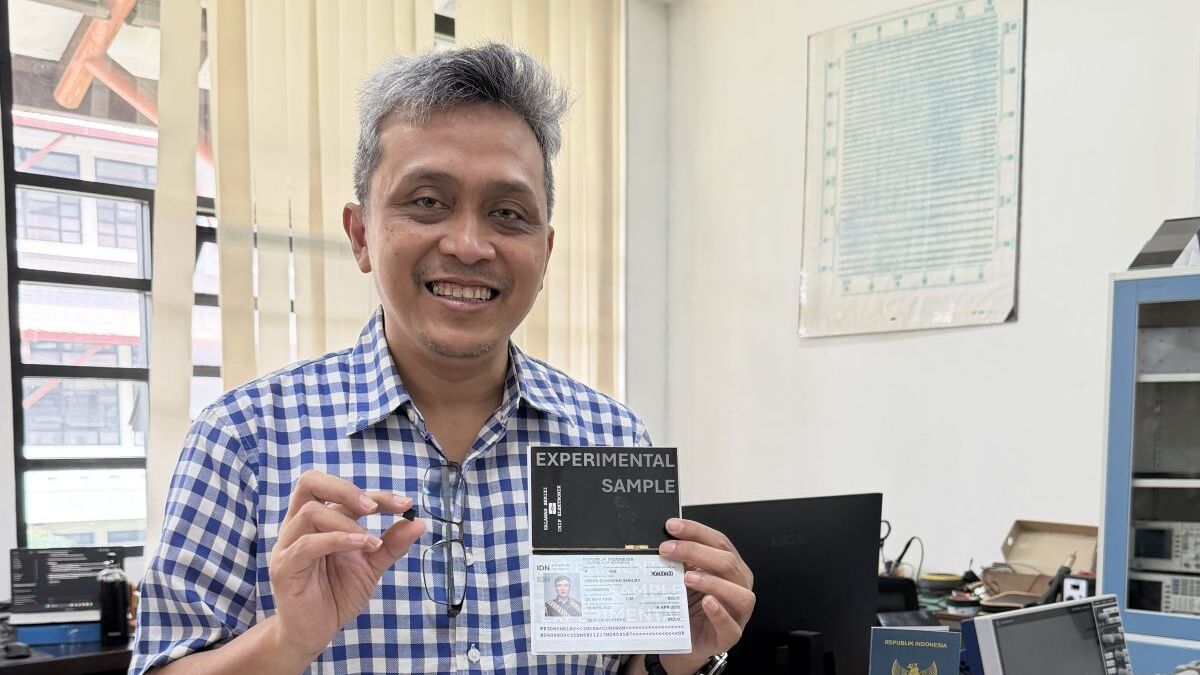
- PERURI and Institut Teknologi Bandung developed Chip Merah Putih for Indonesia's electronic passport requirements.
- The prototype completed development, testing and demonstration stages in September 2026 but is not ready for mass production.
- Government and industry initiatives aim to expand chip-design skills and build a broader domestic semiconductor ecosystem.

Indonesia has officially launched its first domestically designed semiconductor chip prototype, marking a new step in the country's efforts to develop its own chip technology and reduce dependence on imported components.
The prototype, named Chip Merah Putih (Red and White Chip), was developed through a research collaboration between state-owned security printing company Perusahaan Umum Percetakan Uang Republik Indonesia (PERURI) and Institut Teknologi Bandung (ITB).
The chip was unveiled on 11 November 2026 during the Indonesian Science, Technology and Industry Convention (KSTI 2026) at Institut Teknologi Sepuluh Nopember (ITS) in Surabaya, East Java. The launch was attended by Higher Education, Science and Technology Minister Brian Yuliarto, PERURI President Director Teguh Arief Indratmoko and Institut Teknologi Bandung (ITB) Rector Tatacipta Dirgantara.
The initial design was developed for Indonesia's electronic passport (e-passport) requirements, particularly the security and electronic identity systems used in official travel documents.
The project is intended to strengthen Indonesia's domestic capabilities in semiconductor design, improve control over technology used in sensitive government documents and establish a foundation for wider industrial applications.
However, the chip remains at the prototype stage. Further technological refinement, testing and validation will be required before it can be considered ready for commercial or mass production.
PERURI announced the launch in a press statement dated 16 November, describing the project as a strategic step towards strengthening Indonesia's semiconductor capabilities and digital sovereignty.
PERURI and ITB develop chip for electronic passports
The Chip Merah Putih project began with research cooperation between PERURI and ITB to develop a semiconductor design suitable for electronic passports.
ITB conducted the research through its affiliated research and engineering company, PT LAPI ITB, with researchers and lecturers contributing to the chip's development.
According to ITB, the project was carried out over approximately one year, from 2025 to 2026. The prototype completed its development, testing and demonstration stages in September 2026.
ITB said the initiative was driven by Indonesia's dependence on imported chips for its electronic passports.
Although the country has adopted electronic passport technology, it has not previously had full domestic control over the design of the semiconductor components used in the documents.
Professor Arif Sasongko, one of the researchers involved in the project, said developing the chip locally would give Indonesian researchers greater control over its architecture and technological components.
He identified three main objectives: strengthening domestic security technology capabilities, increasing economic value through local development and creating opportunities to apply the technology to other products.
The ability to design chips domestically is particularly relevant to electronic identity documents because they contain personal information that must be protected against unauthorised access and manipulation.
ITB said the technology could potentially be adapted for electronic identity cards, electronic money and other applications requiring chip-based security systems.
Arif described the development as the first electronic passport chip of its kind designed in Indonesia.
However, he stressed that the prototype was not yet ready for mass production and would require further development to support large-scale manufacturing at competitive costs.
Chip development still requires testing and industrial validation
PERURI said the launch marked the beginning of a longer development process rather than the completion of a commercially deployable semiconductor product.
The next stages will include technological refinement, additional testing, further validation and assessments of potential applications under industry standards.
The company said the process would require continued research and development, technical expertise and cooperation between universities, government institutions and businesses.
PERURI President Director Teguh Arief Indratmoko said the project represented an expansion of the company's capabilities in digital security technology.
PERURI has spent more than five decades producing and safeguarding important state instruments and documents, including currency and security-related products.
Teguh said the company was extending that experience into semiconductor technology, particularly chips used in digital security and electronic identification systems.
He said the collaboration with ITB and other stakeholders was intended to demonstrate Indonesia's ability to develop secure and reliable strategic technologies for domestic requirements.
The company said it would continue developing the prototype in cooperation with the Ministry of Higher Education, Science and Technology, the Ministry of Industry, the Coordinating Ministry for Economic Affairs, Danantara and the State-Owned Enterprises Regulatory Agency.
It also plans to expand cooperation with technology companies, industrial operators and academic institutions.
Government calls for research to be developed into industrial products
Higher Education, Science and Technology Minister Brian Yuliarto said the collaboration between PERURI and ITB demonstrated the importance of turning university research into practical innovations that could address national requirements.
He said technological independence required strong domestic research and development capabilities.
Brian said the partnership showed how universities and industrial companies could work together to develop strategic technologies.
He expressed hope that the project would encourage the development of more domestically produced technologies to meet industrial requirements and strengthen Indonesia's technological independence.
The minister also attended the earlier launch of PERURI's Chip Merah Putih Design Sandbox on 27 July 2026.
At that event, he said the development of the semiconductor ecosystem needed to progress beyond research and design to include validation, pilot projects and mass production.
He identified electronic passports, electronic identity cards and electronic SIM cards as potential applications for domestically developed chips.
Brian also highlighted the importance of developing skilled workers to support the industry. The ministry said it had organised training for approximately 1,500 graduates to introduce them to chip design and encourage participation in the semiconductor sector.
The government's approach therefore involves developing both the technology and the workforce required to support its long-term use.
PERURI opens chip-design platform for students and researchers
Alongside the prototype, PERURI has introduced the Chip Merah Putih Sandbox, a learning and experimentation platform intended to increase access to semiconductor design.
The platform allows students, academics and technology professionals to learn about chip development, experiment with digital circuit designs and carry out testing through a web browser.
It is designed to encourage participation from universities and young technology professionals who may not otherwise have access to semiconductor development facilities.
PERURI has also introduced an online chip-design platform through its website, allowing users to explore and experiment with digital circuit design.
The initiative forms part of a broader effort to increase the number of Indonesians with skills in semiconductor engineering.
PERURI said the country faced challenges in developing its domestic semiconductor industry, particularly in the availability of chip-design capabilities and qualified specialists.
To encourage participation, the company organised Chip Hackathon 2026, which involved 98 teams, 338 university students and 41 higher education institutions.
The programme was intended to give students opportunities to work on semiconductor-related projects and gain practical experience in chip development.
PERURI said the sandbox and hackathon were part of its efforts to build a sustainable talent pipeline for the national semiconductor ecosystem.
Indonesia targets wider semiconductor industry development
The Chip Merah Putih project is part of a wider government effort to establish a domestic semiconductor industry.
Semiconductors are essential components in modern electronic equipment, including smartphones, computers, telecommunications infrastructure, vehicles, industrial machinery, data centres and defence systems.
The industry involves several stages, including integrated circuit design, wafer fabrication, assembly, packaging and testing.
Developing a chip design domestically does not automatically mean that every stage of its manufacturing can also be completed locally.
Indonesia's initial project focuses on developing domestic design capabilities, while further investment and industrial cooperation will be required to establish a more comprehensive manufacturing ecosystem.
At the launch of the Chip Merah Putih Design Sandbox in July, Deputy Industry Minister Faisol Riza said the Ministry of Industry was preparing a roadmap, business policies and measures to strengthen the domestic semiconductor ecosystem.
He identified several sectors that could benefit from semiconductor development, including electronics, telecommunications, automotive manufacturing, artificial intelligence data centres and the defence industry.
Danantara Chief Technology Officer Sigit Puji Santosa also identified three principal areas for developing the national semiconductor industry: chip design, foundry operations and packaging.
A foundry is a specialised facility that manufactures semiconductor chips based on designs developed by companies or research institutions. Packaging involves enclosing and connecting fabricated chips so they can be integrated into electronic devices.
Sigit said the development of these capabilities would require investment, regulatory support and a reliable domestic market.
The three areas are interconnected. Developing chip designs without sufficient manufacturing and packaging capabilities would limit the country's ability to establish a complete domestic semiconductor supply chain.
Indonesia faces challenges in building a complete chip manufacturing industry
Despite the launch, Indonesia still faces substantial challenges in establishing a semiconductor industry capable of competing internationally.
The development of a domestic chip prototype demonstrates the country's ability to undertake semiconductor research and design. However, industrial-scale manufacturing requires additional expertise, specialised facilities, substantial capital investment and access to advanced production technologies.
ITB has acknowledged that the Chip Merah Putih prototype is not yet ready for mass production. Further development will be needed to improve manufacturing efficiency and ensure that the technology meets industrial requirements.
The availability of skilled engineers is another challenge. Semiconductor development requires specialists in integrated circuit design, electronic engineering, materials science, fabrication processes and chip testing.
PERURI's collaboration with universities and its student development programmes are intended to address some of these requirements.
The government has also identified the need to bring together universities, state-owned enterprises, private companies and investors to establish a sustainable semiconductor ecosystem.
Chip Merah Putih could support other strategic applications
Although the initial prototype was designed for electronic passports, researchers have identified several other potential applications.
These include electronic identity cards, electronic money and security systems requiring integrated circuits capable of storing and processing sensitive information.
The technology could also provide a starting point for further research into chips for other domestic industrial applications.
ITB said developing the ability to design semiconductor components locally would allow Indonesian researchers and engineers to contribute more directly to the country's technology industry.
The university also highlighted the potential economic benefits of increasing domestic participation in chip development, as more research, engineering and design activities could be undertaken by Indonesian professionals.
PERURI said the next phase would focus on improving the prototype, conducting further tests and exploring possible applications in accordance with industry standards.
The company has not announced a timetable for commercial production or specified when the chip could be incorporated into Indonesian electronic passports.
For now, the Chip Merah Putih project represents an initial domestic achievement in semiconductor design, with further research, validation and industrial development required before it can become a commercially manufactured product.