Chinese semiconductor executive arrested in Belgium over alleged transfer of chip technology to China
A 52-year-old Chinese man has been held in Belgium since 11 May 2026 over allegations of espionage and the unlawful transfer of gallium nitride semiconductor technology to China.
- A Chinese semiconductor executive has been detained in Belgium over alleged espionage and trade-secret offences.
- Investigators are examining suspected links between BelGaN and a Chinese company producing similar gallium nitride technology.
- The suspect denies the allegations, while Belgian authorities continue investigating and seek a second suspect.

A 52-year-old Chinese man and Leuven resident was arrested at Brussels Airport on 11 May 2026 over allegations involving espionage and the unlawful transfer of valuable semiconductor technology to China.
The man was arrested before boarding a flight to Beijing, according to a statement issued by Belgium's Federal Prosecutor's Office on 7 September 2026.
The investigation is being conducted by the East Flanders Federal Judicial Police.
The suspect faces allegations including espionage, participation in a criminal organisation, misappropriation of company assets and unlawful disclosure of trade secrets.
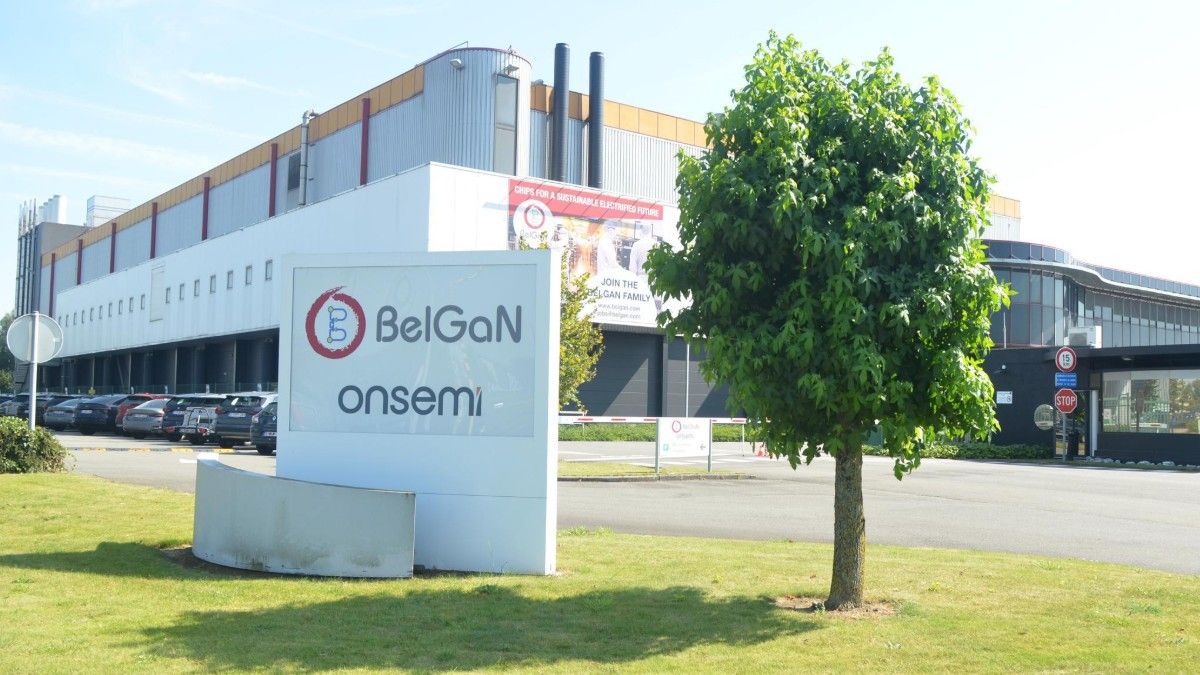
The investigation centres on BelGaN, a semiconductor company in Oudenaarde, East Flanders, which specialised in gallium nitride, or GaN, chip technology.
BelGaN's bankruptcy under investigation
BelGaN, formerly known as AMI Semiconductor and ON Semiconductor, went bankrupt in July 2024. The collapse left hundreds of workers without jobs.
Local media reported that the bankruptcy itself raised suspicions and led to a judicial investigation. BelGaN had been acquired several years earlier by a consortium of Chinese investors.
At the time of the financial difficulties, the company said it had explored additional investment opportunities but had been unable to secure a solution.
Before its closure, BelGaN was Belgium's only commercial microchip manufacturing plant and had operated from the Oudenaarde site for more than 40 years.
The site was originally established as MIETEC and became a major part of the Flemish technology industry. BelGaN was the country's last industrial chip manufacturer.
Links to a Chinese company
According to the Federal Prosecutor's Office, investigators found indications that the suspect held a senior research position at BelGaN while simultaneously serving as a director of a Chinese company involved in similar manufacturing activities.
That Chinese company was established several months after the suspect began working at BelGaN and was financed by a Chinese investment fund, prosecutors said.
The Chinese company was Gankool, which was founded in Fujian and produced technology similar to BelGaN's gallium nitride products.
According to RTBF and De Standaard, the suspect, identified as HL, was presented as Gankool's director at a conference in China in March 2023. He was reportedly a keynote speaker alongside Alan Zhou Zhen, then CEO of BelGaN.
The Chinese company was not mentioned on HL's LinkedIn profile, although his professional history was otherwise detailed. Before joining BelGaN, he had also worked for years at Imec, a major semiconductor research organisation.
Imec told Belgium media outlet VRT NWS that Belgian judicial authorities had contacted the organisation about a former employee.
"We are fully cooperating with that investigation," Imec said, adding that it could not comment further while the investigation remained ongoing.
Investigators examine alleged transfer of technology
The Federal Prosecutor's Office said searches had been carried out during the investigation. Police seized data-storage devices and electronic communications, which are now being analysed.
"The investigation could reveal the unlawful transfer abroad of specialised intellectual property and trade secrets relating to the production of gallium nitride chips," prosecutors said.
The technology has applications in electric vehicles, aviation, aerospace and military equipment. Semiconductor technology more broadly is also central to smartphones, artificial intelligence, vehicles, clean-energy systems and defence equipment.
HL has remained in pre-trial detention at Oudenaarde prison since his arrest on 11 May. A second suspect is also being sought.
The second suspect was identified by RTBF and De Standaard as Alan Zhen Zhou, the former CEO of BelGaN.
Chinese investment and 'mirror companies'
The investigation has also drawn attention to concerns about Chinese investment in technology companies and the possible use of so-called mirror companies.
Belgium's State Security service has previously warned about this practice in its latest annual report.
The report said Chinese companies can invest in smaller Belgian companies, research centres or spin-offs that possess promising technologies but face financial difficulties.
According to the report, a Chinese company may subsequently establish a separate company in China producing similar technology on a larger scale.
"China realises that it still lags behind Europe and the US technologically in some very specific areas," the report stated.
The report described closing those gaps and developing strategic technological advantages as a major priority for China's leadership.
BelGaN's acquisition by Chinese investors was announced in February 2022. Its new CEO, Alan Zhou Zhen, said at the time that he "saw an opportunity to start a GaN valley in Europe".
A few months after the takeover, Gankool was established in Fujian and began producing similar technology.
BelGaN site has new owner
The BelGaN site has since found a new industrial purpose. Thema Foundries acquired the facility and plans to produce photonic chips there.
Meanwhile, the Federal Prosecutor's Office said on 7 September 2026 that it would not provide further comment while the investigation continues.
HL disputes the allegations through his lawyer, Dimitri de Beco.
The lawyer said HL was "no longer being held on suspicion of espionage".
"Even if the facts were deemed proven, they cannot be classified as espionage," de Beco said, arguing that the case would instead concern the unlawful disclosure of trade secrets.
According to the lawyer, the allegations concern economic law and do not involve the transfer of secrets relating to national security for the benefit of a foreign state.