Bali orders three-day work-from-home policy as fuel queues persist
Bali has introduced three days of remote work and online classes from 15 to 17 October as fuel queues continue across the island, with officials blaming distribution delays and expanding emergency supply measures.
- Bali has introduced a three-day work-from-home policy and online learning to reduce mobility during persistent fuel distribution disruptions.
- Officials attribute the queues to delayed vessel unloading, adverse weather and increased demand rather than inadequate national fuel reserves.
- Pertamina has expanded deliveries, transport capacity and petrol station operating hours, while Indonesia's Ombudsman assesses the disruption's economic impact.

Bali has introduced a three-day work-from-home (WFH) policy and moved school and university classes online from 15 to 17 October to reduce mobility as fuel queues continue across the Indonesian island.
The policy, announced in a provincial government circular dated 14 October, covers government agencies, state-owned enterprises, regional government-owned companies and public and private educational institutions.
Provincial Secretary Dewa Made Indra said the measure was intended to support Pertamina's efforts to restore fuel distribution.
“This is to support the smooth supply and distribution of fuel by Pertamina in Bali,” he said, according to Indonesian news agency Antara.
Employees providing direct public services, emergency response and security are exempt and must continue working on site. Institutions must also maintain administrative operations and service standards.
Queues persist at petrol stations
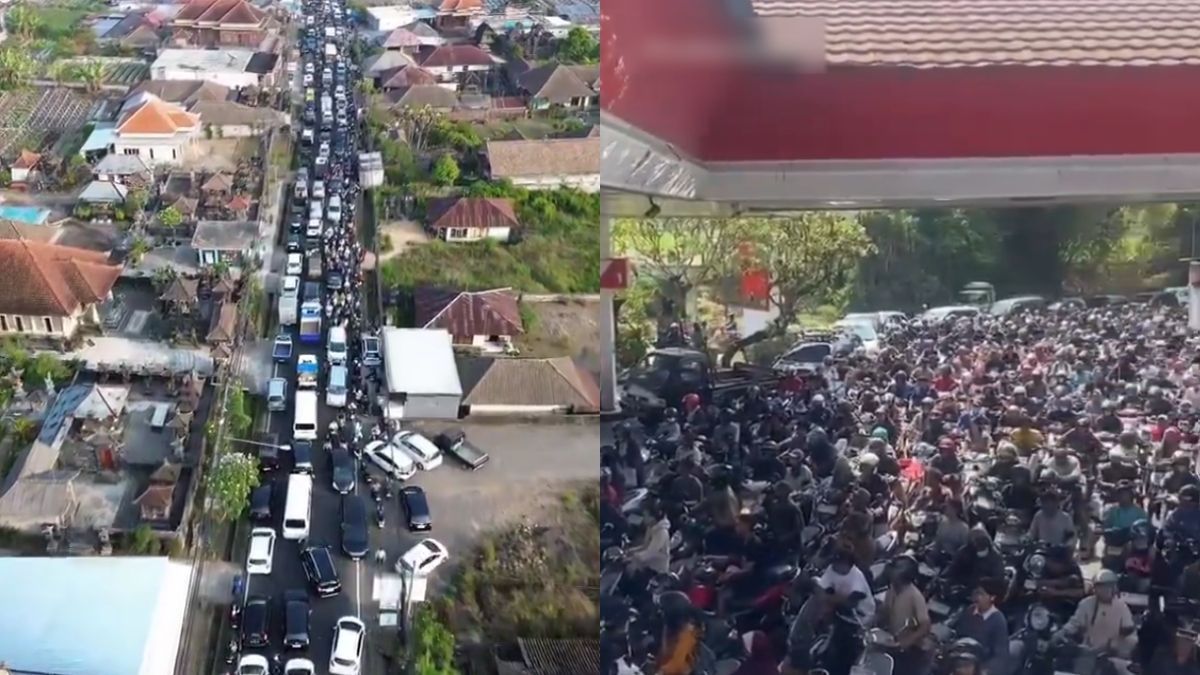
Fuel queues have been reported in Denpasar, Badung, Klungkung, Buleleng and Bangli since 11 October, with lines of vehicles at some stations extending up to one kilometre.
In Klungkung, motorists queued for Pertamax at three stations, Besang, Siku and Batu Tabih, on Tuesday after subsidised Pertalite ran out.
A woman from Bongkasa village fainted at a petrol station in Latu, Abiansemal district, Badung, at about 9am on Tuesday after waiting in a queue for hours. Police and station staff assisted her before she was taken by ambulance to Abiansemal 1 Community Health Centre.
As of 10am on Thursday, queues remained at stations in East Denpasar's Gatot Subroto area, near I Gusti Ngurah Rai International Airport in Badung, around the Sakah Statue area in Gianyar, and in Padang Kerta, Karangasem.
Vessel delays disrupt fuel distribution
Officials have attributed the queues mainly to distribution problems rather than insufficient national fuel reserves.
Pertamina President Director Simon Aloysius Mantiri apologised for the disruption in a social media post shared by Bali Governor Wayan Koster. He identified a problem during a fuel vessel's unloading process as one contributing factor.
The tanker struggled to secure its anchor, delaying unloading scheduled for 6.30am until 10pm. Adverse weather and high waves also reportedly slowed deliveries to fuel terminals.
Energy and Mineral Resources Ministry Director General of Oil and Gas Laode Sulaeman said the disruption stemmed from a delayed vessel.
“It is a distribution issue. Yesterday, there was a delay involving a vessel,” Laode said in Jakarta on Wednesday, according to Tempo.
Coordinating Minister for Downstreaming and Energy Transition Bahlil Lahadalia also said distribution could be responsible for the queues.
“National fuel stocks are not a problem. Distribution may be experiencing some disruption,” Bahlil said.
Bahlil estimated national reserves could cover 16 to 18 days of demand, while Laode put the figure at 18 to 20 days. Officials also cited increased demand for Pertalite, including motorists buying extra fuel out of concern about shortages.
Bahlil said subsidised fuel prices remained unchanged, while non-subsidised prices continued to fluctuate in line with global oil prices.
Pertamina boosts supplies and transport capacity
Pertamina Patra Niaga has deployed four additional tanker trucks from Banyuwangi, East Java, to help deliver fuel to stations experiencing delays. Each truck carries 16 kilolitres, giving the four vehicles a combined capacity of 64,000 litres per full load.
The company has also scheduled additional deliveries totalling 57.9 million litres between 14 and 17 October. The supply comprises 44.9 million litres of Pertalite and 13 million litres of Pertamax, distributed through the Manggis Fuel Terminal in Karangasem and the Sanggaran Fuel Terminal in Denpasar.
Pertamina has deployed 108 tanker trucks and 465 tanker-truck crew members. Of the vehicles, 99 are on standby and nine are being arranged through additional rentals. The personnel include 365 standby crew members and 100 workers brought in from other areas.
Both fuel terminals are operating around the clock. Pertamina has also extended operating hours, with 66 petrol stations in Denpasar and Badung reported to be open 24 hours a day.
The company is preparing reserve drivers and additional station operators, coordinating with the IX/Udayana Military Command, and providing a motorbike-based fuel delivery service for motorcycle users, subject to operational and safety requirements.
Pertamina Patra Niaga Vice President of Corporate Communication Kitty Andhora said the additional fleet would help move supplies from terminals to petrol stations more quickly.
“These efforts are being made to strengthen fuel distribution to petrol stations and support the fulfilment of public needs in various areas,” she said.
Ombudsman assesses economic impact
Indonesia's Ombudsman has asked its Bali representative to conduct a rapid assessment of the disruption and its impact on the public, member Abdul Ghoffar said on Wednesday.
The agency is particularly concerned about Bali because its economy relies heavily on tourism, which depends on transport and mobility. It has not yet calculated the economic losses or reached a final conclusion on the overall causes of the distribution problems.
Pertamina has urged residents to buy fuel according to their needs and follow official company channels for supply updates.
Despite additional deliveries, more tanker capacity and round-the-clock terminal operations, queues were still visible on Thursday morning, indicating that fuel distribution had not yet fully returned to normal.