Abdul El-Sayed wins Michigan Senate race to become first Muslim US senator
Democrat Dr Abdul El-Sayed has defeated Republican Mike Rogers in Michigan to become the first Muslim elected to the US Senate, after a bitter campaign marked by anti-Muslim attacks and a primary rival’s last-minute endorsement of his opponent.
- Dr Abdul El-Sayed defeated Republican Mike Rogers in Michigan, becoming the first Muslim elected to the US Senate.
- He withstood anti-Muslim rhetoric, heavy outside spending and primary rival Haley Stevens’ endorsement of Rogers two days before polling.
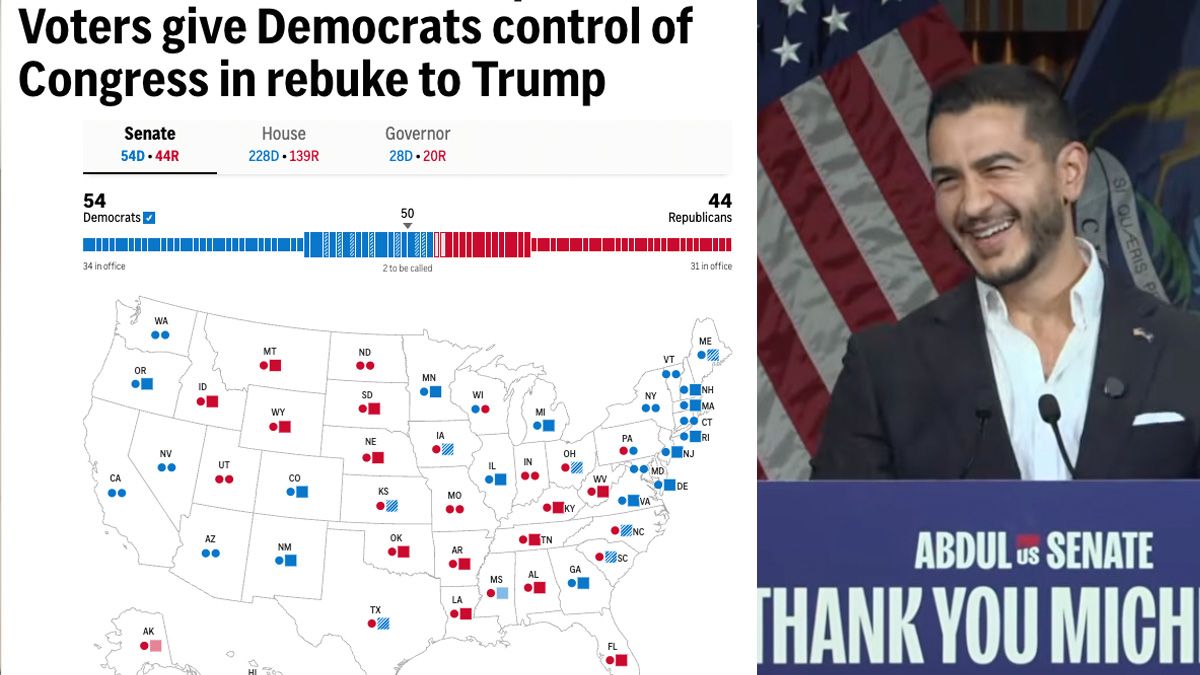
- The win adds to a Democratic Senate majority secured with surprise victories in Texas, Kansas and South Carolina.

Democrat Dr Abdul El-Sayed has defeated Republican Mike Rogers in Michigan’s US Senate race, becoming the first Muslim elected to the chamber in the country’s history.
The Associated Press reported that El-Sayed held 52.4% of the votes counted against 45.6% for Rogers at about 5.30am Eastern Time on 4 November 2026.
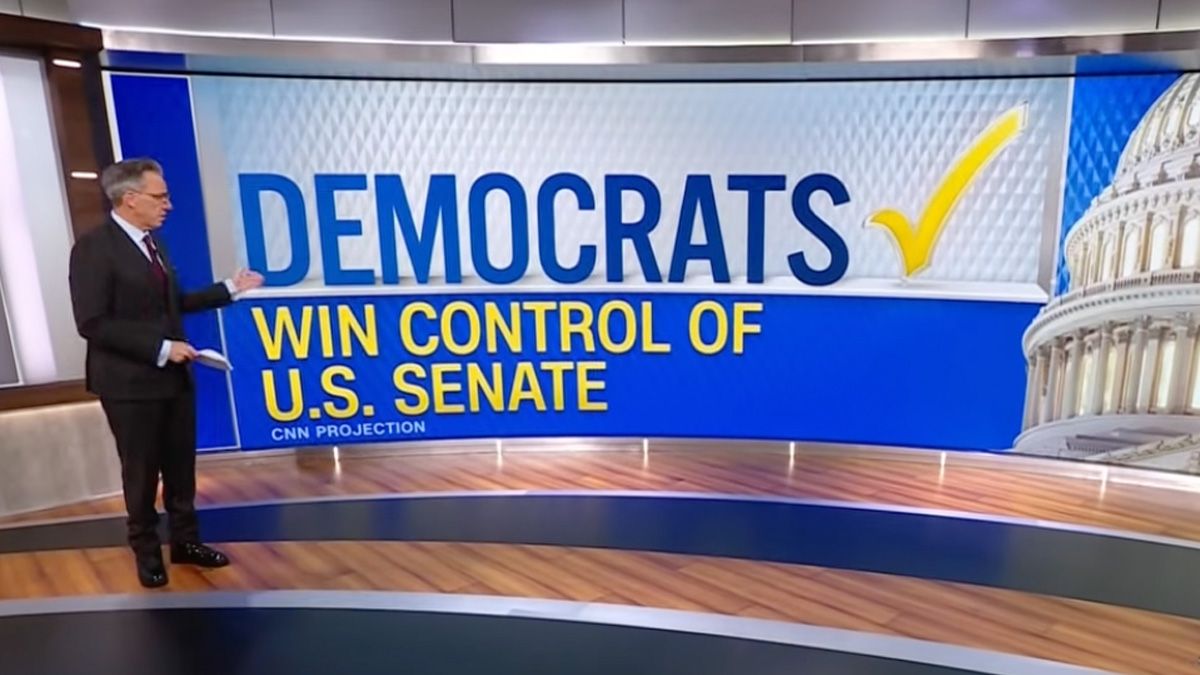
The result adds to a decisive Democratic majority in the Senate. The party took control of the chamber on election night with surprise victories in Texas, Kansas and South Carolina.
El-Sayed, 42, will succeed retiring Democratic Senator Gary Peters. Peters was first elected in 2014, announced in January 2025 that he would not seek re-election, and will complete his second term on 3 January 2027.
The contest was widely viewed as a test of whether a progressive insurgent could win a swing state. Analysts considered it one of the tightest races in the midterm elections.
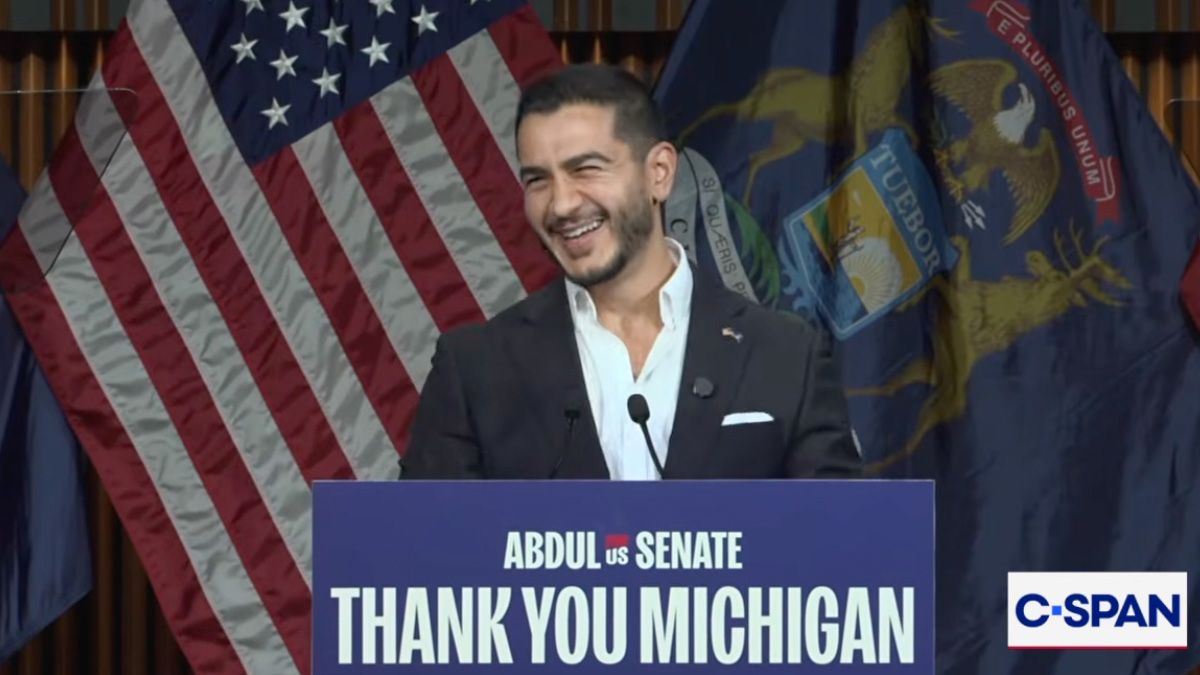
Victory speech in Detroit
El-Sayed declared victory in Detroit early on 4 November. Supporters chanted his name and raised their phones to record the moment, with several people in the crowd embracing.
“Michigan, we did it!” he told the crowd. He later thanked supporters for backing “the unlikeliest of candidates”, saying the win belonged to them.
He joined his wife, Dr Sarah Jukaku, on stage. He credited a movement built over a year and a half of campaigning in Michigan’s largest cities and smallest towns.
Supporters repeated his slogan back to him: “Money out of politics, money in your pocket and Medicare for all.”
Addressing his critics, El-Sayed said: “They want an America that is too small for some of us. We know that America is big enough for all of us.”
He also directed a remark at Vice-President JD Vance: “JD, habibi, there is this delicious irony in the fact that you’re constitutionally obligated to swear me in January.”
The BBC reported that he used the Arabic phrase for “praise be to God” during his speech, then told “the rightwing ops” what it meant.
Attacks on faith and identity
President Donald Trump and his allies led a well-funded campaign of anti-Muslim rhetoric against El-Sayed, casting him as “dangerous” and questioning his loyalty.
Trump called El-Sayed a “communist” and a “jihadist”, alleged that he belonged to the Egyptian Muslim Brotherhood, and said he would need to pass through a metal detector to enter the Senate.
The BBC described efforts to link El-Sayed to terrorism as baseless. The Guardian characterised the campaign by his opponent and detractors, including Trump and Vance, as largely Islamophobic.
The BBC reported that Rogers also portrayed El-Sayed as a communist and criticised his stance on Israel and his Muslim faith. According to The Washington Post, Rogers argued that El-Sayed’s identity, views and policies would endanger communities and raise living costs.
In his speech, El-Sayed said his opponents had chosen division over addressing the price of petrol and groceries because they had no answer to problems he said they had created.
The BBC reported that he described the campaign against him as one of the ugliest seen in his supporters’ lifetimes.
Stevens’ late endorsement of Rogers
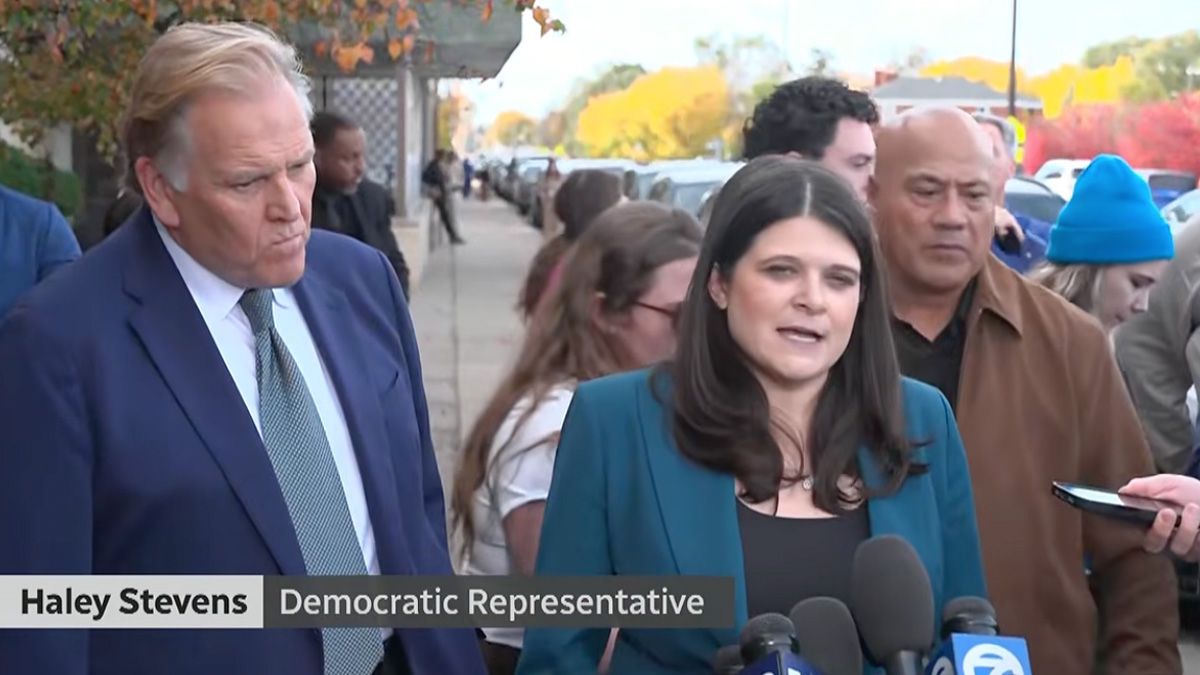
The final days of the race were dominated by Representative Haley Stevens, whom El-Sayed defeated in the August Democratic primary. She crossed party lines to endorse Rogers on 1 November 2026, two days before the election.
Stevens had initially endorsed El-Sayed after the primary. She told CNN’s Anderson Cooper she changed her mind after asking him to apologise for comments about Israel.
She also said she had called on him to condemn what she described as an antisemitic advertisement from an outside group. The Washington Post reported that she cited his criticism of Israel and a personal conflict with him.
In a statement on 30 October 2026, El-Sayed said Stevens “seems intent on relitigating a primary that ended three months ago”, and urged a focus on defeating “Trump’s hand-picked candidate”.
Democratic leaders called the endorsement “a despicable betrayal”, and her staff reportedly resigned en masse. Some voters told the broadcaster they were confused by the move, with some questioning whether she had acted out of anger.
El-Sayed told reporters that he did not “think about Haley Stevens” and that “none of this matters”.
The Washington Post suggested that the defection might have helped him, reporting that it outraged Democrats and brought his campaign millions of dollars in donations.
Israel and campaign spending
Israel and the war in Gaza became a central dividing line. The BBC reported that El-Sayed, the son of Egyptian immigrants, described Israel’s actions in Gaza as genocide and called for an end to US aid to the country.
The issue carries particular weight in Michigan, which has the second-largest Arab-American population in the US, according to the BBC.
The Washington Post reported that his position on ending taxpayer support for Israel’s military drew sharp and sustained criticism from Jewish Democrats, while winning support among progressives.
In his victory speech, he said: “We want our taxes spent here, for schools here, and healthcare here, and infrastructure here. We don’t want our money sent to do apartheid, or genocide, or war.”
The Guardian reported that the American Israel Public Affairs Committee (Aipac), through its super PAC United Democracy Project, spent about US$30 million in the primary trying to stop him, a record for a single race.
Citing AdImpact, the newspaper said both parties had poured more than US$220 million into general election advertising by mid-October.
El-Sayed also drew some backlash for campaigning during the primary with Hasan Piker, a Twitch streamer who, The Washington Post noted, has made controversial comments about the 11 September attacks and Hamas.
Competing economic platforms
Both candidates argued that economic concerns were central to the race, but offered sharply different solutions.
El-Sayed campaigned on universal healthcare through Medicare for All, a tax on billionaires, breaking up monopolies, ending foreign wars and campaign finance reform. People reported that his platform also aimed to lower everyday costs and improve access to housing.
The Washington Post reported that he took this message of economic populism even to deeply Republican parts of Michigan. It added that his combative style and vow to upend Washington politics had unsettled many within his own party.
He campaigned alongside Senator Bernie Sanders and Representative Alexandria Ocasio-Cortez, according to the BBC.
Rogers proposed tax cuts for working families, a pledge to restore manufacturing jobs, a petrol tax holiday and woodwork classes in high schools. He said his relationship with Trump would help end the tariff war with Canada.
The Guardian reported that Rogers had backed Trump’s tariff policy and the war with Iran, before breaking with the president on both in the closing weeks. He called for an end to the US-Canada trade war and a swift conclusion to the conflict.
The newspaper also noted that he had opposed the Affordable Care Act, defended the administration’s immigration enforcement and repeated Trump’s false claims about the 2020 election.
Polling before the vote
Republicans sought to portray El-Sayed as too left-wing for a swing state. Michigan voted for Joe Biden in 2020 and for Trump in 2024.
A Fox News poll in August found that 54% of Michigan voters considered El-Sayed’s positions too extreme, The Guardian reported, while 51% said Rogers was too close to Trump.
People reported that a Mitchell Research & Communications poll for CBS Detroit, published on 1 October 2026, put El-Sayed at 45.6% and Rogers at 41.4%, with a margin of error of 3.8%.
Supporters describe a milestone
The BBC described the result as a milestone for Muslim Americans, coming amid rising Islamophobia nationwide.
Roula Allouch, an Arab American Muslim, told the BBC she had goosebumps. “I’m proud of Abdul, the campaign that he ran, his family for their perseverance through all the hate,” she said.
Another Muslim woman in the crowd told the broadcaster that the win made her community feel it could “stand a little taller”.
A South Asian Muslim supporter, celebrating with family from Chicago, said the moment was historic for those made to feel they do not belong in America. “If someone with the name of Abdul can make it, that means this next generation can look up and say that they can too,” she said.
Candidates’ backgrounds
El-Sayed was born in Michigan and is a physician and epidemiologist. He previously led the Detroit and Wayne County health departments, according to The Washington Post.
The BBC noted that he belongs to a generation of Arab Americans and Muslims born in the US to immigrant parents who grew up in post-9/11 America.
Rogers, 63, is an Army veteran, former FBI agent and former state senator. He represented Michigan’s 8th Congressional District from 2001 to 2015 and chaired the House intelligence committee.
He lost the 2024 Senate race to Elissa Slotkin by roughly 0.3 percentage points, The Guardian reported.
Trump endorsed Rogers as a “Great American Patriot” who would “never let you down”, according to People.
Before polling day, Republicans controlled the House of Representatives, the Senate and the presidency. People reported that all 435 House seats and 33 Senate seats were on the ballot.
Democrats needed to flip four Senate seats to gain an effective majority, with two independents often counted alongside them. They needed three more House seats, in races complicated by Republican-backed redistricting.