Joshua Wong jailed for 10 more years for foreign collusion under national security law
Hong Kong democracy activist Joshua Wong has been sentenced to a further 10 years in prison for conspiring to collude with foreign forces, keeping him behind bars until late 2036. He had been due for release in January 2027 after serving a subversion sentence under the same national security law.
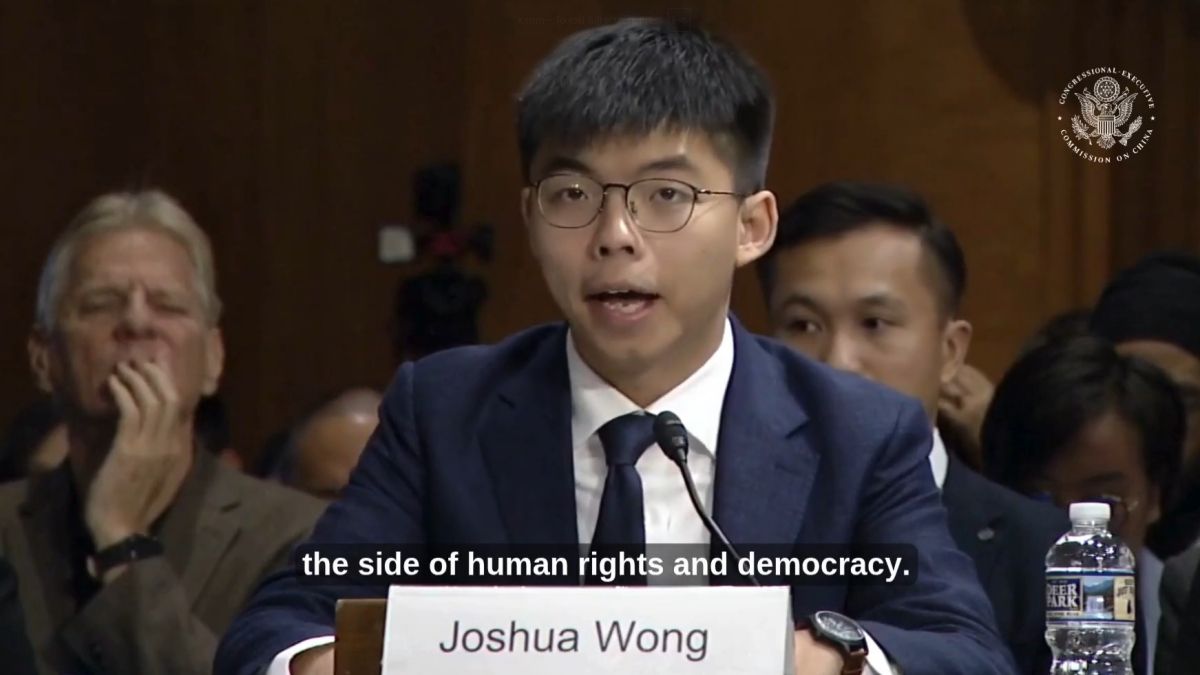
- Joshua Wong received 10 more years for foreign collusion, delaying his release from January 2027 to late 2036.
- The judge set a 13-year starting point, then reduced it to 10 years for Wong’s guilty plea.
- Rights groups, Taiwan and US lawmakers condemned the sentence, while Hong Kong police welcomed it.

Hong Kong pro-democracy activist Joshua Wong was sentenced to a further 10 years in prison on 5 November 2026 for conspiring to collude with foreign forces under the Beijing-imposed National Security Law (NSL).
Wong turned 30 last month and has already spent almost six years behind bars. He had been expected to walk free in January 2027. He is now not due for release until late 2036, when he will be 40.
The sentence follows his guilty plea on 2 September 2026.
It comes on top of a term of four years and eight months for subversion, imposed under the same law in Hong Kong’s largest national security trial.
Judge names Wong and Nathan Law as “ringleaders or masterminds” of the conspiracy
Judge William Tam ruled that Wong’s offence was “of a grave nature”, which meant he could have faced life imprisonment.
Under the NSL, foreign collusion carries a prison term of three to 10 years.
Offences judged to be of a grave nature carry 10 years to life.
Judge Tam set an “appropriate starting point” of 13 years and reduced it to 10 because Wong had pleaded guilty.
The court described Wong and fellow former student leader Nathan Law as “two ringleaders or masterminds” of a conspiracy to endanger national security.
Law lives in self-imposed exile and is wanted by the Hong Kong authorities.
Prosecutors accused Wong of conspiring with Law and other “unknown” individuals between 2016 and November 2020.
They said the group urged foreign governments to sanction Hong Kong and Chinese officials while advocating Hong Kong’s “democratic self-determination”.
There was a heavy police presence outside the court.
Wong entered the dock looking calm in a blue shirt and black glasses, and nodded to his supporters.
After the sentencing, he thanked his supporters and waved to them as he left. Some wept and were heard saying: “We’ll be waiting for your release.”
In a mitigation letter to the court, Wong said he had hoped to leave prison in 2027. He said the new charge made him feel he was back at the beginning.
He wrote that his future would not be defined by what happened to him before 2020. He described his years behind bars as the “most profound lessons” of his life.
Prosecution built on lobbying for the Hong Kong Human Rights and Democracy Act
The authorities said Wong began international lobbying as early as 2016. That year he promoted the Hong Kong Human Rights and Democracy Act, a US bill allowing the President to impose sanctions in response to human rights violations in the city.
In 2019, during massive and sometimes violent pro-democracy protests, Wong joined a delegation to the United States to lobby for the bill. The bill was eventually passed.
Human Rights Watch (HRW) said the prosecution relied heavily on lobbying and media advocacy by Wong and Demosisto, the political party he co-founded in 2016. Most of this activity took place before the NSL came into force.
According to HRW, Wong started online petitions, spoke to international media and met foreign officials to draw attention to human rights abuses in Hong Kong.
He also urged governments to sanction Chinese and Hong Kong officials responsible for abuses.
He called on them to stop selling weapons to the Hong Kong police, which HRW said were used to carry out rights violations.
HRW noted that Wong had mostly stopped these activities before the NSL took effect. Demosisto disbanded on 30 June 2020, hours before the law came into force, and Wong resigned from the group.
The government nonetheless cited social media posts as evidence that the alleged conspiracy continued. In those posts, Wong said he “would not change his views” and would “continue to seek support from the international community” in a personal capacity.
The prosecution also cited Wong’s later opinion pieces and media interviews. HRW said none of these directly called for sanctions, which is the conduct the NSL specifically prohibits.
The government also cited Wong’s reposts of Law’s social media posts, which broadly called for sanctions against Chinese officials and the Hong Kong police.
Guilty plea, statutory minimum and reporting restrictions on pretrial proceedings
HRW noted that a guilty plea normally earns a one-third reduction in sentence. However, the reduction cannot take a term below the statutory minimum, which is 10 years for grave offences.
Committal proceedings are pretrial hearings at which a magistrate decides whether to send a case to a higher court.
Because reporting on Wong’s committal proceedings was restricted, the public did not learn the details of the accusations until his formal plea.
A law enacted in 2024 allows the court, on national security grounds, to deny a defendant’s right to ask for reporting restrictions to be lifted.
HRW said restricting media reporting on pretrial proceedings in national security cases lets the government “control the narrative”. The group said it also undermines the fundamental legal principle of open justice.
From Umbrella Movement leader to the only activist charged twice under the security law
Wong became one of Hong Kong’s best-known democracy activists as a teenager. In 2012 he led a mass protest against a government school curriculum that was widely seen as political indoctrination.
He became the global face of Hong Kong’s democracy movement during the 2014 Umbrella Movement. Since 2017 he has been in and out of prison over protest-related prosecutions.
Wong has been in custody since November 2020. That month he pleaded guilty to organising and inciting an unauthorised assembly linked to the 2019 citywide protests.
He later pleaded guilty on separate occasions to five further charges. They included breaking the anti-mask law, taking part in an unauthorised vigil marking the 1989 Tiananmen crackdown and breaching a court ban on disclosing a police officer’s personal information.
In January 2021, while he was serving those sentences, Wong was charged with conspiracy to commit subversion. The charge related to his part in an unofficial democratic primary held in 2020.
He was among dozens of pro-democracy figures jailed for subversion in 2024 in that case. Some of his co-defendants have been released in recent months after completing their sentences.
Wong is the only member of that group to be charged twice under the NSL. Before he could finish his existing sentences, the authorities brought the collusion charge in June 2025.
When Beijing imposed the NSL in 2020, opposition groups disbanded and activists fled the city. At the time, Wong vowed to “continue to defend my home - Hong Kong - until they silence me”.
Pro-democracy tycoon Jimmy Lai, founder of the now-defunct Apple Daily newspaper, was sentenced to 20 years under the same law in February.
Before the sentencing, Prof Steve Tsang, director of the China Institute at SOAS University of London, told AFP that Wong’s fate showed Beijing “is keeping a tight rein over Hong Kong”.
Prof Tsang added that there was “no scope for turning back to the more relaxed days before 2019”.
Rights groups, Taiwan and US lawmakers condemn sentence as Hong Kong police welcome it
Chief Superintendent Steve Li of the police National Security Department welcomed the sentence. He said it “evidently proved” that Wong’s efforts to rouse foreign sanctions were “futile”.
“The harsh sentence on baseless charges against Joshua Wong is cruel and unjust,” said Elaine Pearson, Asia director at HRW.
“Young people promoting social change are an asset for any vibrant society, but the Hong Kong government puts them behind bars,” Pearson added.
HRW said the Hong Kong government appeared to be stacking charges against influential pro-democracy leaders to keep them in detention for longer, while reducing the chance of an international outcry.
The group named Lai and veteran democracy activists Lee Cheuk-yan and Albert Ho as other prominent figures who had faced similar tactics.
HRW called on the Hong Kong government to release Wong immediately and unconditionally.
It urged foreign governments to impose targeted sanctions on officials responsible for “Hong Kong’s growing repression”.
“Beijing has paid no real price for its increasing repression in Hong Kong,” Pearson said. She urged concerned governments to review their relationship with China more broadly.
Taiwan’s top body for China policy condemned the “endless political persecution” of Hong Kong pro-democracy activists.
It accused Beijing and the Hong Kong government of using “authoritarian tools” to “fabricate charges”.
Megan Khoo, policy and advocacy director of Hong Kong Watch, called the case “a clear example of the weaponisation” of the NSL to criminalise dissent and prolong the imprisonment of activists indefinitely.
Khoo said Wong had already spent more than 2,100 days behind bars for advocating freedom and democracy. She urged international governments to press for his immediate and unconditional release.
Frances Hui, policy and advocacy manager at the Committee for Freedom in Hong Kong Foundation, called it “a gross abuse of ‘justice’” to arrest an imprisoned man again “to ensure he never gets out”.
Hui said the timing was significant because the sentencing came soon after the US elections and after global financial executives had left Hong Kong.
She accused the authorities of trying to “bury this case in the headlines”.
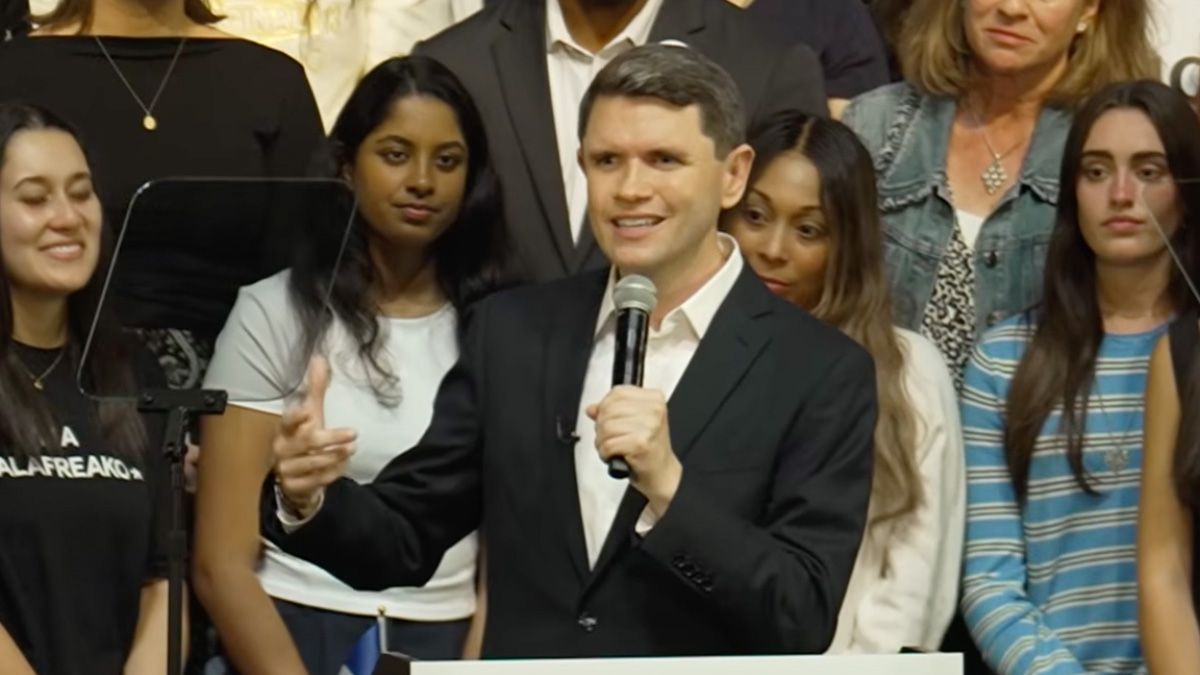
US Representative John Moolenaar, chairman of the House Select Committee on the Chinese Communist Party, called Wong “a hero who has stood up to an authoritarian superpower”.
Moolenaar said Wong had pleaded guilty only because of “the CCP’s systematic erosion of Hong Kong’s judicial independence”. He called for Wong to be released immediately and reunited with his family.