UK confirms Wu Chi-wai will not be deported despite Hong Kong conviction
Britain's immigration minister has confirmed that former Hong Kong opposition leader Wu Chi-wai will not be deported, following weeks of uncertainty after he was initially refused entry at Heathrow Airport.

- UK minister confirms Wu Chi-wai granted permission to enter, will not be deported
- Wu initially refused entry at Heathrow before rights advocates intervened publicly
- Case tied to 2020 Hong Kong opposition primary and national security law conviction

Former Hong Kong opposition leader Wu Chi-wai will not be deported from the United Kingdom, the British immigration minister has confirmed, resolving weeks of uncertainty over his attempt to settle in the country.
In a written reply on Thursday to former Hong Kong governor Chris Patten, UK Minister for Migration and Citizenship Jo White said Wu had been granted permission to enter the UK and was not facing deportation or removal.
White stressed that overseas convictions should not automatically disqualify applicants under the British National (Overseas) (BN(O)) route, which allows eligible Hongkongers and their dependents to live, work and study in Britain.
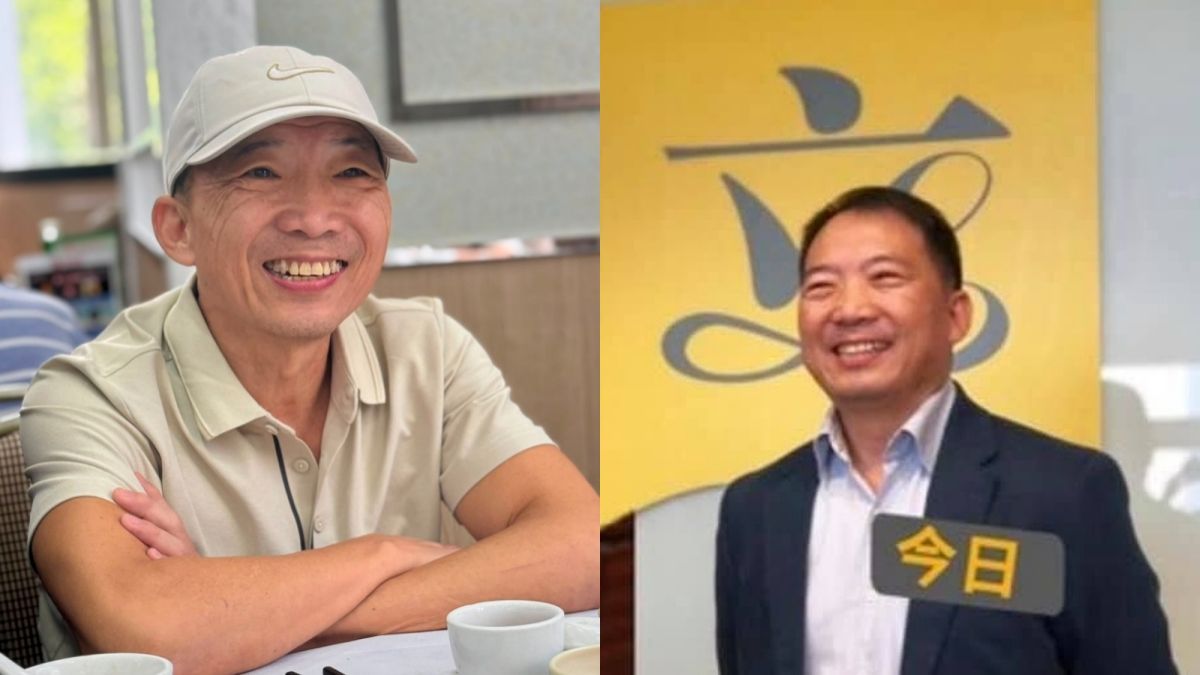
Wu, 63, a former social worker and ex-Legislative Councillor who chaired the now-defunct Democratic Party, was released from a Hong Kong prison on 30 June 2026 after serving four years and five months.
His sentence followed a conviction for conspiracy to commit subversion, linked to his role in organising an unofficial primary election held by Hong Kong's opposition camp in July 2020.
Wu was among 45 people convicted in the case, widely known as the Hong Kong 47 trial, while two others were acquitted. Legal scholar Benny Tai received the longest sentence, of 10 years.
He became the 20th defendant in the case to complete a prison sentence, and pleaded guilty after being charged.
Detained on arrival at Heathrow
Wu's difficulties began when he arrived at London Heathrow Airport on a BN(O) passport. According to The Times, which cited Paul Harris, a former chair of the Hong Kong Bar Association, immigration officers initially told Wu his passport would be confiscated and that he would be deported to Hong Kong within seven days.
He was detained for around 10 hours before being granted temporary admission, first for seven days and later extended to six months as a visitor, following public intervention by rights advocates including Patten.
A Home Office spokesperson told Hong Kong Free Press the government remained supportive of the Hong Kong community in Britain, though it did not routinely comment on individual cases.
Hong Kong Free Press reported, citing sources familiar with the matter, that the delay stemmed from an administrative issue relating to Wu's paperwork rather than his political background or legal status in Hong Kong.
Patten wrote to the government urging the Home Office to issue guidance to caseworkers and border officers on handling cases involving political persecution, to prevent applicants being unfairly excluded from the BN(O) scheme.
In her reply, White said standard immigration rules on criminality still applied to BN(O) applicants but that guidance allowed flexibility where overseas convictions related to offences not recognised in the UK, or carrying disproportionately higher penalties abroad.
She added that caseworkers would consider evidence where an applicant asserted their actions were politically motivated, alongside all other available evidence including relevant court findings, before reaching a decision.
Without naming Wu directly, White noted that individuals who entered the UK as visitors or through other routes could still apply for the BN(O) pathway from within the country, provided they met the relevant requirements.
Rights groups respond
Hong Kong Watch had earlier raised concerns over Wu's treatment at Heathrow, saying he had travelled to Britain after being advised by the British Consulate in Hong Kong that he could apply for a BN(O) visa from within the UK.
The organisation's policy director, Megan Khoo, said Wu deserved safety and dignity, and the chance to continue speaking for the people of Hong Kong from British soil after his imprisonment.
Lord Alton of Liverpool, patron of Hong Kong Watch and chair of the UK Parliament's Joint Committee on Human Rights, also called on the government to explain the circumstances of Wu's detention.
Legal and political background
The case against Wu and his co-defendants centred on the National Security Law, imposed by Beijing on 30 June 2020 following a year of anti-government protests, which criminalised secession, subversion, terrorism and collusion with foreign forces.
Hong Kong's High Court ruled that the 2020 primary election formed part of a plan to undermine, destroy or overthrow the authorities, by seeking to secure a legislative majority and repeatedly veto government budgets to force the Chief Executive's resignation.
In March 2024, Hong Kong further enacted the Safeguarding National Security Ordinance, also known as Article 23, introducing additional offences including treason, insurrection and sedition.
Hong Kong and Beijing authorities maintain the legislation restored stability after the 2019 unrest. Foreign governments, the United Nations and rights organisations have argued the laws have significantly curtailed civil liberties.
Introduced in 2021, the BN(O) scheme has drawn hundreds of thousands of Hong Kong residents to Britain, including pro-democracy activists Nathan Law and Finn Lau, both wanted by Hong Kong's national security police.