Najib's top counsel says ex-PM will serve house arrest as Malaysian MPs slam secrecy and question legal basis
Former Malaysian prime minister Najib Razak is expected to serve his remaining prison term at home, but politicians are demanding answers over undisclosed restrictions and the legal basis for the arrangement, while a separate 15-year prison sentence remains in place.
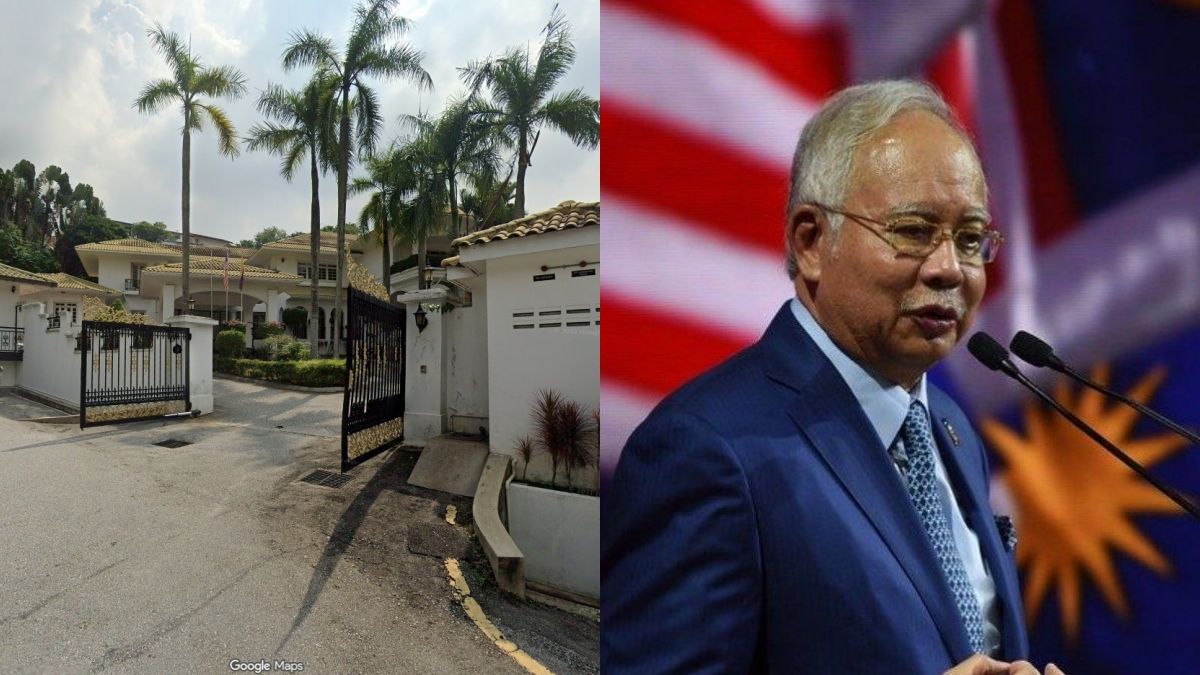
- Najib's lawyer says a royal order permits home confinement at his Kuala Lumpur residence with his family.
- Politicians are demanding disclosure of the house arrest conditions and clarification of the legal authority governing their implementation.
- The High Court rejected Najib's application to suspend a separate 15-year prison sentence over the 1MDB scandal.

KUALA LUMPUR, MALAYSIA: Former Malaysian prime minister Najib Razak is expected to serve the remainder of his current prison sentence under house arrest, but the arrangement has drawn criticism over its undisclosed conditions and uncertain legal framework.
Two politicians have separately demanded explanations from Malaysian authorities, questioning why the public cannot examine the restrictions imposed on Najib and which laws would govern his detention outside prison.
The questions emerged on 14 October 2026, when Najib's lead lawyer, Muhammad Shafee Abdullah, confirmed that his client had received a royal home confinement order detailing its conditions and implementation.
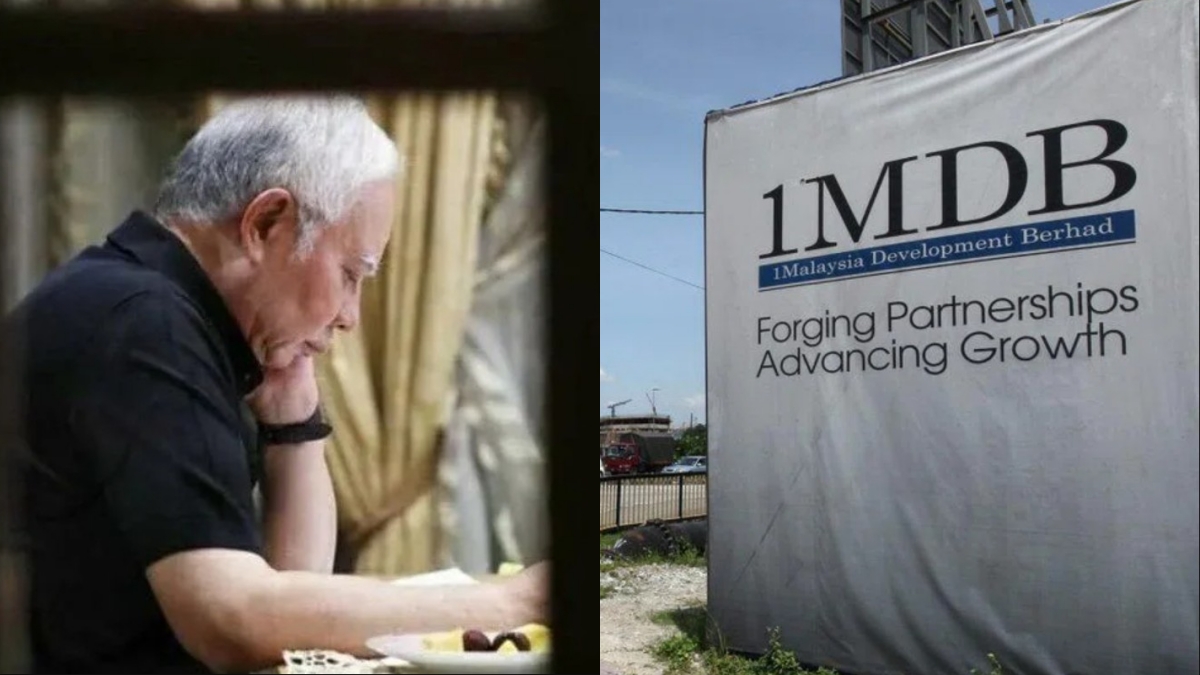
On the same day, Malaysia's High Court rejected Najib's attempt to suspend a separate 15-year prison sentence arising from the multibillion-dollar 1Malaysia Development Berhad (1MDB) corruption scandal.
Lawyer confirms Najib will serve sentence at Kuala Lumpur residence
According to The Edge Malaysia, Shafee told reporters after High Court proceedings on Wednesday that Najib had received the home confinement order from Malaysia's King, Sultan Ibrahim Sultan Iskandar.
The order reportedly includes an appendix setting out the conditions and procedures governing Najib's detention at home.
Shafee said the Malaysian Prisons Department had advised Najib against disclosing those details to prevent speculation among the public and media.
He confirmed that Najib would serve his remaining sentence at his residence in Langgak Duta, an affluent residential area of Kuala Lumpur, where he would be permitted to live with his family.
Najib has been imprisoned at Kajang Prison, near Kuala Lumpur, since 23 August 2022, after Malaysia's Federal Court upheld his corruption conviction involving SRC International, a former subsidiary of 1MDB.
On 18 September 2026, Sultan Ibrahim granted Najib a conditional royal pardon allowing him to serve the remainder of his existing six-year sentence under home confinement until 23 August 2028.
The decision, made at the 64th meeting of the Federal Territories Pardons Board, requires Najib to pay a RM50 million (approximately US$12.2 million) fine.
Najib's political party, the United Malays National Organisation (UMNO), has launched a fundraising campaign to help pay the fine.
Opposition MP demands disclosure of house arrest restrictions
Kepong Member of Parliament Lim Lip Eng, from the Democratic Action Party (DAP), criticised the Prisons Department's reported advice against disclosing the conditions.
Lim described the secrecy as "ridiculous", arguing that the restrictions imposed on Najib were not official secrets and should be made available for public scrutiny.
He warned that withholding the information would encourage further speculation about whether Najib would face meaningful restrictions while serving his sentence outside prison.
Lim raised questions about who would be permitted to visit Najib and whether the former prime minister could access communication devices and entertainment.
"Who is allowed to visit him? Can he use his phone, the internet and social media? What about watching television or other forms of entertainment and receiving guests?" he asked.
He also questioned whether Najib would be required to wear an electronic monitoring device or remain under continuous closed-circuit television surveillance.
"Najib is still a prisoner. He is not yet a free man," Lim said, stressing that the arrangement remained a matter of public interest.
He argued that the conditions could establish an important reference point for future house arrest arrangements involving other convicted prisoners.
"So the people deserve to know how imprisonment will be conducted outside of prison," he said.
Lim urged the department to distinguish between genuinely sensitive security information and ordinary detention conditions that could reasonably be disclosed.
"House arrest is not a holiday at a luxury bungalow. If everything is above board, why fear publicising the conditions?" he asked.
Former MP questions legal powers behind Najib's home confinement
Separately, former Pokok Sena MP Mahfuz Omar questioned which existing laws would permit Najib's house arrest when Malaysia's proposed House Arrest Act had reportedly not been finalised.
Mahfuz referred to an earlier statement by Home Minister Saifuddin Nasution Ismail indicating that the proposed legislation remained in the drafting stage.
He said the Ministry of Home Affairs and the Prisons Department needed to explain the legal authority supporting the arrangement.
"The question is simple: what existing legal provisions, regulations, or powers are being used to implement house arrest for an offender who has been convicted and is currently serving a prison sentence?" Mahfuz asked.
His concerns followed Shafee's confirmation that the royal order specified both the location of Najib's confinement and the mechanisms governing its implementation.
Mahfuz argued that authorities must identify the relevant legal provisions if the proposed House Arrest Act had not yet come into force.
He stressed that the issue extended beyond Najib's personal circumstances because the rule of law should apply equally to every citizen.
Using the analogy of constructing a house without an approved plan, Mahfuz warned against implementing major decisions before clearly explaining their legal foundations.
"Do not build a house without a blueprint, only to scramble for one later—when questioned—to explain how the house was constructed," he said.
"Likewise, in the exercise of state power, the legal basis must be clear and capable of being explained to the public."
Mahfuz nevertheless emphasised that he respected the constitutional authority of Malaysia's King, formally known as the Yang di-Pertuan Agong, to grant pardons.
He maintained that respecting the royal pardon did not remove the government's responsibility to explain how the resulting detention arrangement would be administered.
"I respect the Yang di-Pertuan Agong's power of pardon. Yet, the public has a right to know the legal basis for its implementation," he said.
"If everything is backed by clear legal authority, then explain it to the people. The rule of law is not merely a principle we recite; it is a principle that must be upheld."
Mahfuz also referred to his own imprisonment at Kajang Prison on 8 December 2000, including his former prisoner number, 20043, when signing his media statement.
High Court rejects attempt to suspend separate 15-year prison term
The dispute over Najib's house arrest comes as he faces a separate prison sentence that could affect how long he remains in custody.
On 14 October 2026, High Court judge Noor Ruwena Md Nordin dismissed Najib's application to suspend a 15-year prison sentence and RM11.38 billion (approximately US$2.79 billion) fine pending his appeal.
The judge found that no special circumstances justified suspending the sentence.
"Therefore on final merit, the application is accordingly dismissed," she ruled.
The application concerned Najib's conviction on 26 December 2025 in a separate corruption case involving 1MDB, the Malaysian state investment fund at the centre of a major financial scandal.
In that case, then High Court judge Collin Lawrence Sequerah found Najib guilty of four counts of abuse of power and 21 counts of money laundering.
The court imposed a 15-year prison sentence, with the four imprisonment terms ordered to run concurrently, meaning they would be served at the same time rather than consecutively.
Najib was also fined RM11.38 billion. Each abuse-of-power charge carries an additional 10-year prison term if its corresponding fine remains unpaid.
Separately, the court ordered Najib to pay approximately RM2.08 billion as a recoverable sum connected to the money-laundering offences.
His additional 15-year prison sentence is scheduled to begin in August 2028, after the completion of his existing sentence in the SRC International case.
Najib's lawyers filed an appeal against the conviction on 29 December 2025.