Talarico wins Texas Senate seat despite Musk’s millions and Republican warnings
Democrat James Talarico has won a US Senate seat in Texas, the party’s first since 1988, defeating Trump-backed Ken Paxton despite more than US$200 million from Elon Musk. Some Republicans had warned for months that Paxton’s nomination could put the seat at risk.
- Talarico won with about 55 per cent, giving Democrats their first Texas Senate win since 1988.
- Musk spent over US$200 million for Paxton, while national Republican groups spent over US$281 million on ads.
- Republican leaders warned against nominating Paxton, and some prominent Republicans publicly backed Talarico.

Democrat James Talarico has won a US Senate seat in Texas, becoming the first member of his party elected to the chamber from the state since 1988. He defeated Republican state Attorney General Ken Paxton in the election on 3 November 2026.
WFAA reported Talarico on 55.08 per cent, or 5,445,121 votes, to Paxton’s 42.99 per cent, or 4,249,752 votes, as of 4 November 2026. Libertarian Ted Brown took 1.92 per cent. Counting was continuing.
The result came in a state President Donald Trump carried by nearly 14 points in 2024. Democrats had not won any statewide office in Texas since 1994, and Democrat Gina Hinojosa also won the governor’s race on the same night.
The Texas Tribune described the contest as the most expensive Senate race in US history. Talarico won despite more than US$200 million spent by Elon Musk to support Paxton, and warnings from senior Republicans that the seat could be lost.
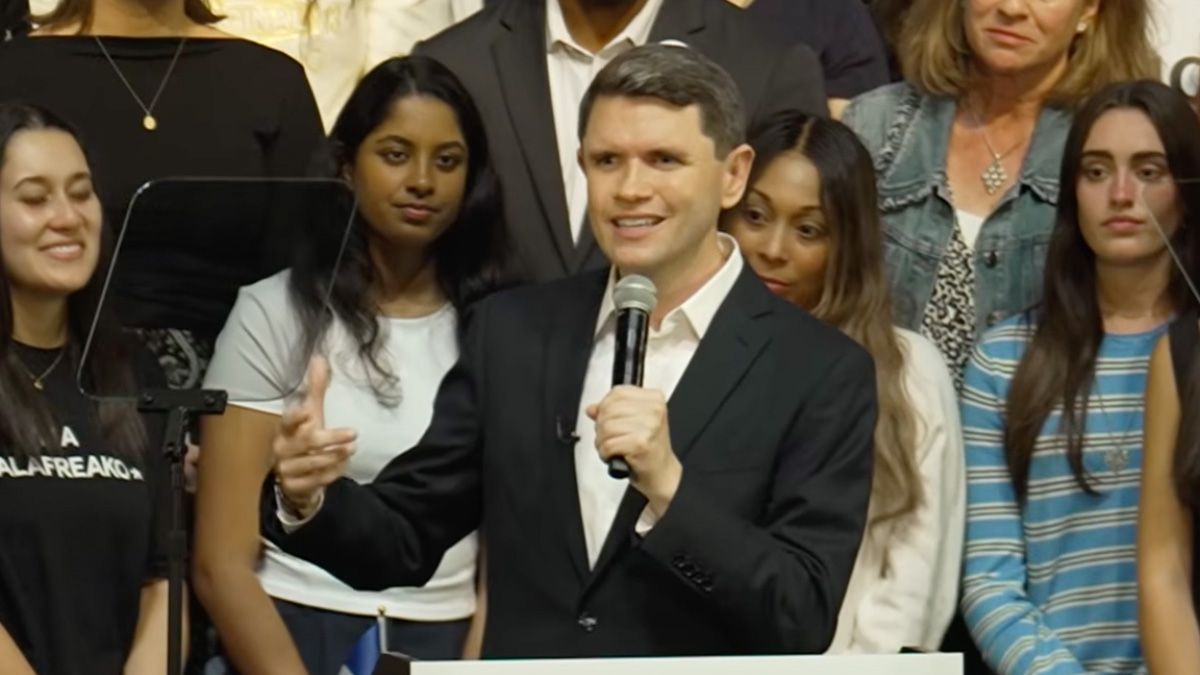
“We just took back Texas,” Talarico told supporters in Austin. Paxton conceded at about 10.20pm, according to Houston Public Media, and said he would pray for Talarico to represent Texans well.
Money from outside Texas
Fortune, citing a New York Times analysis, reported that Musk spent more than US$200 million to help elect Paxton. Mother Jones put the figure at no less than US$212 million.
According to Newsweek, federal filings showed US$158 million of Musk’s money went to the Senate Leadership Fund, the main super PAC for Senate Republicans. The fund then passed the same amount to a group called Texas PAC, the largest contributor backing Paxton.
Musk’s trust also gave US$10 million to Lone Star Liberty PAC, the main outside group supporting Paxton. Fortune reported that MAGA Inc., Trump’s main super PAC, added US$10 million, its first major outlay of the midterms.
The Texas Tribune reported that national Republican groups put in more than US$281 million for advertising, much of it attacking Talarico. Newsweek said total advertising in the race passed US$500 million. In his victory speech, Talarico said his campaign had faced more than US$300 million.
Paxton’s own campaign had far less. Quartz reported that it raised US$22 million, while Talarico raised US$145 million for his campaign, mostly from smaller donors. The Texas Tribune called Talarico the country’s most prolific fundraiser this cycle.
Talarico was not without outside help. The Texas Tribune said he benefited from a significant outside spending effort that previous Texas Democrats lacked. A super PAC also supported him during the primary, although he has criticised such groups and pledged to fight to ban them.
He made Musk’s spending part of his message. Fortune quoted him as saying: “This Senate seat doesn’t belong to Elon Musk.” It also reported an advert in which he stood before a wall of televisions playing attack adverts funded by Musk.
Musk responded on X after the defeats. “Data centers in space looking pretty appealing right now,” he wrote.
How Paxton won the nomination
Paxton’s path began with a contest against Senator John Cornyn, a four-term incumbent. In the primary on 3 March 2026, the Washington Examiner reported that Cornyn won 910,382 votes, Paxton 878,564 and Representative Wesley Hunt 293,250, forcing a runoff.
Trump endorsed Paxton on 19 May 2026, a week before the runoff, calling him a “true MAGA warrior”. He later said Cornyn had not been supportive when “times were tough”, according to reports of his statement at the time.
Paxton won the runoff on 26 May 2026 by 63.8 per cent to 36.2 per cent, according to Associated Press figures reported by the Washington Examiner. It was far wider than the roughly eight-point margin that polling averages had suggested.
The result came despite heavy spending for Cornyn. Yahoo reported in the spring that super PACs controlled by allies of Senate Republican leader John Thune had spent US$60 million trying to stop Paxton. A spokesperson for a Democratic super PAC put the total at nearly US$100 million.
The warnings
Republican concerns had been public for months. Reuters reported that the party’s Senate campaign arm warned in an internal memo that a Paxton nomination “would hand Democrats an opening to flip Texas” and divert hundreds of millions of dollars from other races.
Thune told Semafor in February 2026 that it was “a business argument”. He said US$100 million to US$200 million spent in Texas would be money unavailable for winnable races elsewhere, and told reporters that a Trump endorsement of Cornyn would be enormously helpful.
Cornyn warned that Republicans up and down the ballot could suffer if he lost. On the morning of the runoff, he told Fox News that Paxton “will be on defense the whole time” if nominated, Reuters reported.
Paxton’s team dismissed those arguments. Adviser Nick Maddux told Axios in 2025 that Cornyn’s electability case was a “tired, pathetic ploy”, noting that Paxton had won re-election in 2022 by nearly 10 points.
Asked whether Trump’s endorsement would make holding the Senate harder, Thune told CBS News that “the majority runs through a lot of different states”.
Paxton’s record was central to the concerns. The Republican-controlled Texas House impeached him in 2023 over allegations he abused his office to help a donor. The Texas Senate acquitted him on all 16 articles at trial, and Paxton has repeatedly denied wrongdoing.
Newsweek reported that a separate federal investigation ended without charges in 2024. The Texas Tribune reported that prosecutors dropped fraud charges against him after he agreed to a pretrial diversion deal.
By the final week, the alarm had become public. Senator Ted Cruz said on his podcast: “We could lose every single statewide race in Texas.” Trump told supporters: “We can’t lose the votes. It’s very close.”
After the result, Cornyn offered his congratulations to Talarico. Punchbowl News, as cited by Raw Story, had earlier quoted him as saying that he tried to warn people that he would be “a safer bet” for holding the seat.
Whether Cornyn would have held the seat is unknown. Abbott, a three-term governor who did not carry Paxton’s record, also lost on the same night.
Republicans who backed Talarico
On 10 September 2026, Talarico’s campaign launched “Republicans for Talarico” with 21 founding members, Newsweek reported. They included retired Texas Supreme Court Chief Justice Tom Phillips, former US representatives Steve Bartlett and Alan Steelman, and adviser Lionel Sosa.
Bryan Mayor Pro Tem James Edge said he would support plenty of Republicans, but could not vote for Paxton. He said Talarico was willing to “put Texas and our country first”. Jacob Smith, a former Cornyn aide, joined the Democrat’s campaign.
Bennett Ratliff, a former Republican state representative, told Spectrum News that the choice came down to integrity. “I haven’t changed. My Republican friends haven’t changed. The party has moved away from us,” he said.
Neil Bush, brother of former President George W Bush, also backed Talarico. He voiced concern about a culture in which “loyalty to an individual takes precedence over loyalty to principle”.
Former Texas House Speaker Dade Phelan, who presided when the chamber voted to impeach Paxton, told CNN that he would skip the Senate race. Drew Landry, a government professor in West Texas, said such defections gave voters “a little bit of cover”.
Republican National Committee chairman Joe Gruters dismissed talk of significant crossover support as a “pipe dream”. Polling before the vote suggested it was limited but potentially significant in a close race.
A Fox News poll in October found 90 per cent of Republicans backing Paxton. A late Marist poll put Talarico on 8 per cent of likely Republican voters, though only 6 per cent viewed him favourably. That suggests some were moved more by opposition to Paxton.
The results also pointed to change in Republican-leaning suburbs. KERA reported that Talarico won Tarrant County, once the largest urban Republican stronghold, and Paxton’s home county of Collin, where Trump took about 55 per cent in 2024.
Fox 7 Austin reported that Denton County also went for Talarico and that every county in the state shifted towards Democrats. Some of the biggest shifts came along the southern border, in areas that had backed Trump in 2024.
A candidate who reached across party lines
Talarico, a 37-year-old Presbyterian seminarian and state representative, built his campaign around the cost of living and a political system he said was corrupted by billionaire and corporate influence. “The real fight in this country isn’t left versus right,” he said.
Paxton called him the most radical Democrat ever to run in Texas, citing past remarks including that “God is nonbinary”. Trump labelled him “Talafreako”. Talarico said some of those remarks were meant to be provocative but “missed the mark”.
Trump and Vice President JD Vance headlined six campaign events in Texas after Labor Day, The Texas Tribune reported. More than 7.7 million Texans voted early, the highest midterm early-turnout rate on record in the modern era.
In his victory speech, Talarico cast the win as a David and Goliath story. “The people of Texas were my slingshot,” he said. “And tonight, we defeated Goliath.”