Hong Kong's press freedom under scrutiny: RSF challenges Chinese government's claims
Reporters Without Borders (RSF) refutes China's claim that Hong Kong's press freedom is "fully protected," detailing the detention of journalists, media shutdowns, and legal threats that depict a stark decline in media liberty.
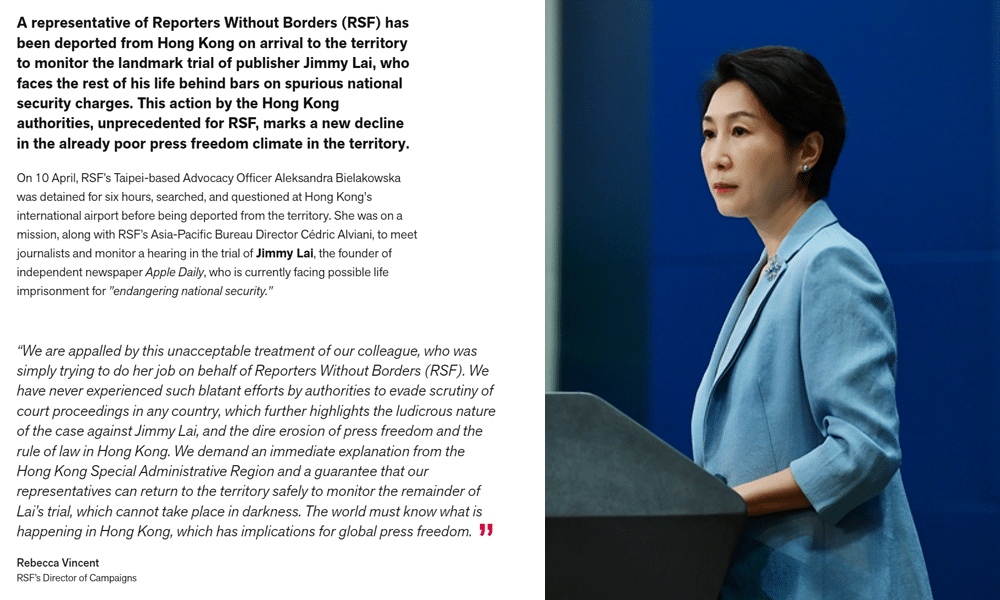

HONG KONG – During a press conference on 11 April 2024, a Chinese Foreign Ministry spokesperson, Mao Ning, asserted that press freedom in Hong Kong has been “fully protected” since the territory was handed over to China 25 years ago.
"I am not aware of the specifics you mentioned. About the freedom of press in Hong Kong, what I can tell you is that since Hong Kong’s return 26 years ago, the freedom of press and speech has been fully protected by the Basic Law of the Hong Kong SAR and other laws. Recent years have seen an increase in the numbers of international media outlets and journalists in Hong Kong. This is a fact," said Ms Mao.
This statement came in response to inquiries about the recent detention and subsequent deportation of a representative from Reporters Without Borders (RSF) at Hong Kong airport.
However, RSF, a leading advocate for journalistic freedom, contradicted these claims by presenting ten facts that paint a starkly different picture of the state of press freedom in Hong Kong.
According to RSF, the territory is experiencing a significant decline in media freedom, orchestrated by both the Chinese regime and Hong Kong authorities.
Cédric Alviani, the RSF Asia-Pacific Bureau Director, criticized the official stance as misleading.
"To claim that press freedom reigns in Hong Kong is a blatant lie that does not withstand scrutiny," he stated.
Alviani highlighted a worrying trend of crackdowns on independent journalism, including the closure of eight media outlets and the criminal prosecution of numerous journalists under state crime allegations.
Key Facts Outlined by RSF Include:
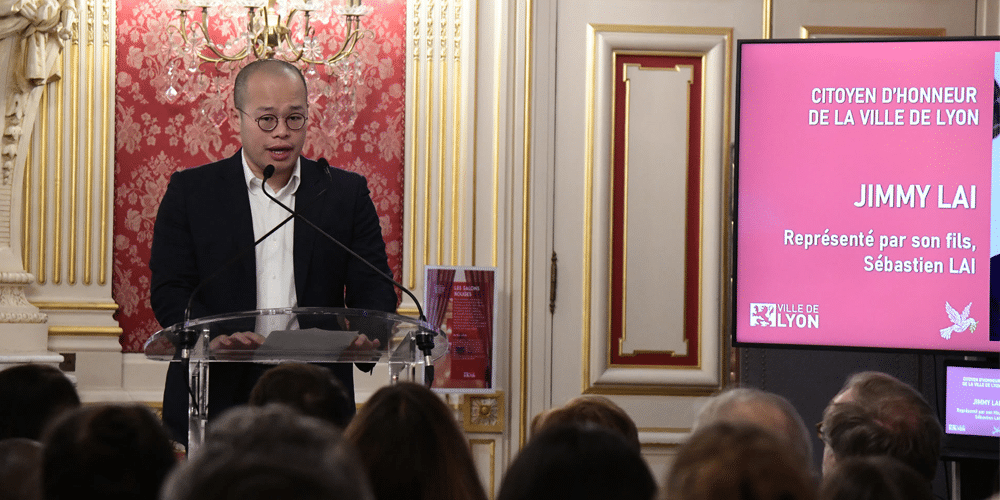
- Detentions: Ten journalists and press freedom defenders, including 2020 RSF Press Freedom Prize laureate Jimmy Lai, are currently detained under national security law charges.
- Media Shutdowns: Major outlets like Apple Daily and Stand News were shut down in 2021 amid a growing climate of fear, influencing at least five other outlets to cease operations.
- Legal Threats: The imposition of stringent national security and sedition laws threatens journalistic activity, with at least 28 journalists prosecuted since 2020.
- Accusations Against Foreign Media: In 2024 alone, the Hong Kong authorities have accused several foreign media organizations, such as the BBC and The New York Times, of publishing “misleading” content.
- Censorship at RTHK: The once-independent Radio Television Hong Kong has seen a shift towards censorship under government-appointed management since 2022.
- Harassment of Associations: Entities like the Hong Kong Journalist Association have faced harassment and financial penalties, reflecting a broader crackdown on press advocacy groups.
- Surveillance and Exile: Numerous journalists report being surveilled, and hundreds have been forced into exile, with many also losing their jobs due to media closures.
- Legal Evidence from Journalism: Articles and op-eds are being used as evidence in trials against journalists, with two editors from Stand News facing sedition charges.
- Barred Journalists: Several foreign journalists have been denied entry into Hong Kong after covering pro-democracy protests, highlighting restrictive measures on international reporters.
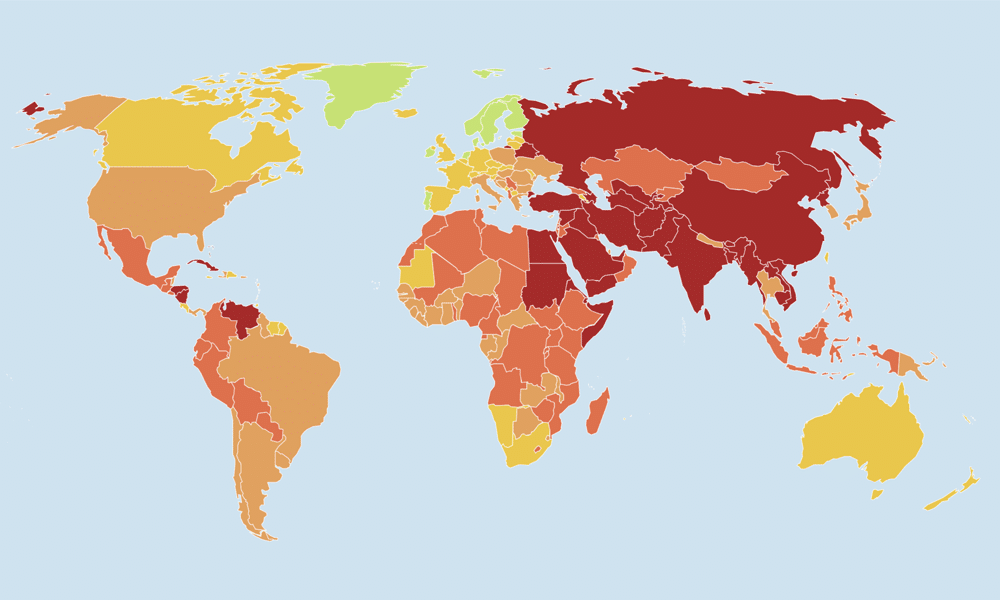
- Press Freedom Rankings: Hong Kong's position in the RSF World Press Freedom Index has dramatically fallen from 18th to 140th in two decades.
These points starkly contrast with official narratives, highlighting a troubling decline in press freedom.
Hong Kong's ranking near the bottom of global press freedom indices underscores the challenges faced by journalists in the region.
RSF continues to call on international democracies to pressure China and Hong Kong to restore true press freedom and protect journalistic integrity in the territory.