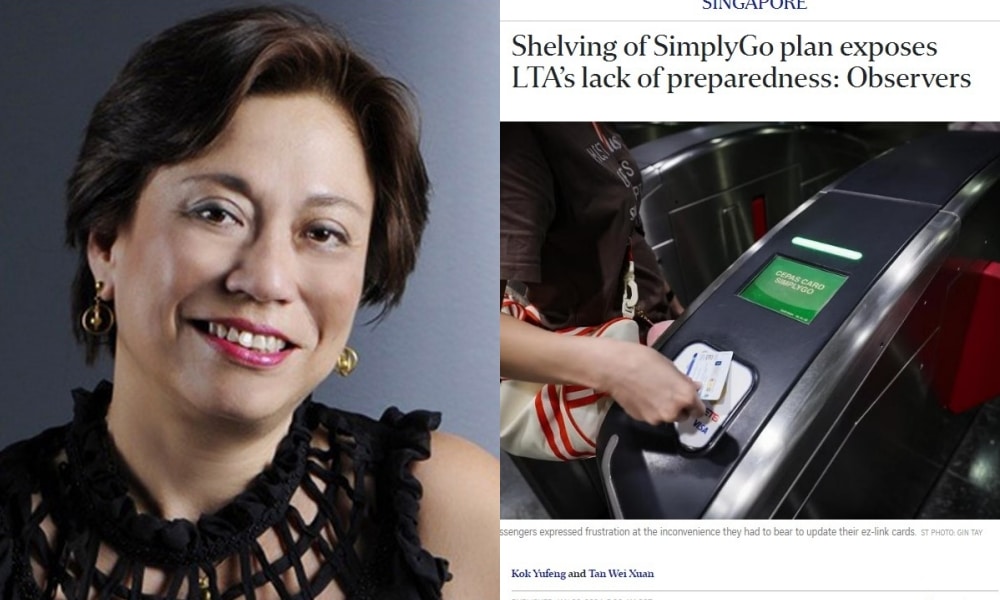
Bertha Henson critiques Singapore mainstream media and questions Government influence
Veteran journalist Bertha Henson reaffirmed her disappointment to Singapore mainstream media, and questions why one should expect the media to behave differently, especially if they are government-funded.
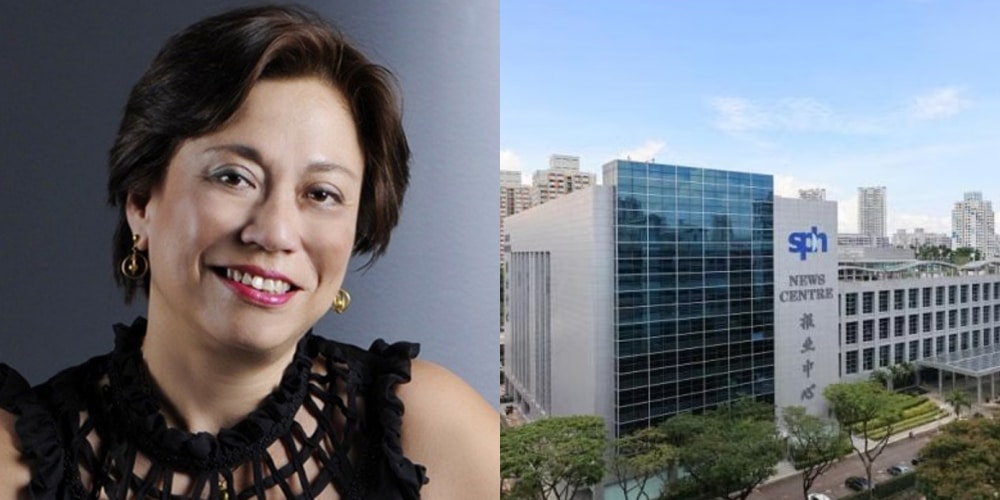

Bertha Henson, former Associate Editor of the Straits Times (ST), recently reaffirmed her disappointment with the state of journalism in Singapore, particularly after changes in the business structure of the publishing arm of Singapore Press Holdings.
Henson questions why one should expect the media to behave differently, especially if they are government-funded.
In a recent Facebook post, she emphasized one of her goals for the year: to increase readership, driven by her concern for the declining intellectual engagement of our citizens.
While critiquing the quality of reporting and the lack of local analysis in mainstream local media, she underscored the importance of local news, as international media outlets like CNN and BBC may not cover events specific to Singapore and are unlikely to report government pronouncements due to their broader audience.
"They definitely won’t run government pronouncements, not only because they don’t “do’’ propaganda but because they have a much wider audience to cater to. "
The veteran journalist conveyed her initial optimism that the restructuring at Singapore Press Holdings would enhance the quality, scope, and depth of journalism.
However, she believed that these hopes had been dashed and stated that she doesn't believe the local mainstream media (MSM), especially The Straits Times, can reverse the declining standards.
She suggested that journalists are falling short in their roles if readers are required to undertake critical thinking and analysis themselves.
Calls for punishment against MSMs and funding withdrawal
"They should be punished, funding should be pulled and so forth. The truth is, I don’t think anything will change if the powers-that-be see no need for it. "
She discussed the pervasive influence of officialdom which is so embedded in Singapore society, whether in unions, grassroots organizations, education, and business.
"This power is felt not just in the public sector, where many political leaders are drawn from. It extends to other domains as many people, companies and organisations depend on good relationships, business contracts and licences for their livelihoods or future success. "
"They see the need for a “blessing’’ from the government. So they second guess the government’s supposed ‘line’ and speak and act accordingly," she added.
Questioning the role of government in media affairs, she asked, "Why should we expect the media to behave differently, especially if they are government-funded?"
She criticized the government's role in fielding questions about the media, implying that the media should be capable of representing themselves without government intervention.
"Look at how the government is the organ fielding questions about the media as if the media are incapable of speaking for themselves!"
However, she opined that Singapore readers limited choice of reading materials if they want to be active citizens engaged in the happenings of the country.
Ms Henson calls for heightened media literacy
"The difference is that we have to be even smarter now when doing so, because the media is no longer the filter that it was in terms of making sense of the news."
Addressing the limitations faced by Singaporean readers in choosing diverse reading materials for informed citizenship, Henson stressed the importance of heightened media literacy.
"The difference is that we have to be even smarter now when doing so, because the media is no longer the filter that it was in terms of making sense of the news. "
"We need to be our own filter, treat reports as press releases and publicity pieces. We need to be critical readers instead of just critics."
Ms Henson concludes by suggesting that unless those in power recognize that the media is contributing to a decline in public intelligence, meaningful change is unlikely.
Ms Henson's satirical insights unmasking MSMs' positive spin amidst negative realities in Singapore
An earlier FB post by Ms Henson vividly exemplifies how local media portrays Singapore, underscoring the significance of her call for heightened media literacy among readers to foster critical engagement.
In the post, Ms Henson depicted how locals might perceive their city-state by consuming local media.
Her illustrations humorously pointed out the media's inclination to highlight the positive aspects of Singapore, even when delving into potentially negative issues. Ms Henson went a step further by providing insightful "translations" for each narrative presented by MSMs.
For instance, MSM tends to present a positive image of Singapore, emphasizing good news even when addressing challenging issues, such as the impact of the GST rise or rising prices.
In her post, she underscored the local media's tendency of selective presentation of statistics to downplay negative aspects, the emphasis on technological advancement and administrative efficiency.
Ms Henson mocked that published statistics are often presented incomprehensibly, leading readers to question whether they are receiving good or bad news.
Blaming 'global uncertainties' for negative events
Her post also highlighted the media often attributes negative events to 'global uncertainties', "Remember also that anything bad that happens is beyond our control, as in ‘global uncertainties’. So keep your head down and use your SkillsFuture credits. You have only yourself to blame if you don’t catch up. "
She also mocked the media's tendency to use big, reassuring words that lack substantive meaning.
"We are tired of big words thrown at us that really don’t mean anything. Repeating them doesn’t increase understanding but breeds cynicism and confusion. We want to see facts, not predictions about the future."
While the MSMs might tell readers "be grateful that politicking is confined only to a few people, and the system still works well, " Ms Henson's "translation" reminded readers that every politician engages in politicking, and the effectiveness of the system is subjective and dependent on individual perspectives.
"Whether the system still “works well’’ is a point of view and dependent on our threshold of excellence. While Parliamentary is the clearing house of all issues, it is not obvious nor always the case that people agree," she said.
Ms Henson further illustrated that the media's narrative encourages citizens to compare Singapore favourably with other struggling countries, emphasizing the idea that Singapore is doing much better and trusting the rationality of policymakers.
Breaking this narrative, she highlighted that while Singaporeans may be luckier than most, as a maturing nation, Singaporeans "want to know more about what is happening and have time to think about them."
"Instead we have to hope that our system of quick legislation is operated by well-meaning leaders and MPs who scrutinise Bills meticulously."
"While a parliamentary supermajority aids efficiency, it should not be used to “blindside’’ the people to the flaws of proposed legislation, " Ms Henson cautioned.
Preference for "safer" topics
Ms Henson also pointed out the mainstream media's preference for "safer" topics such as climate change and artificial intelligence (AI), presented in dense or incomprehensible ways.
She implied that the MSMs consciously or unconsciously avoid delving into controversial issues that could potentially disrupt the status quo or upset the public.