Ho Ching's opinion on Gaza Strip reveals extent of misconceptions surrounding the tragedy
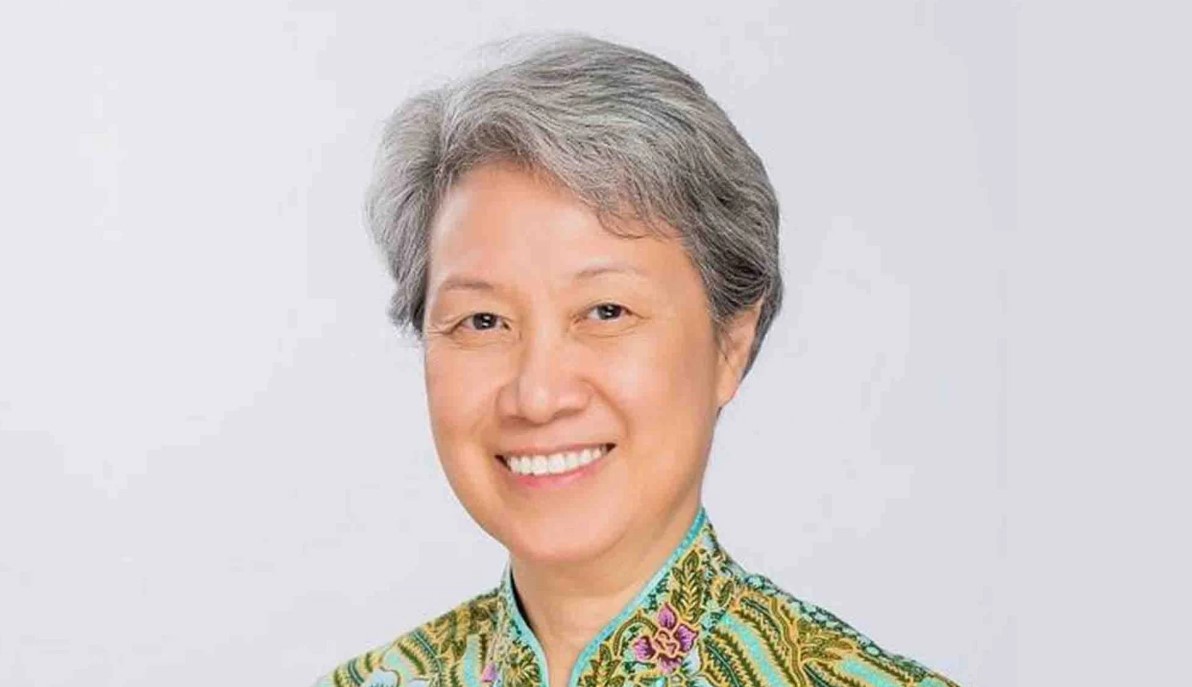
Former Temasek CEO, Madam Ho Ching's recent remarks on the Gaza crisis expose widespread misconceptions and oversimplifications of the region's profound struggles.
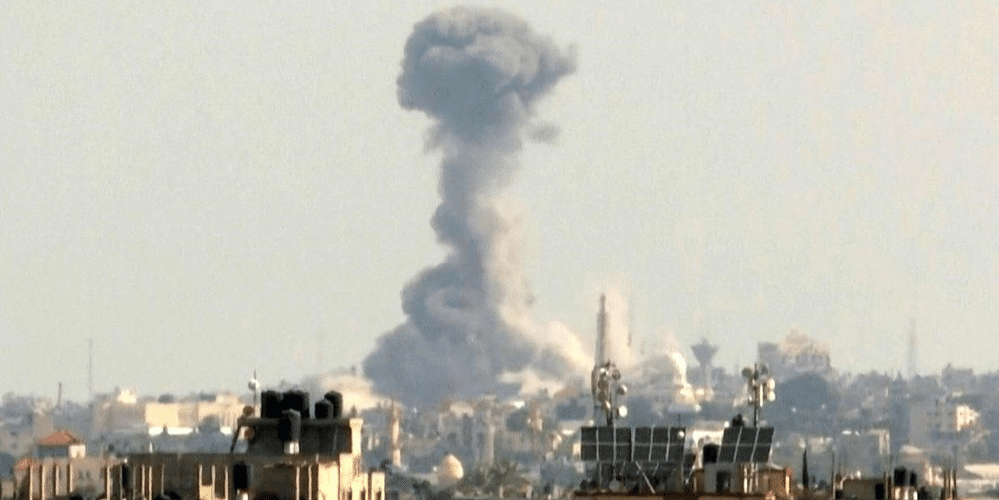

As the conflict between Israel and Hamas escalates in the Gaza Strip, a Facebook post by Madam Ho Ching, former CEO of Temasek and spouse of Prime Minister Lee Hsien Loong, has polarized opinions in the comments section.
Her commentary questioned the path taken by Gaza's leadership, juxtaposing the region's strife with Singapore's peaceful development and highlighting a contentious perspective amid the growing humanitarian crisis.
Mdm Ho wrote: "With the talents they have, Gaza could prosper like Sg, building up capabilities, getting investments, and creating good opportunities for its people, no different from Sg in the early days when Sg was poor and squalid with lots of slums. So why would a capable and well-organized group not choose the path to provide a better life and pride of place for millions of their people, instead of sending their young to murder and be mostly killed?"
Her detailed comparison sparked reactions ranging from agreement to criticism for allegedly oversimplifying a complex geopolitical crisis.
The ongoing conflict in the Gaza Strip, intensified by Hamas' "Operation Al-Aqsa Flood" on 7 October, elicited a severe Israeli military response, "Operation Swords of Iron."
Last Friday, the Israeli army ordered more than 1 million people — half of Gaza's population — to evacuate northern Gaza within 24 hours, signaling an imminent military ground operation. Though the initial deadline has passed, the directive raises profound legal and humanitarian concerns, sparking fears for civilian safety.
The operations have led to tragic losses, with current reports citing over 3,478 Palestinians and more than 1,400 Israelis killed, prompting a global outcry and a plea from UN Secretary-General Antonio Guterres for an immediate humanitarian ceasefire.
Supporters of Mdm Ho's viewpoint cite Singapore's history of racial and religious harmony, arguing that a similar focus on economic development over armed conflict could bring peace to the troubled region.
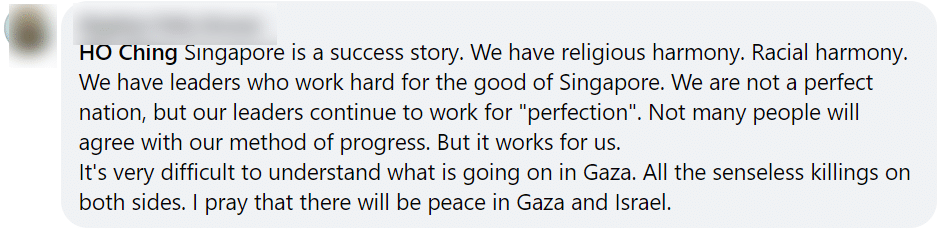
However, critics pointed out the historical and geopolitical nuances that Ho Ching allegedly overlooked, emphasizing the crippling blockade imposed by Israel and Egypt since Hamas assumed control of Gaza in 2007.
This measure by the Israeli government, aimed at preventing weapon smuggling and isolating Hamas, has significantly impaired the region's economy and the livelihoods of its residents, contributing to the dire humanitarian situation.
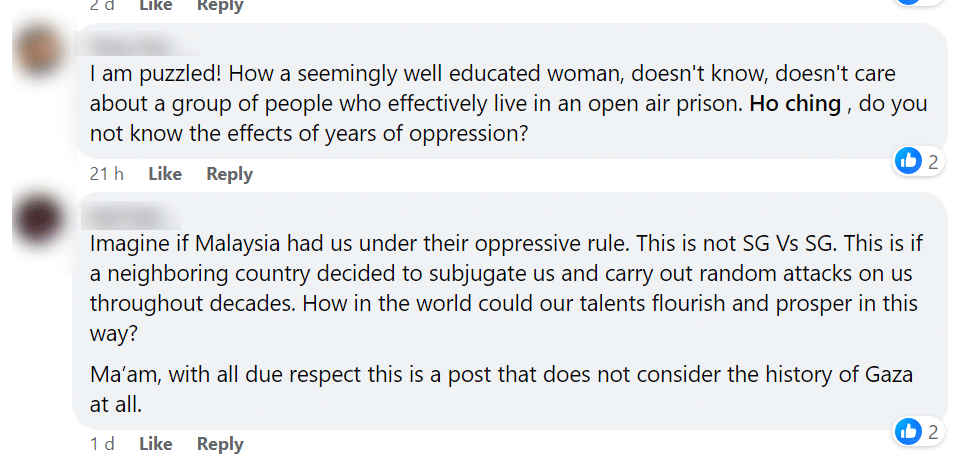
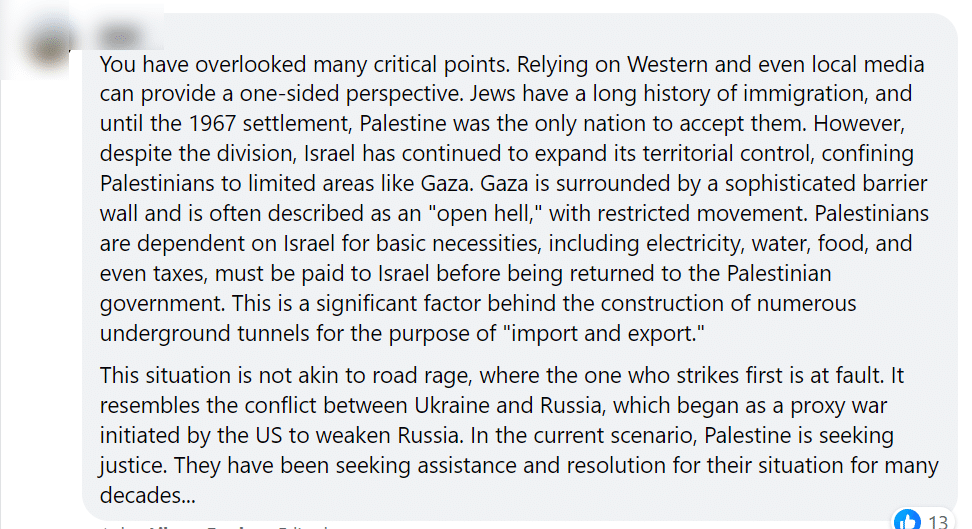
One critic elaborated, "Gaza is surrounded by a sophisticated barrier wall and is often described as an 'open-air prison,' with restricted movement. Palestinians are dependent on Israel for basic necessities, including electricity, water, and food. Even taxes must be paid to Israel before being returned to the Palestinian government."
Others brought up international treaties and events like the Balfour Declaration and Nakba (also known as the Palestinian Catastrophe), highlighting the ongoing displacement and systemic oppression faced by Palestinians.
They challenged Mdm Ho's understanding, pointing out the extensive literature on the plight of Palestinians and the extreme disparities in power in the region.
"This situation is not akin to road rage, where the one who strikes first is at fault," a respondent stressed, advocating for a broader understanding of the crisis beyond mainstream narratives.
Despite its victory in the 2006 parliamentary elections, Hamas, the so-called leaders, had forcefully wrested control of the Gaza Strip from the internationally recognized Palestinian Authority in 2007. The Palestinian Authority, led by the opposing Fatah faction, maintains governance over semi-autonomous regions within the Israeli-occupied West Bank.
Significantly, of the more than 2 million Gazans, approximately half are minors under the age of 18. With no elections held since 2006, the majority of Gazans residing in the Gaza Strip today were too young to have participated in Hamas' electoral victory and cannot be held responsible for the actions of their leaders. Moreover, it's critical to note that the Palestinians, including Hamas, do not control any of the Gaza Strip's borders, impeding economic activities as suggested by Mdm Ho.
These considerations are glaringly absent from Mdm Ho's commentary, overlooking the complex adversities and circumstances faced by Palestinians living under these constraints while living in what many have described as the world's largest open-air prison.
Amid the tragedy, Mdm Ho's comments underscore the world's divided views, shaped by misinformation and lack of information on the situation. They also serve as a reminder of the intricate dynamics at play, necessitating a compassionate and informed global response to pave the way for a sustainable resolution.