Anwar’s Taiwan remark criticised for oversimplifying China-Taiwan ties and departing from Malaysia’s policy of restraint
Prime Minister Anwar Ibrahim’s comments backing China’s claim over Taiwan and invoking force to protect national unity have drawn scrutiny in Malaysia, with debate focusing on historical complexity, peaceful resolution and strategic autonomy.
- Anwar Ibrahim reaffirmed Malaysia’s One-China position while saying force could be used to preserve national unity.
- Malaysian commentators differed over whether his remarks accurately reflected Taiwan’s complex history and Malaysia’s diplomatic tradition.
- Taiwan criticised the remarks, while China praised Anwar’s position and stressed the One-China principle.

KUALA LUMPUR, MALAYSIA:Malaysians have raised concerns over Prime Minister Anwar Ibrahim’s remarks describing Taiwan as part of China and suggesting that force could be used to preserve national unity, with debate centring on the complexity of the cross-Strait dispute and Malaysia’s traditional emphasis on restraint.
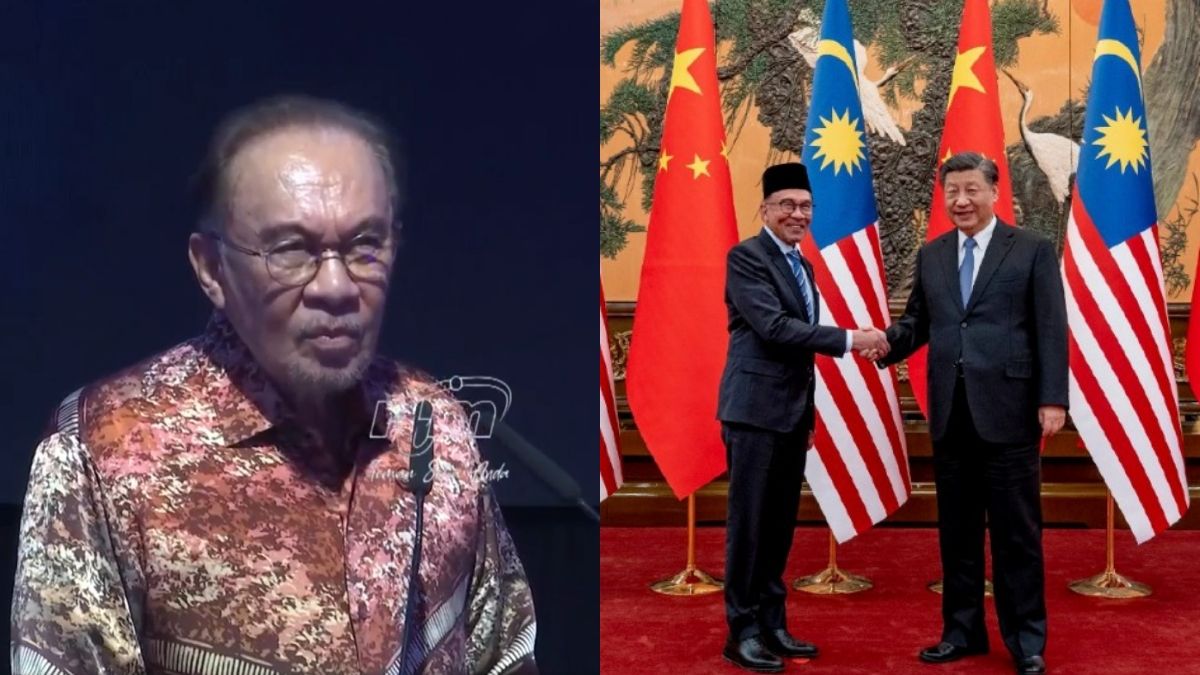
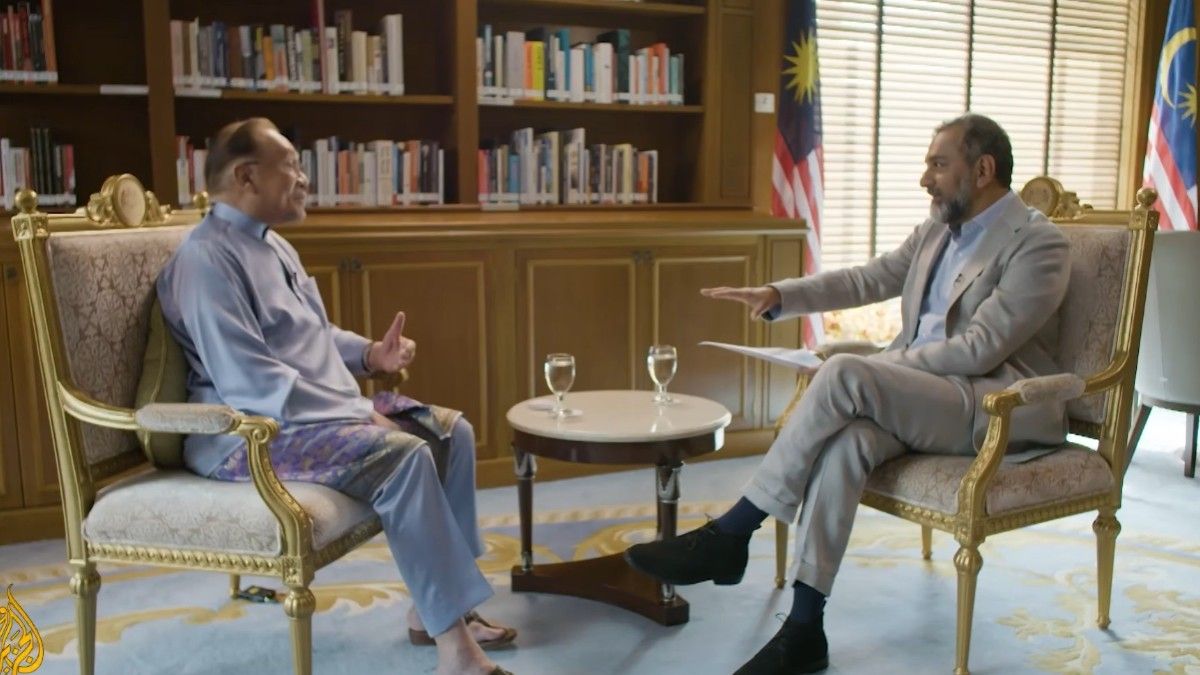
During an Al Jazeera interview published on 17 August 2026, Anwar said he regarded Taiwan as part of China and that “the Chinese have to decide”.
He rejected the idea that supporting Taiwan’s separation was compatible with preserving an independent country’s territorial integrity, and linked the dispute to colonialism and US involvement, including the Seventh Fleet.
Asked whether he would condemn China if peaceful reunification failed and Beijing used force against Taiwan, Anwar compared the issue with a Malaysian state attempting to leave the federation.
“If one province decides… to break away. Do we use force? I think I will protect the sanctity and unity of the nation,” he said.
When pressed, Anwar replied, “Yes. Because otherwise they’ll be fragmented.”
Taiwan pushes back
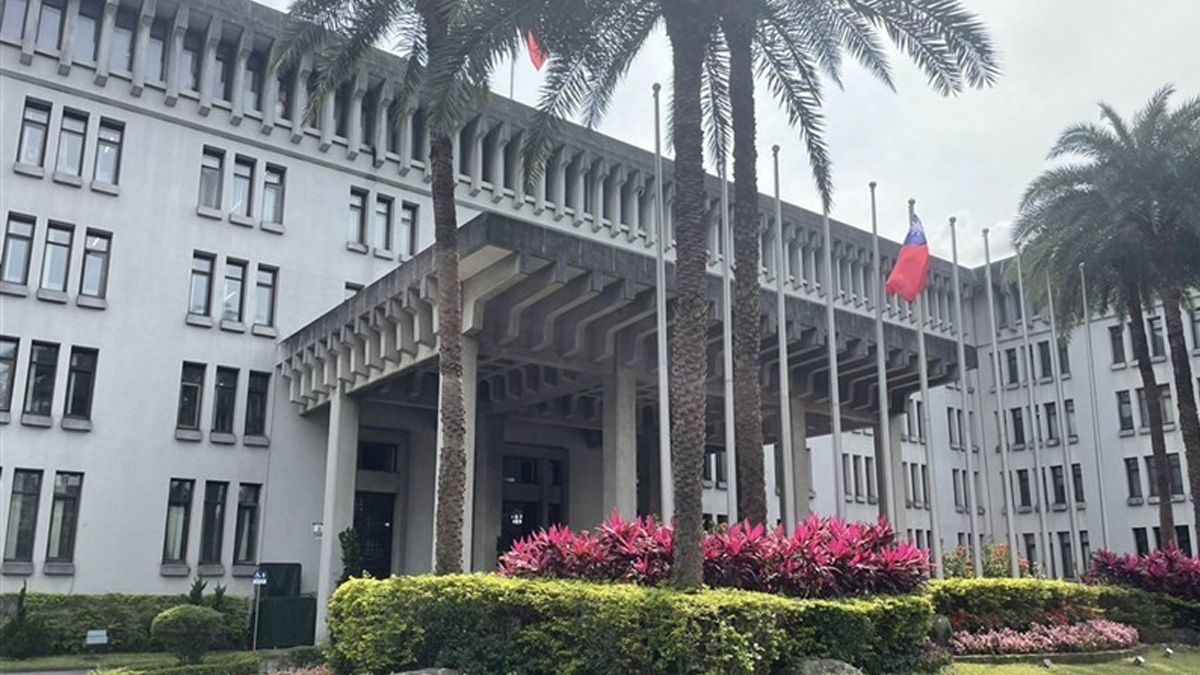
Taiwan’s Foreign Ministry subsequently criticised the remarks, saying they endorsed Beijing’s position and falsely portrayed Taiwan as a province seeking separation.
It reaffirmed Taiwan’s sovereignty and said the island’s future should not be determined by Beijing or outside powers.
Taiwan also warned that Anwar’s position could undermine confidence among Taiwanese businesses investing in Malaysia.
On 19 August, Malaysian Communications Minister Datuk Seri Fahmi Fadzil said the Cabinet had not discussed Anwar’s Taiwan remarks.
Writer questions whether Anwar’s Taiwan comparison overlooks the island’s complex history and political evolution
Malaysian writer Megat Hisemudin Megat Kasim questioned whether the comparison between Taiwan and a Malaysian state adequately reflected the history of China-Taiwan relations.
Megat, who graduated from National Cheng Kung University in Taiwan, said his comments were not intended to defend Taiwan because he had studied there, but to provide historical context.
He recalled that the Republic of China (ROC) was established in 1912 under Sun Yat-sen following the fall of the Qing dynasty.
Political instability followed, including a prolonged struggle between the Kuomintang (KMT) and the Chinese Communist Party (CCP), led by Mao Zedong.
The two sides briefly cooperated against Japan during the Second Sino-Japanese War before resuming their civil war.
In 1949, Chiang Kai-shek’s ROC government retreated to Taiwan, while the CCP established the People’s Republic of China (PRC) on the mainland.
Megat noted that the ROC retained China’s seat at the United Nations until 1971, when the PRC took over the seat.
From Beijing’s perspective, Taiwan remains part of China. However, Taiwan developed its own government, currency, political system and institutions.
Megat also noted that Taiwan evolved from KMT rule towards a more democratic political system, with the Democratic Progressive Party (DPP) now governing.
He recalled studying in Taiwan between 1983 and 1987, when the island was still under martial law, although he described daily life as generally peaceful. Martial law was later lifted under President Chiang Ching-kuo, followed by political reforms under Lee Teng-hui.
Commentator highlights Taiwan’s separate government and complex history behind its ties with China
Another Malaysian writer, Ayman Rashdan Wong, said the question of whether Taiwan is part of China was considerably more complicated than it might initially appear.
Wong noted that Taiwan is not administered by Beijing. It has its own president, parliament, currency and military, unlike Hong Kong and Macau, which remain under Beijing’s direct administration.
At the same time, Taiwan’s official name is the Republic of China, reflecting its complicated history.
Wong said Taiwan was under direct Qing rule from 1683 to 1895 before China ceded the island to Japan after losing the First Sino-Japanese War.
Japan relinquished Taiwan following its defeat in the Second World War in 1945, after which the island came under the ROC government led by the KMT.
The Chinese Civil War then resulted in the CCP establishing the PRC in Beijing in 1949, while the KMT retreated to Taiwan, Penghu, Kinmen and Matsu.
This created what Wong described as “two Chinas”, with both governments initially claiming to be the legitimate government of China.
The ROC lost China’s United Nations seat to the PRC in 1971. Malaysia established diplomatic relations with Beijing in 1974, leaving Taiwan increasingly isolated internationally.
Wong said countries generally could not maintain formal diplomatic relations with both Beijing and Taipei.
Malaysia’s One-China policy
Wong argued that Malaysia’s diplomatic relationship with Beijing means it cannot remain completely neutral on the Taiwan question.
He said Malaysia’s position was consistent with countries including the United States and Japan, which recognise the PRC while maintaining unofficial relations with Taiwan.
“If I were in the Prime Minister’s position and was pressed by journalists on this issue, I would repeat the same answer,” Wong said.
He added that Taiwan’s DPP-led government strongly promotes a distinct Taiwanese identity, contributing to tensions with Beijing.
However, Wong stressed that “no narrative is 100% wrong or 100% right”, reflecting the competing perspectives and interests surrounding the dispute.
Politician backs Malaysia’s One-China policy but says it should not mean supporting war over Taiwan
Former DAP lawmaker Ronnie Liu said maintaining friendly relations with China did not mean treating Taiwan as an enemy.
He argued that Malaysia-Taiwan ties in trade, investment, education, tourism, technology and people-to-people exchanges serve Malaysia’s national interests.
Liu supported Anwar’s reaffirmation of Malaysia’s longstanding One-China policy, which dates from the establishment of diplomatic relations with the PRC in 1974.
He said the remarks did not represent a sudden shift towards a pro-China foreign policy or require Malaysia to choose between Beijing and Washington.
Liu argued that principles of national sovereignty and territorial integrity should be applied consistently, including to major powers such as the US, China and Russia.
“If international rules are truly principles, they cannot only be applied when they benefit us,” he said.
He nevertheless stressed that recognising China’s position on reunification did not mean supporting military action against Taiwan.
“Understanding history does not mean supporting war. Recognising China’s position on reunification does not mean supporting the use of military force,” Liu said.
He called for a peaceful resolution and restraint from all parties, warning that a Taiwan Strait war could disrupt semiconductor production, shipping, financial markets and global supply chains.
Liu also said Malaysia should maintain strong ties with China while defending its own interests, including in the South China Sea.
“We can have many friends, but we have only one national interest,” he said.
“This is not pro-China. It is not anti-American. This is Malaysia First.”
Economist questions whether Anwar’s Taiwan stance departs from Malaysia’s policy of restraint
Economist CY Wong criticised Anwar’s remarks as a departure from Malaysia’s longstanding approach to cross-Strait tensions.
In a Facebook post written in Mandarin, Wong said successive prime ministers had upheld the One-China policy and treated the Taiwan issue as an internal matter, while stopping short of supporting unilateral military action.
Malaysia had traditionally opposed unilateral changes to the status quo and bloc confrontation, while prioritising regional peace and economic interests.
Wong noted that former prime ministers Najib Razak and Mahathir Mohamad had not openly supported military unification. Najib stressed non-interference in China’s internal affairs, while Mahathir often blamed the US for provoking tensions to benefit arms sales.
Former prime minister Ismail Sabri Yaakob had also said Malaysia did not want military conflict in the Taiwan Strait and urged external powers to exercise restraint.
Wong said Anwar had similarly advocated peaceful solutions during his early years as prime minister, warning that conflict would carry serious economic and security consequences for Southeast Asia.
He questioned Anwar’s political calculation, asking, “Are you rushing into this for what?” and suggesting Anwar could be seeking political support by challenging Western powers while backing the One-China principle.
Professor Phar Kim Beng defends remarks reflect deterrence, not an endorsement of war
Professor of ASEAN Studies Phar Kim Beng argued in a Malay Mail commentary that Anwar’s remarks should be understood through Malaysia’s constitutional commitment to territorial integrity and its One-China policy.
While Anwar acknowledged Beijing’s claim over Taiwan and the possibility of force if peaceful reunification failed, Phar said this should not automatically be interpreted as an endorsement of war.
“Reserving the right to use force is not the same as advocating its employment,” Phar said, arguing that credible military capability could deter attempts to alter the status quo through coercion.
He acknowledged that Taiwan’s self-governing democracy and rejection of Beijing’s sovereignty claim created a political reality distinct from Malaysia’s diplomatic position.
Phar also warned that deterrence alone could not guarantee Malaysia’s long-term stability, pointing to Sabah and Sarawak’s historical arrangements, regional inequalities, resource disputes and representation as potential fault lines if grievances accumulated.
He argued that good governance, fair development and strong federal-state relations were essential to maintaining national unity.
China welcomes Anwar’s position
China, meanwhile, welcomed Anwar’s remarks.
A Chinese Foreign Ministry spokesperson said on Facebook on 19 August that China commended Anwar’s comments on the Taiwan question and his “steadfast position on the one-China principle”.
“Nothing will stop China from being reunified,” the spokesperson said.
The ministry added that the international community’s commitment to the One-China principle should not be shaken.
Growing pressure across the Taiwan Strait
Anwar’s comments came as Taiwan faces continuing military and political pressure from Beijing, which continues to stress its goal of “complete reunification” with Taiwan.
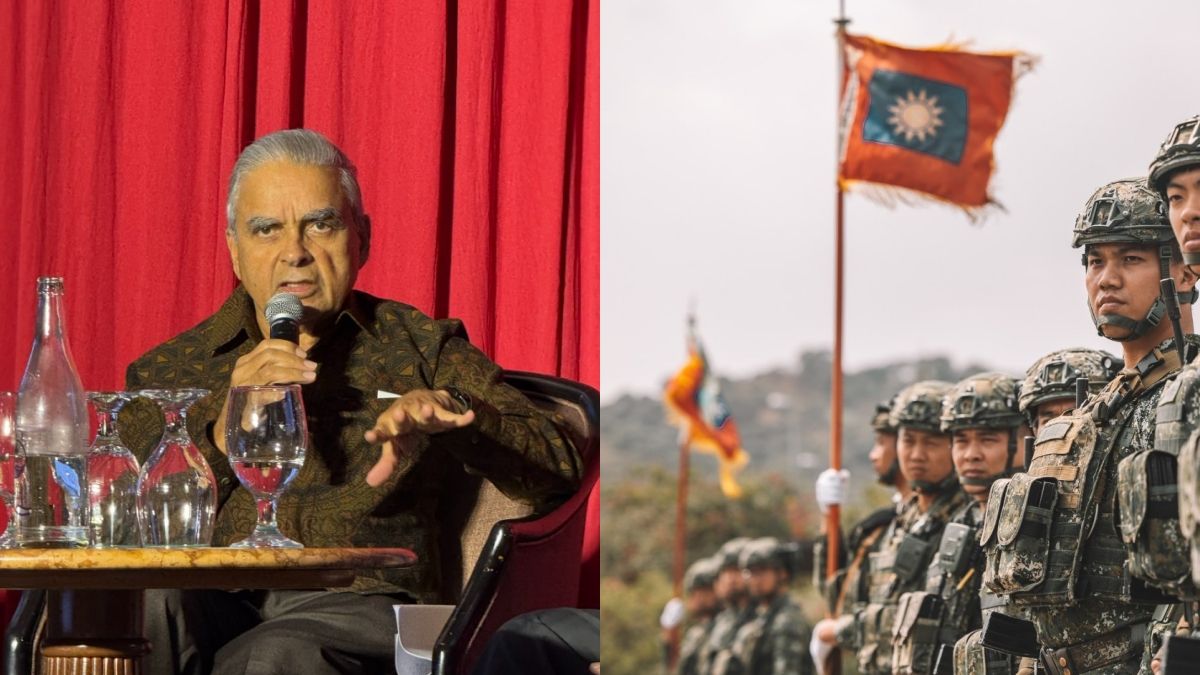
Against that backdrop, Taiwan has increased its military preparedness, with its 2026 Han Kuang exercises placing greater emphasis on realistic combat scenarios, civil defence and resilience against a potential Chinese attack.
The exercises reflect broader concerns about Taiwan’s ability to respond to a potential conflict and maintain resilience during heightened military pressure.
Taiwanese media have also reported that Chinese authorities are seeking to influence Taiwan’s domestic debate over plans to strengthen its military drone capabilities.
Those reports cited an anonymous source in Beijing in describing the alleged effort to influence discussion surrounding Taiwan’s defence plans.