Taiwan condemns China’s sanctions on Paraguayan and Belizean ministers
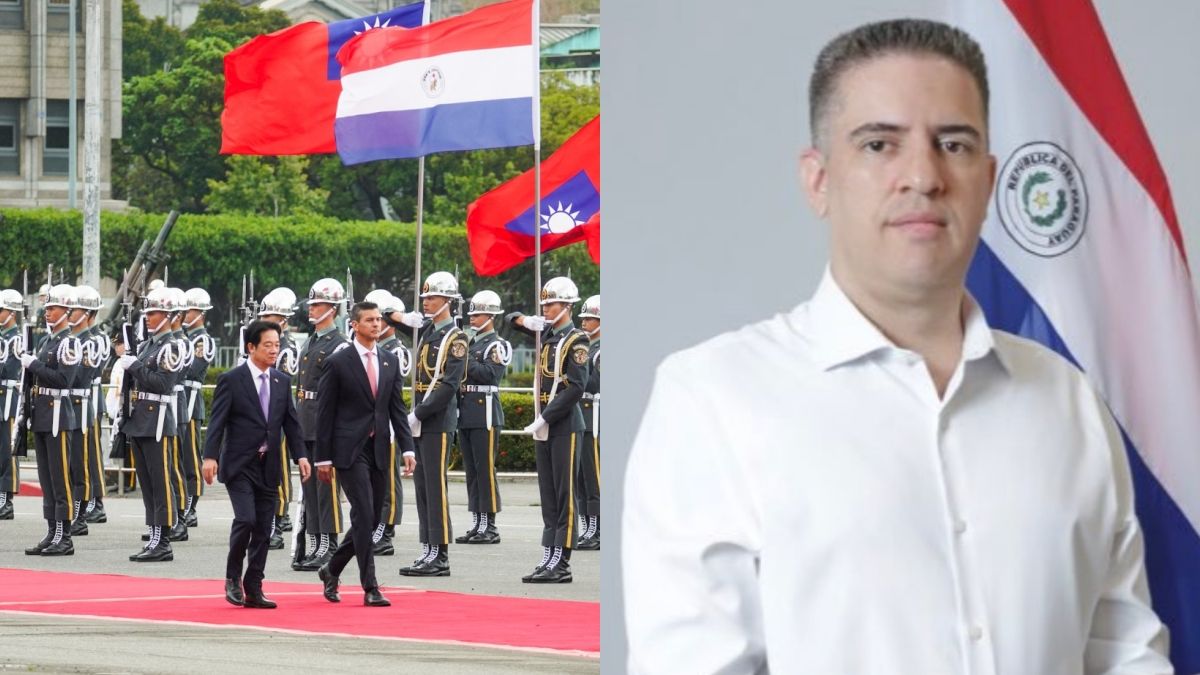
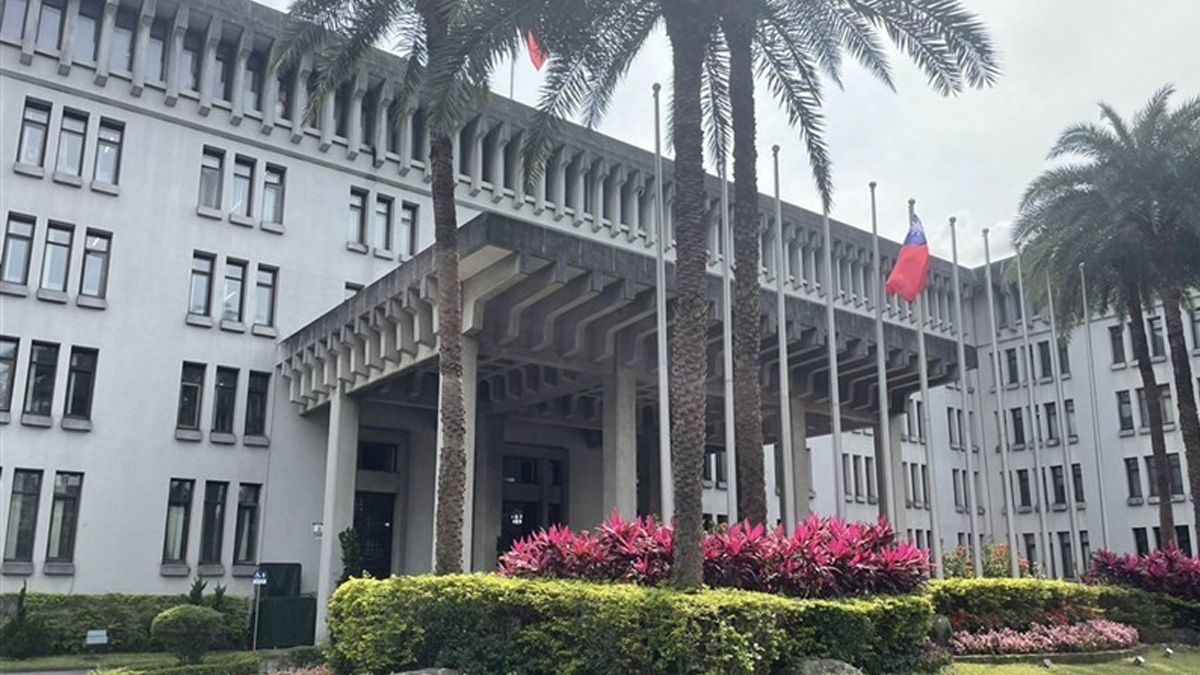
Taiwan’s foreign ministry has condemned Beijing’s sanctions on Belize’s Foreign Minister Francis Fonseca and Paraguay’s Gustavo Villate, calling them “preposterous” interference in the sovereignty and diplomacy of Taiwan’s allies.
- China sanctioned Belize’s foreign minister and a Paraguayan minister over their countries’ diplomatic ties with Taiwan.
- Taiwan’s foreign ministry called the sanctions “preposterous” political intimidation and transnational repression.
- Belize and Paraguay are among 12 countries that formally recognise Taipei rather than Beijing.

Taiwan’s Ministry of Foreign Affairs (MOFA) has condemned China’s decision to sanction two ministers from Taiwan’s diplomatic allies, describing the measures as “preposterous” and a “blatant interference in other countries’ sovereignty and diplomacy”.
China’s foreign ministry announced on 12 October 2026 that it would sanction Belize’s Foreign Minister Francis Fonseca and Paraguay’s Minister of Information and Communication Technologies, Gustavo Villate, over their countries’ diplomatic relations with Taiwan.
According to the Chinese foreign ministry, the penalties include freezing their assets and other property in China, prohibiting organisations and individuals in the country from doing business with them, and denying them visas and entry.
The ministry said the restrictions took effect on 12 October 2026 and also apply in Hong Kong and Macau.
Belize and Paraguay are among the 12 countries that formally recognise Taipei rather than Beijing.
Taipei accuses Beijing of “transnational repression”
In a statement issued the same day, MOFA said the action revealed China’s “futile attempt to deploy political intimidation and transnational repression to coerce other countries into submission to its political agenda”.
The ministry described the tactics as “despicable”. It said such behaviour would only make Beijing’s intent to undermine the international order clearer to the global community.
MOFA noted that Taiwan has long maintained close ties with both Belize and Paraguay.
It added that Taiwan would continue working closely with all its diplomatic allies to deepen mutually beneficial cooperation and shared prosperity, while jointly pushing back against what it termed authoritarian expansion.
Beijing’s stated reasons for the sanctions
In its statement, the Chinese foreign ministry said the measures targeted “certain anti-China politicians who have stubbornly supported their respective countries in maintaining so-called ‘diplomatic ties’ with China’s Taiwan region”.
The ministry said these politicians had undermined China’s core interests. It accused them of what it described as “a series of egregious words and actions” on issues concerning China, pursued for their own political interests.
According to the ministry, the sanctions were intended to defend China’s sovereignty, security and development interests, and to oppose what Beijing calls Taiwanese separatism.
The ministry cited provisions of China’s Anti-Foreign Sanctions Law as the legal basis for the restrictions. Its statement did not explain why the two ministers had been singled out.
Beijing regards Taiwan as part of its territory and has not ruled out the use of force to bring the island under its control. Taiwan’s government rejects the claim and maintains that the island governs itself.
Paraguay reaffirms ties on Taiwan’s National Day
The sanctions were announced two days after Taiwan celebrated its National Day on 10 October, an annual event marking the establishment of the Republic of China government in 1912.
Villate had publicly reaffirmed Paraguay’s relationship with Taiwan in a social media post marking the occasion.
He wrote that Paraguay reaffirmed “its relationship of friendship and cooperation”, which he said was based on shared values and principles, including the self-determination of peoples, human rights and democracy.
Paraguay is the only country in South America that maintains formal diplomatic relations with Taiwan.
It is also the only member of the Southern Common Market (Mercosur) that does not have diplomatic relations with China.
Paraguayan President Santiago Peña visited Taiwan earlier in 2026, describing the island as a “fundamental partner” for his country.
During the visit, the two sides signed several agreements covering mutual legal assistance in criminal matters, cybersecurity cooperation, artificial intelligence and computing investment.
Taiwanese officials have also sought to strengthen economic cooperation with Paraguay.
In March 2026, Taiwan established a trade and economic office intended to develop commercial opportunities, including links between African fruit exports and Paraguay’s meat industry.
Trade with China despite diplomatic differences
Although Paraguay and China do not maintain formal diplomatic relations, their commercial relationship remains significant.
According to figures cited in Chinese-language reporting, bilateral trade totalled US$3.201 billion in 2025. Chinese exports to Paraguay accounted for US$3.152 billion of that total.
China has become one of Paraguay’s major sources of imported goods. Beijing has repeatedly urged the country to recognise the “one China” principle and sever diplomatic relations with Taiwan.
Chinese-language reporting has also cited several opinion polls which reportedly found that nearly 90 per cent of respondents in Paraguay considered diplomatic relations with China important.
Some Paraguayan legislators have publicly called for discussions on the issue. These reported views coexist with the Paraguayan government’s continued support for Taiwan.
According to a report by The New York Times, Beijing has increased pressure on Paraguay to end its diplomatic relationship with the island.
Taiwan has rejected the prospect of losing its South American ally and has continued to promote cooperation in trade and other sectors.
Belize maintains longstanding ties with Taiwan
Belize has maintained diplomatic relations with Taiwan since 1989, following the end of its diplomatic relationship with China.
The sanctions against Fonseca come amid renewed diplomatic engagement between Belize and Taiwan.
Taiwan’s Foreign Minister Lin Chia-lung visited Belize in September 2026. Following the visit, Taiwan’s foreign ministry said the two sides had agreed to deepen their relationship.
Taiwan’s other diplomatic partners in the Americas include Guatemala and Haiti, as well as several Caribbean island states.
Cross-strait tensions continue
In his National Day speech outside the Presidential Office in Taipei, President William Lai Ching-te said Taiwan “cherishes peace” and would “not give up our freedom”.
China’s Taiwan Affairs Office (TAO) condemned Lai’s remarks, accusing him of disregarding facts, distorting the truth and misleading the public.
Chinese President Xi Jinping had reiterated Beijing’s position in January 2026, saying the “reunification” of China and Taiwan was “unstoppable”.
The United States does not maintain formal diplomatic relations with Taiwan, but is legally committed to providing the island with the means to defend itself.
On 2 October 2026, the United States delivered two F-16V fighter jets to Taiwan as the island continued efforts to strengthen its defence capabilities.