Bali insists it is safe to visit after Fodor’s ‘No List’ and row over treatment of local tourists
Bali has defended its tourism industry after being named on Fodor’s 2027 No List, as environmental concerns and complaints of preferential treatment for foreign visitors intensify debate over the island’s tourism model.
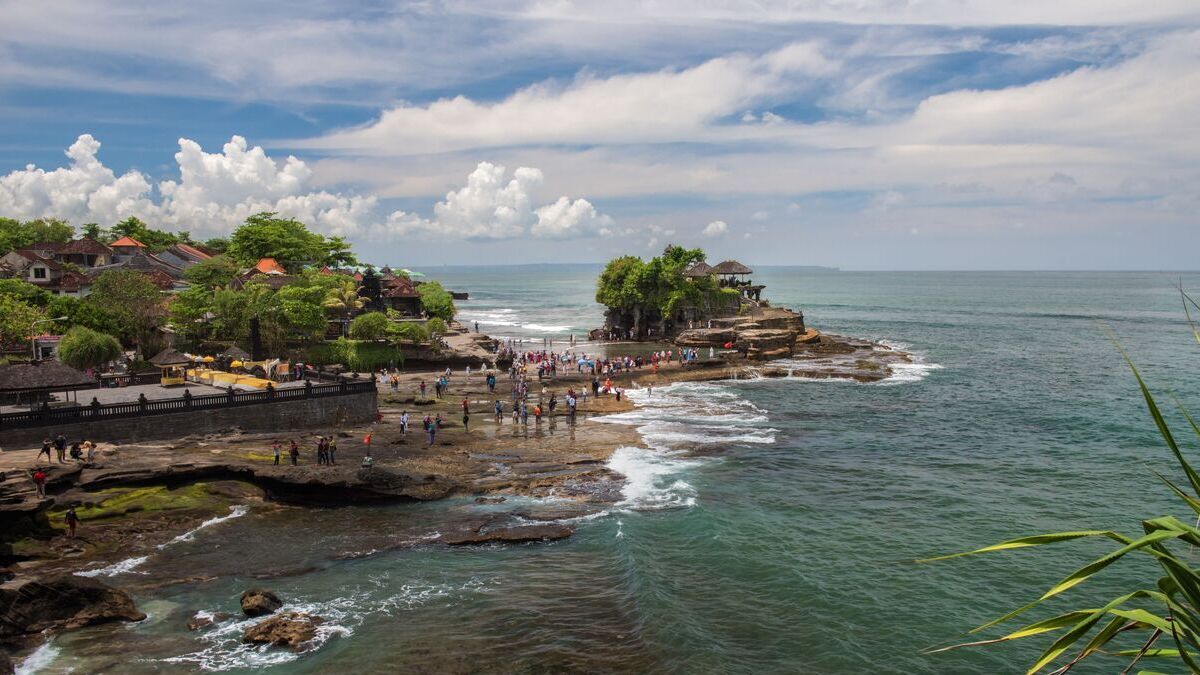
- Bali has defended its safety and tourism appeal following its inclusion in Fodor’s 2027 No List.
- Indonesian travellers have criticised businesses and tourism operators over alleged preferential treatment for foreign visitors.
- Environmental pressures, infrastructure problems and tourism revenue distribution remain central challenges for the provincial government.

Bali’s provincial government has reaffirmed that the Indonesian island remains safe and suitable for international visitors after it was included in travel publisher Fodor’s 2027 “No List”.
However, the island is also facing criticism from Indonesians who accuse parts of its tourism industry of favouring foreign visitors while treating domestic tourists as second-class customers.
The domestic controversy intensified in October after Bali senator I Gusti Arya Wedakarna made remarks about foreign tourists’ spending habits and tipping culture.
He argued that Bali needed visitors with greater spending power, including those bringing foreign currency, and suggested that foreign tourists were often more generous with tips than Indonesians.
The comments triggered criticism from Indonesians who said domestic visitors also contributed significantly to Bali’s economy and should receive the same standard of service.
On 19 November, I Wayan Sumarajaya, head of the Bali Tourism Office, said the island remained “very suitable to visit and very safe for tourism”.
He said the provincial government respected criticism from overseas and would use it as material for evaluation, particularly in addressing waste management, traffic congestion, environmental protection and tourism sustainability.
Fodor’s highlights pressure from overtourism
Fodor’s Travel published its 2027 No List on 10 November, naming eight destinations where tourism pressure has raised concerns.
Bali was included alongside the Albanian Riviera, the Amalfi Coast, Corsica, Edinburgh, Kyoto, the Ngorongoro Conservation Area and Sedona.
The publisher stressed that the list was not a boycott or a call for travellers to cancel their trips. Instead, it encouraged visitors to reconsider how, when and why they travel to destinations experiencing pressure from tourism.
For Bali, the concerns include waste burning, air pollution, the loss of agricultural land and growing pressure on water supplies.
Fodor’s cited the Bali Air Dispatch monitoring network, which operates more than 50 air-quality sensors. Its data indicated that daily PM2.5 readings in southern Bali exceeded the World Health Organization’s 24-hour guideline on every day between June and September 2026.
The network estimated that burning accounted for about 80 per cent of morning pollution spikes.
Waste management remains a major challenge. The Suwung landfill stopped accepting organic waste in April 2026, while a planned waste-to-energy facility is not expected to become fully operational until 2028.
Fodor’s also cited estimates from Indonesia’s National Research and Innovation Agency (BRIN) indicating that tourism activities generate three to five times more waste than households.
The report raised concerns about the conversion of agricultural land for tourism development, estimating that Bali loses about 1,000 hectares of farmland annually. The island’s traditional subak irrigation system, recognised by UNESCO as a cultural landscape, is also under pressure from development.
Water consumption is another concern. Fodor’s cited estimates that tourism accounts for about 65 per cent of Bali’s water use.
The island was also hit by severe flooding in September 2025, which killed at least 18 people.
Senator’s comments about foreign tourists trigger domestic backlash
The debate over Bali’s treatment of visitors intensified in early October after I Gusti Arya Wedakarna, a member of Indonesia’s Regional Representative Council (DPD) representing Bali, made comments comparing foreign and domestic tourists.
In a video circulated on social media, Wedakarna urged Indonesian tourists to become accustomed to giving tips when visiting tourist destinations. He said tipping was part of the expected etiquette in tourism settings and observed that foreign visitors were generally more accustomed to the practice.
“Perhaps that’s the psychological reason why Balinese people are more excited about serving foreigners,” he said, according to the South China Morning Post’s report on 14 October.
He also said some domestic visitors rarely left tips, bargained over prices and made considerable demands of tourism workers.
In separate remarks reported by Indonesian media, Wedakarna said Bali needed “quality tourists” with high spending power and described the importance of attracting visitors who brought dollars to the island.
The comments prompted criticism from Indonesians who said they reinforced the perception that foreign tourists were more welcome than domestic visitors.
The controversy also revived complaints from Indonesian travellers who said they had experienced less attentive service than foreign guests at some tourism businesses.
Bali businesswoman and fellow DPD member Ni Luh Djelantik challenged Wedakarna’s generalisation. She argued that foreign visitors should not automatically be considered more generous and that domestic tourists also contributed to the local economy through accommodation, transport, restaurants and shopping.
She said visitors should receive professional and courteous service regardless of their nationality or spending budget.
The debate has highlighted a tension within Bali’s tourism industry: the economic importance of attracting high-spending international visitors alongside the contribution of Indonesian tourists, who also make up a substantial share of arrivals.
Governor highlights foreign-exchange contribution
Wedakarna’s comments about attracting visitors who bring dollars came amid the provincial government’s emphasis on the economic value of international tourism.
Bali Governor Wayan Koster has repeatedly highlighted the foreign-exchange earnings generated by overseas visitors.
At the Bali and Beyond Travel Fair in Badung on 30 May 2026, Koster said Bali generated an estimated Rp176 trillion (about US$10.7 billion) in tourism foreign-exchange earnings in 2025.
He said this represented approximately 55 per cent of Indonesia’s total tourism foreign-exchange earnings, estimated at Rp320 trillion (about US$19.4 billion).
Koster based the calculation on 7.05 million foreign tourist visits to Bali in 2025 and average visitor spending of US$1,522.44.
He said the money was spent across hotels, transport, restaurants and micro, small and medium-sized businesses. Tourism contributed about 66 per cent of Bali’s economy, according to figures cited by the governor.
Koster has also said that the provincial government wants tourism to benefit local communities, including farmers, fishermen and craftspeople, through demand for locally produced goods.
Government says foreign tourists remain welcome
The provincial government has sought to clarify its position on international visitors.
In a statement published on 30 October, Koster said Bali remained open to foreign tourists but expected them to comply with Indonesian laws and respect local customs and culture. He also supported enforcement against foreign nationals who violate regulations.
Bali introduced a Rp150,000 (about US$9) levy on foreign visitors in February 2024.
In a message published by the provincial government in May 2026, Koster said the levy generated Rp369 billion in 2025. However, the government estimated that only about 34 per cent of the approximately seven million foreign visitors paid it.
The province has also proposed restrictions on new hotel and restaurant development in several areas as part of efforts to manage tourism growth.
Visitor numbers remain high
Despite the criticism, Bali continues to attract large numbers of international visitors.
Statistics Indonesia’s Bali office recorded 650,169 foreign arrivals in September 2026, an increase of 2.36 per cent compared with the same month a year earlier.
Arrivals reached 697,809 in July and 685,994 in August. The provincial statistics office said foreign visitor numbers during the July-September period were higher than in the corresponding months of 2025.
Sumarajaya also pointed to six awards received by Bali at the 2026 World Travel Awards in the Asian categories, including Asia’s Leading Wedding Destination, Asia’s Leading Resort, Asia’s Leading Green Resort and Asia’s Leading Water Park.
The provincial government has said it will continue promoting Bali internationally while improving environmental management and tourism infrastructure.
The criticism from Fodor’s and the domestic backlash over Wedakarna’s remarks have brought different aspects of Bali’s tourism challenges into focus.
While the first concerns the environmental and infrastructure pressures created by visitor numbers, the second concerns how the island’s tourism economy values and treats its Indonesian and foreign guests.