Anwar stands by One-China remark, but stresses Malaysia prefers a peaceful approach
Malaysian Prime Minister Anwar Ibrahim has defended his remarks on Taiwan and reaffirmed Malaysia’s One-China policy, while stressing that a peaceful resolution remains the preferred approach to tensions across the Taiwan Strait.
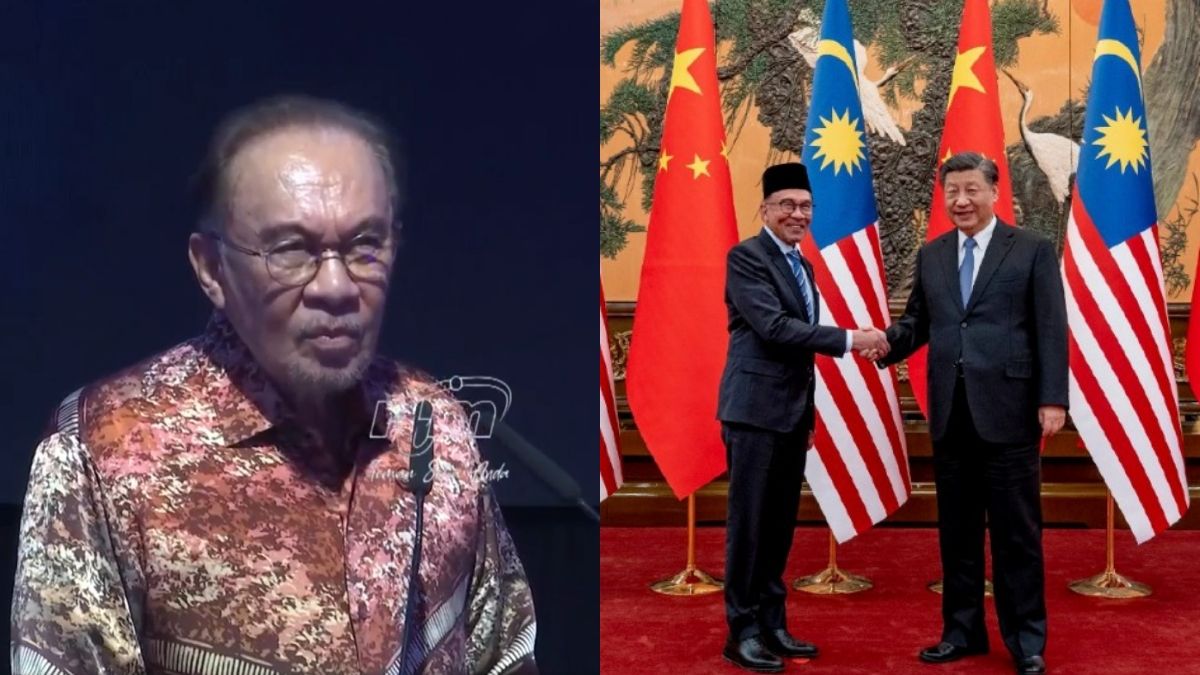
- Anwar Ibrahim reaffirmed Malaysia’s One-China policy while stressing that a peaceful resolution remains the preferred approach.
- Taiwan criticised his remarks, saying they legitimised Beijing’s position on using force against the island.
- China welcomed Anwar’s position, while Malaysian commentators questioned his comparison of Taiwan with a Malaysian state seeking separation.

KUALA LUMPUR, MALAYSIA: Malaysian Prime Minister Anwar Ibrahim has stood by his remarks on Taiwan while clarifying that Malaysia’s position is to pursue a peaceful resolution to tensions across the Taiwan Strait.
Anwar said Malaysia had followed the One-China policy since the administration of the country’s second prime minister, Tun Abdul Razak Hussein, and would continue to uphold it.
“The One China policy has been practised since Tun Abdul Razak. In my view, the policy remains and we will continue to uphold it,” he said.
Anwar was speaking to reporters on 20 August after launching the TikTok Shop Summit Malaysia 2026 in Kuala Lumpur.
He was responding to criticism from Taiwan’s Foreign Ministry over remarks he made during a recent interview with Al Jazeera.
While defending the substance of his position, Anwar stressed that Malaysia preferred a peaceful path.
“Of course, we want to seek a peaceful path whenever possible,” he said.
He added that Malaysia respected China’s position but believed that resolving the issue peacefully remained the best course.
“Of course, we respect China’s position, but a peaceful path is best. That is what is being pursued now,” Anwar said.
His clarification places the emphasis on two elements of Malaysia’s position: continued adherence to the One-China policy and a preference for peaceful resolution rather than conflict.
Why Anwar referred to the United States
Anwar also defended his position by drawing a comparison with the United States and its history following the American War of Independence.
He argued that the United States had gone through its own war of independence and did not permit any of its territories to break away.
“I was therefore merely taking a consistent position,” Anwar said.
Anwar said China was recognised as one country while Taiwan was referred to separately, and maintained that the One-China policy was accepted within the United Nations.
He did not indicate that Malaysia was abandoning its existing diplomatic position.
Instead, his remarks reaffirmed the policy that Malaysia has maintained since establishing diplomatic recognition of Beijing in 1974.
The controversy stems largely from how Anwar addressed the possibility of conflict during the Al Jazeera interview.
Anwar says Taiwan is part of China and backing force to preserve unity
During the interview, journalist Sreenivasan Jain asked Anwar whether the wishes of Taiwanese people should carry weight, noting that polls had repeatedly indicated strong opposition in Taiwan to being governed by Beijing.
Anwar responded by referring to Malaysia’s position on Taiwan and China.
“It is a part of China and the Chinese have to decide,” he said.
“I see Taiwan as part of China, period.”
He rejected the idea that supporting Taiwan’s separation was compatible with preserving an independent country’s territorial integrity.
Anwar also linked the dispute to colonialism and United States involvement, including the US Seventh Fleet.
Jain then asked whether Anwar would condemn China if peaceful reunification failed and Beijing used force against Taiwan.
Anwar compared the situation with a Malaysian state attempting to leave the federation.
“If one province decides… to break away. Do we use force? I think I will protect the sanctity and unity of the nation,” he said.
When pressed, Anwar replied: “Yes. Because otherwise they’ll be fragmented.”
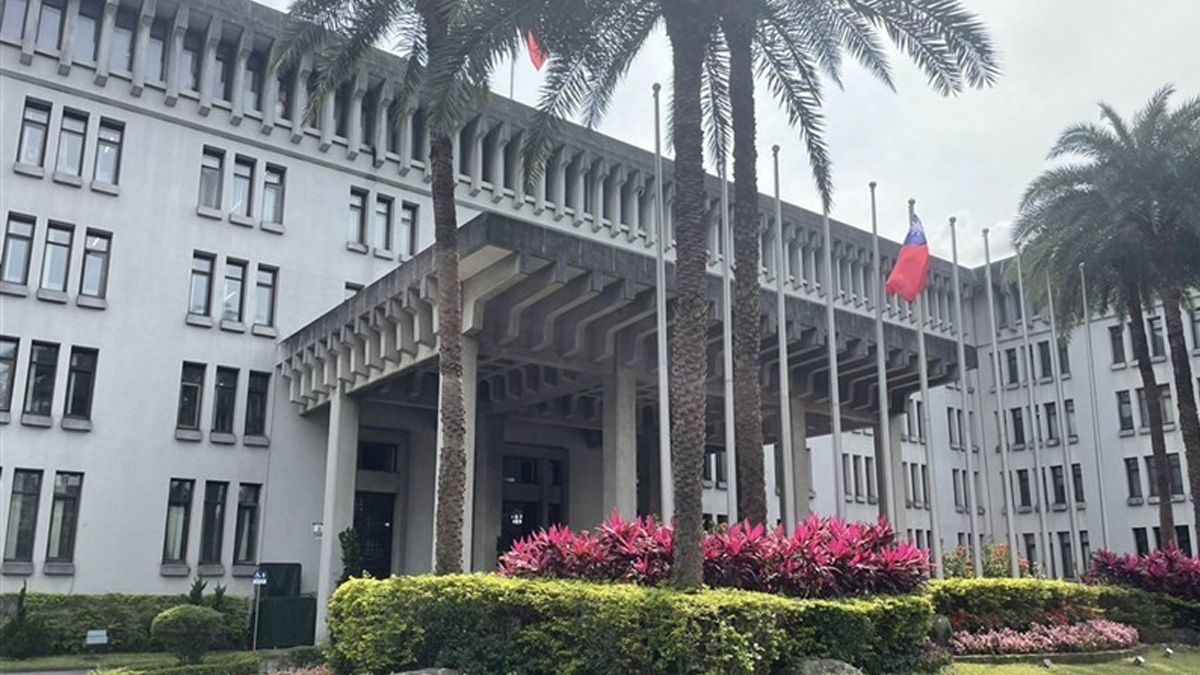
Those comments prompted a strong reaction from Taiwan’s Foreign Ministry.
Taiwan objects to Anwar’s remarks
Taiwan’s Foreign Ministry accused Anwar of making “false” statements that suggested Taiwan was a breakaway province of China.
The ministry also said Anwar had openly rationalised Beijing’s position on the use of force to achieve reunification.
Taiwan reaffirmed its sovereignty and said the island’s future should not be determined by Beijing or outside powers.
It also warned that Anwar’s position could undermine confidence among Taiwanese businesses investing in Malaysia.
“Considering that Malaysia is a democracy and Anwar has long portrayed himself as a defender of democracy and human rights, he should value principles such as freedom, human rights and the rule of law, and respect and uphold the will of the people,” the ministry said.
Taiwan added that Anwar’s comments effectively legitimised Beijing’s position on the use of force against Taiwan.
Anwar’s remark criticised for oversimplifying China-Taiwan ties and departing from Malaysia’s policy of restraint
The controversy has also triggered criticism and debate among Malaysian commentators, particularly over whether comparing Taiwan with a Malaysian state seeking separation adequately reflects the history and political development of the China-Taiwan relationship.
Writer Megat Hisemudin Megat Kasim questioned the comparison and outlined the background of the Chinese Civil War, the retreat of the Republic of China government to Taiwan in 1949 and Taiwan’s later democratic transition.
Writer Ayman Rashdan Wong similarly highlighted Taiwan’s separate government, president, parliament, currency and military.
Wong traced Taiwan’s history from Qing rule and Japanese administration to the establishment of the People’s Republic of China in 1949.
He also discussed Malaysia’s diplomatic recognition of Beijing since 1974.
According to Wong, recognising the People’s Republic of China does not prevent Malaysia from maintaining unofficial relations with Taiwan, although the diplomatic relationship with Beijing limits Malaysia’s ability to remain completely neutral on the issue.
“If I were in the Prime Minister’s position and was pressed by journalists on this issue, I would repeat the same answer,” Wong said.
Questions over military force
Former DAP lawmaker Ronnie Liu supported Malaysia’s longstanding One-China policy but drew a distinction between recognising China’s position and supporting military action against Taiwan.
Liu highlighted Malaysia’s economic and social ties with Taiwan.
He also warned that a war in the Taiwan Strait could disrupt semiconductor production, shipping, financial markets and global supply chains.
“Understanding history does not mean supporting war,” Liu said.
Economist CY Wong questioned whether Anwar’s remarks had departed from Malaysia’s traditional restraint on Taiwan Strait tensions.
He pointed to previous prime ministers’ emphasis on non-interference, peaceful solutions and avoiding military conflict.
Wong also questioned the political calculation behind Anwar’s comments, asking: “Are you rushing into this for what?”
Another interpretation came from Professor Phar Kim Beng, who argued that Anwar’s remarks should be understood through Malaysia’s constitutional commitment to territorial integrity and its One-China policy.
Phar said reserving the right to use force was not necessarily an endorsement of war.
He argued that credible military capability could instead serve as deterrence.
He also highlighted potential long-term fault lines within Malaysia, including the historical arrangements involving Sabah and Sarawak, regional inequalities, resource disputes and representation.
Phar argued that good governance and fair development remained important to maintaining national unity.
China welcomes Anwar’s position
China welcomed Anwar’s remarks.
A Chinese Foreign Ministry spokesperson said on Facebook on 19 August that China commended Anwar’s comments on the Taiwan question and his “steadfast position on the one-China principle”.
“Nothing will stop China from being reunified,” the spokesperson said.
The ministry added that the international community’s commitment to the One-China principle should not be shaken.