Taiwan withdraws diplomats and aid staff from Papua New Guinea after forced office closure
Taiwan has begun pulling diplomatic and aid personnel out of Papua New Guinea after Port Moresby ordered its representative office shut. Taiwan has also ended LNG spot purchases and aid programmes, and Beijing has offered to buy more PNG gas.
- Taiwan is withdrawing nearly all diplomats and aid workers from PNG, ending a presence dating back to 1990.
- Taiwan has ended aid programmes and LNG spot purchases, and China has offered to buy more PNG gas.
- A PNG commentator has questioned whether the government’s statements on the closure are consistent and transparent.

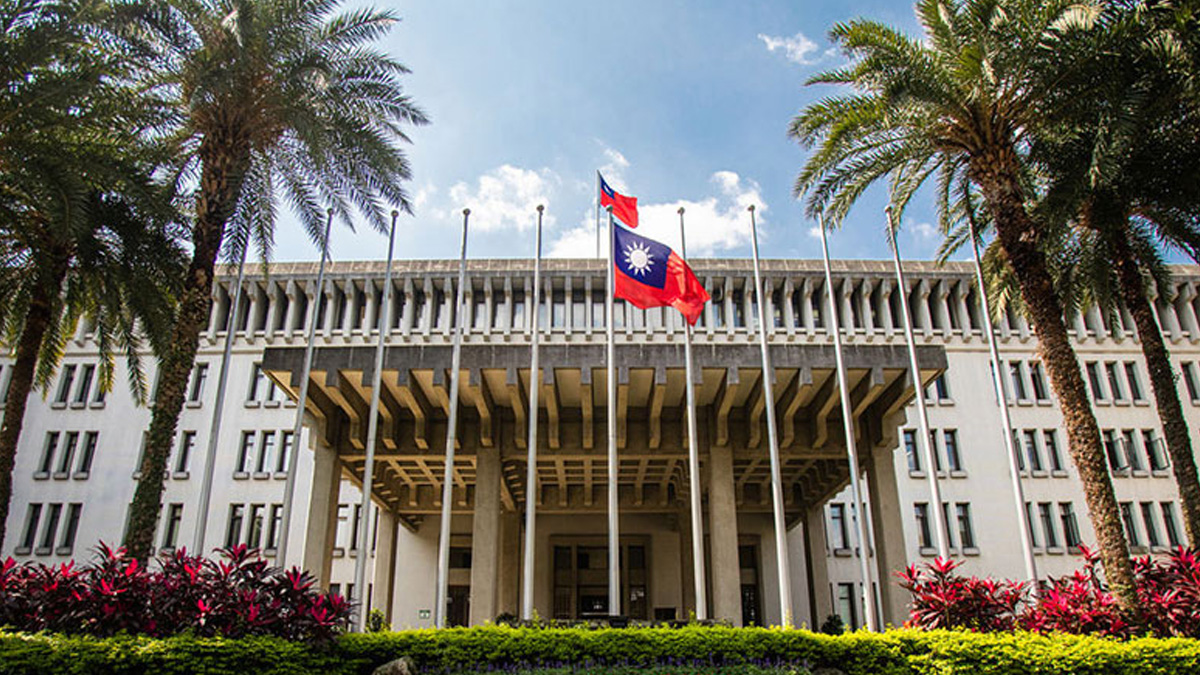
Taiwan has begun withdrawing all diplomatic and technical mission personnel from Papua New Guinea (PNG), after the Pacific nation’s government ordered the closure of Taipei’s de facto embassy in Port Moresby.
In a statement on Wednesday (11 November 2026), Taiwan’s Ministry of Foreign Affairs (MOFA) said several staff would remain in PNG to oversee the office’s closure. All other diplomats and aid workers will leave.
According to the Central News Agency (CNA), those leaving include personnel from the Taiwan International Cooperation and Development Fund (TaiwanICDF), the government’s foreign aid agency.
The withdrawal ends Taiwan’s 36-year unofficial presence in PNG. Its representative office was set up in February 1990, after a trade agreement signed the previous year, even though the two sides had no formal diplomatic relations.
Arrangements for Taiwanese nationals and office assets
MOFA said Taiwan’s embassies and representative offices in neighbouring countries would provide help and consular services to the roughly 100 Taiwanese nationals living in PNG. The Overseas Community Affairs Council (OCAC) will support this work.
Official vehicles, equipment and other movable assets will be inventoried, then auctioned or transferred in line with government property management regulations, the ministry added.
Seven-day deadline for senior diplomats
The departures follow Taiwan’s announcement on Friday (6 November) that it would close the Taipei Economic Office in Port Moresby. The decision came after PNG renewed its demand that the office’s personnel leave the country.
According to CNA, PNG’s Department of Foreign Affairs said in a statement early that Friday that its secretary, Elias Wohengu, had handed Taiwan’s representative, Chiu Chen-yu (邱陳煜), an official notice requiring him to leave.
The department gave Chiu and First Secretary Lee Chung-nun seven days to leave the country. A third diplomat, Pan Shao-jyun, would be allowed to stay to complete the office’s closure within a year, the statement said.
Later that day, MOFA said it would close the office and withdraw all stationed personnel. It would also review bilateral ties “in consideration of national dignity, diplomatic autonomy, and overall national interests”.
According to Focus Taiwan, MOFA also said Taiwan would end all technical cooperation and assistance programmes in PNG. These include technical and medical missions, scholarships and personnel training.
The ministry said PNG’s actions had seriously undermined mutual trust built up over years of cooperation. It accused Beijing of using political pressure and economic influence to interfere in other countries’ diplomatic decisions and to restrict Taiwan’s international space.
Liquefied natural gas purchases halted
MOFA said Taiwan would not sign any new spot purchase contracts for PNG liquefied natural gas (LNG). This extends a suspension of spot purchases first imposed in July.
At a press conference on 28 July, Michael Lin (林昭宏), Director-General of MOFA’s Department of East Asian and Pacific Affairs, said the suspension meant state-owned CPC Corporation would forgo about 500,000 tonnes of PNG LNG.
The stakes for PNG are considerable. Taiwanese figures put Taiwan’s share of PNG’s LNG exports at about one-third. Data from PNG’s National Statistical Office show that LNG makes up more than 40 per cent of the country’s total exports.
Al Jazeera, citing AFP and Reuters, reported that Taiwan bought about 8 per cent of its natural gas from PNG last year. MOFA said it had reassessed domestic demand and secured alternative supplies to keep energy supply stable.
Beijing offers to buy more PNG gas
On Monday (9 November), Chinese Foreign Ministry spokesperson Guo Jiakun said Beijing was willing to increase LNG imports from PNG and deepen economic and trade cooperation, Reuters reported.
Guo welcomed PNG’s decision to close Taiwan’s office. He described it as further evidence of international support for the one-China principle.
The United States repeated its concern. A State Department spokesperson told CNA on Saturday (7 November) that Washington was “deeply concerned” that PNG had unilaterally ordered the office’s closure.
The spokesperson described the episode as another example of Beijing’s intimidation of Taiwan.
Questions raised within PNG
The decision has also drawn scrutiny inside PNG. According to the Taipei Times, political commentator Paul Kebaija questioned on the PNGBlogs website whether the government’s statements on the closure were consistent.
Kebaija noted that Foreign Minister Justin Tkatchenko announced the “immediate cessation of operations” of the office in July, under National Executive Council (NEC) Decision No. 144/2026.
He wrote that the department later said the office could operate for 12 months. It then called that window uncertain and gave two of the office’s three officials a week to leave.
Kebaija suggested that either the minister had misstated a Cabinet decision or the government was “rewriting that decision as it goes”.
He also pointed to conflicting accounts of consultation. Taipei says it was not consulted, but Tkatchenko told foreign media that Taiwan had been informed “weeks ago”.
Kebaija noted that Prime Minister James Marape had said no external power pressured the decision. He urged the government to publish the NEC decision, figures on lost gas sales and foreign exchange, and the “other platforms” it says can keep ties going.
A dispute months in the making
Tkatchenko first announced the closure in mid-July, citing PNG’s adherence to the “one China” policy. He said the office’s presence would no longer be recognised within PNG’s jurisdiction.
Taiwan rejected the decision, saying it had not been consulted, and kept the office open. Vice President Hsiao Bi-khim (蕭美琴) said at the time that China was suppressing Taiwan “everywhere”.
Foreign Minister Lin Chia-lung (林佳龍) later told a legislative hearing that Beijing was using “elite capture” in South Pacific nations to advance its interests. He cited PNG as the latest example.
Beijing praised the July announcement. According to the Taipei Times, China’s embassy in Port Moresby called it the “right decision” for China-PNG relations.
Relations between Taipei and Port Moresby have been strained for years. The two sides briefly established diplomatic ties in 1999. Taiwan’s office was renamed in 2018 amid pressure from Beijing.
In 2023, PNG closed its own trade office in Taipei, citing financial difficulties.
Taiwan now has formal diplomatic relations with 12 countries. Three are in the Pacific: Palau, Tuvalu and the Marshall Islands. Taiwan also runs a representative office in Fiji.
An analysis in The Strategist, published by the Australian Strategic Policy Institute (ASPI), had warned that Beijing would likely step up efforts to close Taiwan’s Fiji office if Taipei were forced out of PNG.