Prabowo’s brother Hashim faces calls to resign as Indonesia’s climate envoy
Environmental groups have called for Hashim Djojohadikusumo to resign as Indonesia’s climate envoy, citing potential conflicts of interest arising from his business interests in oil and gas, mining and other resource-based industries.
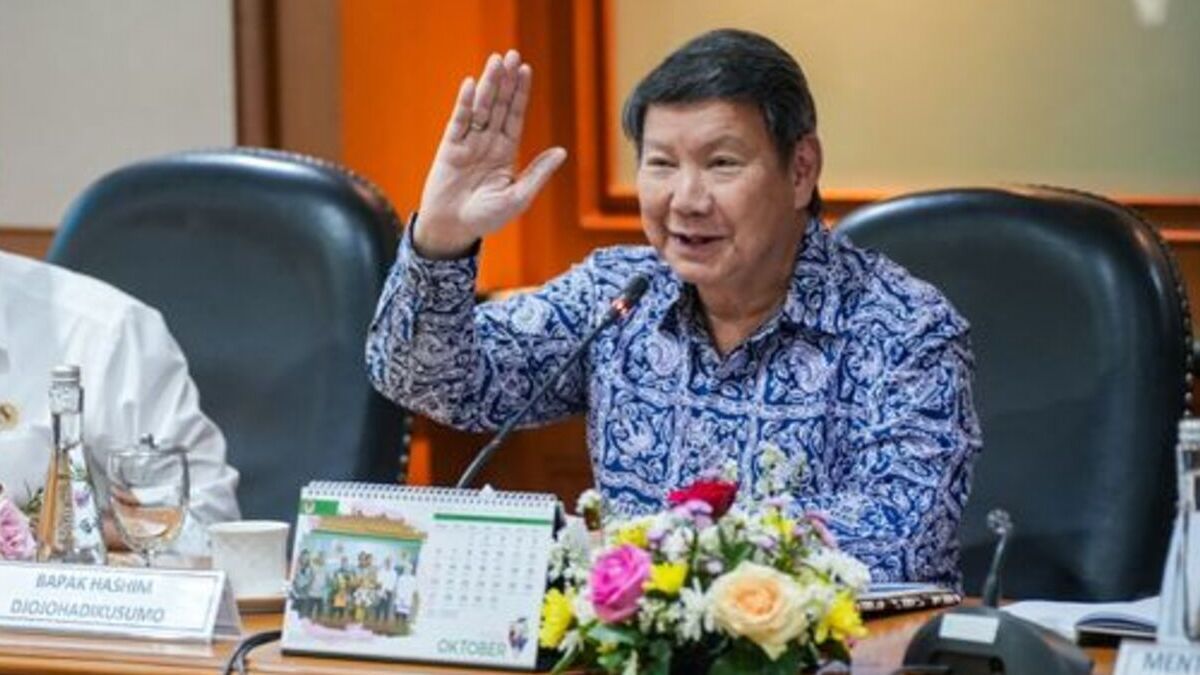
- Environmental groups want Hashim Djojohadikusumo replaced as Indonesia’s head of delegation at future climate negotiations.
- His business portfolio includes oil and gas exploration, tin mining and other resource-based investments.
- Civil society organisations are demanding greater transparency, fossil fuel phase-out commitments and independent climate representation.

Indonesia’s participation in the United Nations climate negotiations has come under renewed scrutiny after environmental organisations and civil society groups called for Hashim Djojohadikusumo, the younger brother of President Prabowo Subianto, to resign as the country’s Presidential Special Envoy for Climate and Energy.
The demand was made on 9 November 2026, as the 31st UN Climate Change Conference (COP31) opened in Antalya, Türkiye.
The groups questioned the suitability of Hashim leading Indonesia’s climate diplomacy because of his extensive business interests in extractive industries and fossil-fuel-related sectors.
In a statement published on 350.org Indonesia, the organisations argued that appointing a businessman with interests in extractive industries to lead international climate negotiations could create a conflict of interest, particularly when governments are expected to negotiate measures to reduce greenhouse gas emissions.
The campaign also called on the Indonesian government to replace Hashim with an independent figure who has experience in international climate negotiations and to remove fossil-fuel industry representatives and lobbyists from the official delegation.
Sisilia Nurmala Dewi, Indonesia country manager at 350.org, said the country had for too long sent representatives with business interests linked to environmental destruction to international climate negotiations.
“In the midst of the relentless climate disasters striking Indonesia, this is utterly unacceptable,” she said, calling for the Environment Ministry to clean up the Indonesian delegation.
Firdaus Cahyadi, programme officer for Natural Resources and Climate Justice at Yayasan TIFA, said Hashim should resign because his appointment could weaken Indonesia’s negotiating position through a potential conflict of interest.
The organisations also called for Indonesia to commit to phasing out fossil fuels, secure grant-based international funding for climate adaptation and disaster recovery, and appoint representatives whose interests are independent of the industries being discussed at the negotiations.
Hashim’s family ties to Prabowo
Hashim is not only a businessman but also one of the most influential members of the President’s family. He is Prabowo’s younger brother and the youngest sibling of the Djojohadikusumo family.
His position as a presidential special envoy gives him a prominent role in representing the Indonesian government internationally.
He also leads the Indonesian delegation at COP31, placing him at the centre of negotiations concerning climate finance, emissions reduction, forest protection and the transition away from fossil fuels.
The Indonesian Environment Ministry confirmed his leadership role in an official statement issued on 9 November. It identified Hashim as head of the Indonesian delegation when he opened the Indonesia Pavilion in Antalya.
In his opening remarks, Hashim said Indonesia's climate strategy was guided by three priorities: strengthening climate resilience, promoting collective action and pursuing a strategic pathway towards net-zero emissions.
He also argued that climate action should proceed alongside economic development, food security, energy security and public welfare.
Environment Minister Moh Jumhur Hidayat, speaking at the same event, said climate ambitions needed to be followed by concrete, measurable implementation and adequate financing.
The government has set a target of achieving net-zero emissions by 2060 or earlier, according to its Second Nationally Determined Contribution submitted in October 2025.
Hashim says he has left the palm oil business
The controversy surrounding Hashim's appointment comes amid questions about his business interests, particularly in the energy and extractive industries.
In an interview with CNN Indonesia in October, Hashim denied allegations that he remained involved in the palm oil business.
He said he had left the industry in 2018, correcting himself after initially saying 2008.
"That's slander! I have left the palm oil business. I stopped in 2008 — sorry, 2018. It has been eight years," he said, according to CNN Indonesia's report published on 23 October.
Hashim said he was no longer interested in running palm oil businesses and had moved into other sectors, particularly oil and gas and mining.
However, his departure from the palm oil industry does not mean his business interests are separate from sectors central to Indonesia's climate and environmental policies.
His own corporate group, Arsari Group, describes itself as a diversified investment group with interests in six principal areas:
-
Energy and mining: including oil and gas, and mineral extraction.
-
Renewable power: investment in renewable energy projects.
-
Digital infrastructure: telecommunications and digital infrastructure investments.
-
Agroforestry: forestry-related and land-based business activities.
-
Agriculture: agricultural production and related investments.
-
Trading and aquaculture: commodity trading and aquaculture operations.
These sectors are listed on the group's official website, which identifies Hashim as its founder and chairman.
Oil and gas, tin mining and digital infrastructure interests
One of the most significant developments in Hashim's business portfolio came in September 2026, when PT Nations Petroleum, a subsidiary of , secured the Natuna D-Alpha oil and gas working area.
The award was based on Energy and Mineral Resources Ministerial Decree No. 108.K/MG.4/DJM/2026, dated 17 September 2026.
According to Bisnis.com, the company committed US$103.3 million in investment during the first three years of the project, in addition to a US$200,000 signing bonus.
The award places a company belonging to the president's younger brother in a major oil and gas development project at a time when Indonesia is also presenting itself internationally as a country pursuing a transition towards net-zero emissions.
The Jakarta Post reported that Nations Petroleum secured the block through the government's direct-offer mechanism.
Hashim's interests also extend to tin mining through PT Arsari Tambang. Its business network includes PT Mitra Stania Prima, PT Mitra Stania Kemingking, PT Mitra Stania Bemban, PT AEGA Prima and PT Solder Tin Andalan Indonesia, which operates under the STANIA brand.
In digital infrastructure, Arsari has been linked to PT Solusi Sinergi Digital Tbk, known as Surge (WIFI). Hashim resigned as the company's president commissioner in September 2026, according to Bisnis.com.
His earlier business career under Tirtamas Group also covered cement manufacturing, petrochemicals, plantations, mining, banking and international commodity trading.
Arsari's official corporate biography further records his previous involvement in Nations Energy, which operated in Kazakhstan, and Nations Petroleum, through which he operated several oil fields before selling those assets.
The breadth of these interests is relevant to the conflict-of-interest concerns raised by environmental organisations. Although Hashim says he has exited palm oil, his current portfolio continues to include fossil-fuel exploration, mining and other resource-based industries.
Questions over his understanding of forest degradation and biofuel policy
Beyond his business interests, Hashim has also faced criticism over statements about Indonesia's degraded forests and plans to use them to support the country's biodiesel programme.
His remarks on 7 October 2026 at the Investor Daily Summit in Jakarta raised questions about the accuracy and completeness of the information he presented, particularly concerning the proposed use of 12.7 million hectares of degraded land.
Hashim said the government intended to use degraded forests and land to support the development of biofuels, including the B50 and B100 programmes.
B50 refers to diesel containing 50 per cent biodiesel, while B100 refers to fuel consisting entirely of biodiesel.
He said the proposed land was not primary forest but consisted of degraded areas that had previously been damaged by fires and were largely covered by shrubs.
Hashim suggested that some of the land could be planted with sugarcane, cassava and oil palm to support Indonesia's energy self-sufficiency ambitions.
He subsequently said that only about two million hectares would be used for planting, while the remaining area would undergo reforestation.
However, his explanation did not provide detailed maps, locations, land classifications or information about the legal status of the 12.7 million hectares.
The proposal also raised questions because the same figure had previously been presented as part of Indonesia's forest rehabilitation and reforestation ambitions.
At COP29 in Baku, Azerbaijan, in November 2024, Hashim had spoken about rehabilitating 12.7 million hectares of degraded land through reforestation and biodiversity-based approaches.
The figure originated from government data on critical land, rather than representing 12.7 million hectares of abandoned land automatically available for agricultural conversion.
A BBC News Indonesia investigation published on 16 October 2026 reported that the figure was based on 2022 government statistics covering critical land across 33 provinces.
The report noted that the available statistics did not provide sufficient geographical detail to establish which areas could be used for energy crops and which required ecological restoration.
Putra Saptian, a senior campaigner at Pantau Gambut, questioned the proposal and called on Hashim to disclose the locations and legal status of the land.
He warned that degraded land could still have important ecological functions, particularly in peatland ecosystems, which can retain substantial carbon stocks even when their vegetation has deteriorated.
The BBC also reported that it had sought clarification from Forestry Ministry officials, including the director-general responsible for watershed management and forest rehabilitation, but had not received a response at the time of publication.
The issue highlights questions about the preparation and technical basis of proposals being promoted by a presidential envoy responsible for climate diplomacy.
Hashim's statements have moved between describing the 12.7 million hectares as an area for reforestation and presenting degraded land as a potential resource for biofuel production.
Although he subsequently clarified that only a portion would be used for planting, the absence of publicly detailed maps and land assessments has left important questions unanswered.
The controversy does not establish that Hashim's proposal is technically unworkable. However, the lack of publicly available supporting information has made it difficult for independent experts and the public to assess its environmental implications.
For a representative leading Indonesia's international climate negotiations, the accuracy of land-use information and the distinction between forest restoration and agricultural conversion are particularly important.
Natuna D-Alpha raises further conflict-of-interest questions
The concerns over Hashim's appointment intensified following the award of Natuna D-Alpha to Nations Petroleum.
The block is particularly significant because of its high carbon dioxide content, which has been reported at up to 72 per cent.
The development requires substantial investment and technical preparation, including studies related to carbon dioxide management.
350.org's campaign against Hashim's appointment has specifically highlighted the award, arguing that a businessman whose group is expanding its oil and gas interests should not simultaneously lead Indonesia's climate negotiations.
The organisation said the situation raised concerns about whether Indonesia's negotiating priorities could be influenced by commercial interests.
The award also came as Indonesia was promoting its climate credentials internationally and seeking investment in renewable energy and carbon projects.
Hashim has defended the government's approach by presenting energy security and economic development as priorities that should proceed alongside climate action.
However, the organisations calling for his resignation argue that these objectives require independent leadership to ensure that fossil-fuel interests do not influence the country's negotiating positions.
Civil society demands changes before COP32
The 350.org statement outlined several demands directed at Prabowo and the Environment Ministry.
For COP31, the organisations want Indonesia to commit to a gradual phase-out of fossil fuels and advocate affordable clean and renewable energy.
They also called for developed countries to provide grant-based funding for climate adaptation and disaster recovery, rather than relying on additional loans.
Looking towards COP32, they want the government to replace the head of the Indonesian climate delegation with someone experienced in international climate negotiations and independent of extractive-industry interests.
They also called for the removal of extractive-industry businesspeople and fossil-fuel lobbyists from the country's official delegation.
Ginanjar Aryasuta, coordinator of Climate Rangers Indonesia, said young people rejected an energy transition controlled by individuals who continued to profit from the ecological crisis.
The groups said they would monitor Indonesia's negotiating positions throughout COP31 and continue pressing for reforms before the next climate summit.
The Indonesian government has not announced any change to Hashim's position in response to the demands. Instead, official statements from the Environment Ministry continue to identify him as head of the delegation.
On 9 November, the ministry reiterated Indonesia's three climate priorities under his leadership: climate resilience, collaborative action and a pathway towards net-zero emissions.
The ministry also highlighted the country's target of achieving net-zero emissions by 2060 or earlier.
The disagreement therefore centres on a fundamental question raised by the organisations: whether a businessman with extensive interests in oil and gas, mining and other resource-based industries should be entrusted with representing Indonesia in international negotiations intended to address the environmental consequences of economic activity.