Singapore amends GST Act after Govt agencies’ errors in fee charges
Singapore Parliament passed amendments to Singapore’s GST Act on Tuesday following MOF’s disclosure in February that six government agencies erroneously applied GST to 18 fees for regulatory services.
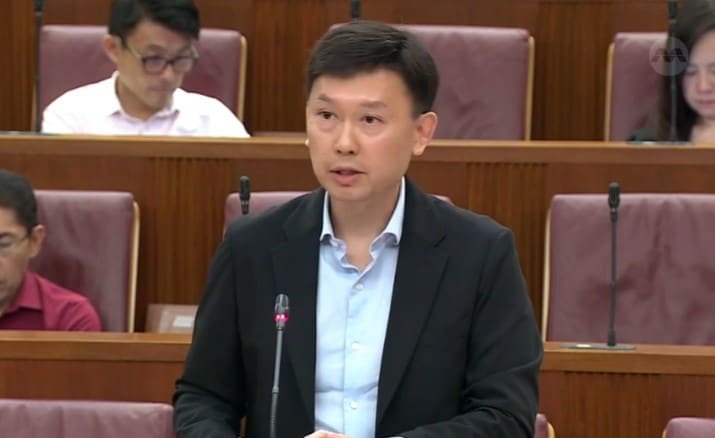

SINGAPORE: To prevent the recurrence of incorrect Goods and Services Tax (GST) collection for regulatory services, Second Minister for Finance Chee Hong Tat informed Parliament on Tuesday (2 April) that a list of government services exempt from GST will be published by the end of April.
The amendments to Singapore’s GST law, introduced by the Ministry of Finance (MOF), were passed by Parliament.
These amendments aim to provide clarity on GST treatment for various fees and specify regulatory fees exempt from GST.
This initiative comes after MOF’s disclosure in February that six government agencies erroneously applied GST to 18 fees for regulatory services, ranging from professional license application fees to administrative charges for public flat rentals.
The government has earlier said it will make at least S$7.5 million (US$5.6 million) in refunds to affected individuals and businesses.
While GST is generally applied to government services such as fees for the use of public sports facilities or the rental of hawker stalls, Minister Chee emphasized during the second reading of the Bill on Tuesday the importance of ensuring parity in tax treatment.
This involves subjecting services that can potentially be provided by or outsourced to the private or non-government sector to GST.
However, GST should not be imposed on services of a regulatory nature or those performed for control and regulation purposes.
The 18 fees that were erroneously taxed included application fees for professional licenses such as real estate agent licenses, registration fees for Lasting Power of Attorney, and administrative charges for renting out public flats.
Currently, government agencies have the discretion to determine what constitutes a regulatory fee based on guidance from government circulars.
However, Mr Chee expressed concerns that agencies may not always have clarity on where to draw the line, leading to wrongful GST charges, as seen with the 18 fees.
Under the proposed Bill, the government will establish a list of non-taxable government fees, including application fees for professional licenses and license renewal fees, along with the 18 regulatory fees subject to refunds.
"As part of this change in legislative approach, moving forward, MOF and IRAS will henceforth work closely with agencies to assess their fees instead of allowing self-assessment by agencies," said Mr Chee.
He added that the MOF has reviewed all regulatory and ancillary fees currently subject to GST and is working with agencies to review the remaining 'more than 1,700' fees exempt from GST.
“MOF will continue to work with agencies to progressively prescribe their regulatory fees in the non-taxable list, and we aim to complete this by September,” Mr Chee told the Parliament.
He delineated the categories of government fees subject to GST. The first, constituting the majority, encompasses fees for services provided by the government, such as the rental of public sports facilities, which are already subject to GST.
“There is no change in the treatment of these fees,” he said.
Another category includes fees that are not charged with GST now but should be taxed moving forward based on the government’s “clarified policy intent”.
Another category involves fees currently exempt from GST but slated for taxation based on the government's clarified policy intent. These encompass fees for examinations prerequisite to licensure issuance, presently not subject to GST by some agencies.
Additionally, inspection fees before licensing and certain business operations are included.
In total, it's estimated that there are "more than 100" such examination and inspection-related fees.
Mr Chee underscored the government's commitment to mitigating the impact by initially absorbing the GST on these fees and instituting a freeze until the end of 2025.
"MOF has separately asked the agencies involved to review their fees and charges, and to consider ways where they can streamline processes or reduce costs. "
“We will work closely with agencies on this to review if the above-mentioned fees may be reduced or even removed,” Minister Chee added.
“If there are unavoidable cost increases, then agencies would have to raise their fees. But they will do so only after end-2025 and will ensure that any increases are phased in gradually, taking into consideration the impact on affected stakeholders.”