WP MP Louis Chua proposes rental cap for NEA hawkers over bidding practices
WP MP Louis Chua opposes a price-based tender system, calling for measures to relieve financial pressures on hawkers. The MSE Minister defends current bidding, citing NEA's transparent and fair monthly tender exercises for hawker stall allocations.
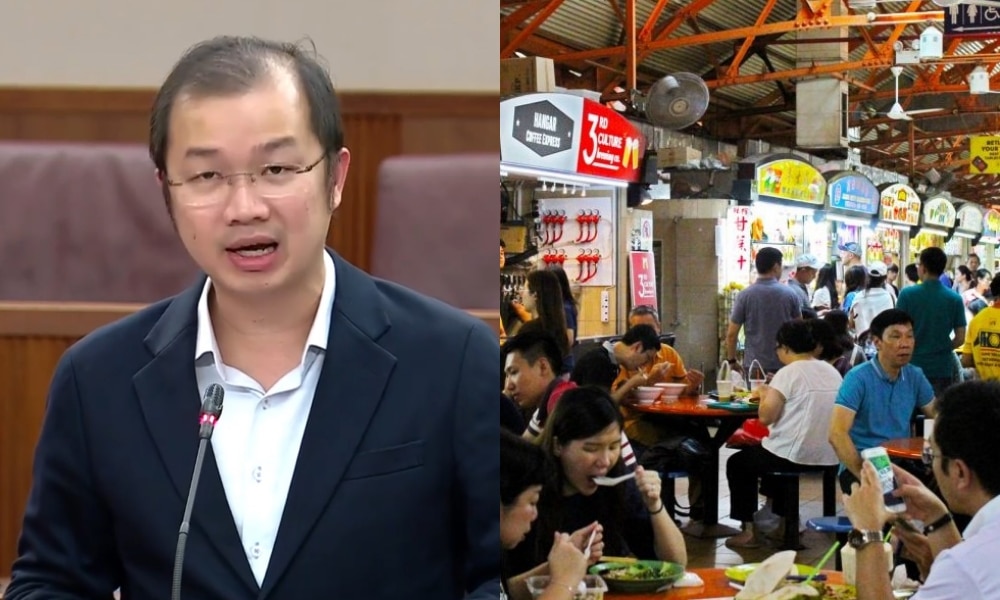

SINGAPORE: Mr Louis Chua Kheng Wee, Workers' Party (WP) Member of Parliament (MP) for Sengkang GRC, had argued against a purely price-based tender system, where hawker stalls are awarded to the highest bidder.
Participating in the Committee of Supply Debate for the Ministry of Sustainability and the Environment (MSE) budget on 4 March, Mr Chua emphasized the need for measures to ease the financial pressures on hawkers and ensure the affordability of hawker food for the public, especially in the face of the rising cost of living in Singapore.
One of Mr Chua's proposals involved considering the adoption of a rental cap, drawing parallels with its successful introduction in this year's Geylang Serai Ramadan bazaar.
He suggested that a similar approach could be extended to stalls in NEA-operated hawker centres.
However, the MSE Minister staunchly defended the existing bidding practice, reiterating that NEA conducts transparent and fair monthly tender exercises for hawker stall allocations.
WP MP Louis Chua spotlights hawkers' challenges amid escalating rents
This isn't the first instance of WP MPs advocating for the elimination of the bidding system, which they argue has led to skyrocketing operating costs for hawkers.
Last year, Mr Chua's colleague, Associate Professor Jamus Lim, illuminated how exorbitant coffee shop rents contribute to the inflation of hawker food prices.
During his speech, Mr Chua underscored the substantial pressure faced by hawkers in hawker centres due to the escalating rents, resulting in financial strain.
Consequently, many hawkers may find themselves compelled to reluctantly raise their food prices, affecting well-intentioned individuals in the industry.
As of 2021, the median monthly rent was S$1,250 for non-subsidized stores in NEA-operated hawker centres and S$2,000 for stalls in privately operated hawker centres under the Socially-conscious Enterprise Hawker Centres (SEHC) Scheme.
Mr Chua suggested that these higher rents could be attributed to operators passing on the costs from successful tenders, such as the S$6 million bid for the recently opened Buangkok Hawker Centre.
Therefore, Mr Chua proposed bringing all hawker centres under NEA control to better manage or even reduce costs for stallholders, ensuring the continued affordability of many food items.
"Cooked food stores in NEA-operated Hawker centres also face elevated rents with tender documents revealing that a median winning bid for January to November 2023, was approximately S$1,700, with some stalls even fetching over S$6,000 in rent."
Notably, the highest-ever rental reached S$6,810 per month for a hawker stall in Newton Hawker Food Centre.
"If the introduction of a rental cap for this year's Geylang Sarai Ramadan bazaar, perhaps a similar idea could be implemented for stalls in NEA-operated hawker centres, or even other government lease properties, such as HDB eating houses as well," Mr Chua suggested.
In contrast to a purely price-based tender system, where hawker stalls are awarded to the highest bidder, Mr Chua emphasized the urgency of implementing measures to alleviate financial pressures on hawkers, especially in the face of the rising cost of living impacting Singaporeans.
His call is for a balance that ensures the affordability of hawker food for all.
https://www.tiktok.com/@louis.chua/video/7344710538309422344
SMS Dr Koh said NEA's monthly tender exercises are transparent and fair
However, on 4 March, in response to Mr Chua's proposal, Dr Koh Poh Koon, the Senior Minister of State (SMS) for Sustainability and the Environment, staunchly defended NEA's commitment to fostering a supportive environment for hawkers.
This environment, he argued, allows them to find a delicate balance between pricing their offerings affordably and sustaining their livelihood.
"NEA lets out hawker stalls through monthly tender exercises, which are transparent and fair."
Dr Koh explained, "Rent will be adjusted towards the assessed market rent, after the first three years. In fact, only about 4% of cooked food stalls in hawker centres today are paying rent at above the assessed market rent. "
"These stalls would be in their initial 3-year tenancy, and their rental would be based on their tender bid. When they renew their tenancy at the end of the three years, it will be adjusted to the assessed market rent. "
Median rental across non-subsidised cooked food stalls has remained constant at about S$1,250 since 2015, said Dr Koh.
For SEHCs, Dr Koh said NEA considers proposals from operators with lower rental and operating costs for hawkers. Operators are not allowed to vary charges to hawkers over the tenancy term.
Dr Koh added that NEA has implemented measures such as the Productive Hawker Centre (PHC) program and Hawkers’ Productivity Grant (HPG) to help hawkers enhance their operations and productivity.
He further emphasized that NEA does not regulate hawker food prices, allowing hawkers autonomy to price their food based on various considerations such as operating costs and market conditions.
"NEA’s Hawkers’ Development Programme (HDP) and Incubation Stall Programme (ISP) provide holistic training to equip aspiring hawkers with skills needed to run a successful hawker business. Over 60 hawkers have joined the trade through these programmes."
Dr Koh announced the opening of three new SEHC hawker centres – Woodleigh Village, Anchorvale Village, and Punggol Coast Hawker Centres – designed to offer affordable and tasty hawker food in pleasant dining environments.
KF Seetoh: ‘Think twice before starting an F&B in Singapore’
Mr Chua's recent advocacy aligns with the persistent call from prominent Singaporean food critic KF Seetoh, who fervently urges the NEA to eliminate the bidding process.
Mr Seetoh's proposition revolves around establishing a fair rental system that recognizes and rewards deserving individuals based on criteria such as menu variety, culinary talent, and a commitment to preserving Singapore's unique food culture.
In a recent Facebook post, Mr Seetoh also disclosed that CoCo Rice, a beloved nasi lemak stall, will close by March’s end.
He shed light on the formidable challenges faced by local hawkers, including high operational costs and a shortage of manpower, despite their passionate efforts to produce delectable and authentic dishes for the public.
“If anyone is looking to start an F&B (food and beverage) or hawker stall (businesses) in Singapore, be very careful. I urge you to think twice,” he said.