Red Dot United questions Singapore's immigration policies amid community changes
In a Facebook post, Red Dot United highlights changing community dynamics in Singapore, questioning citizenship and residency policies to foster integration and harmony.
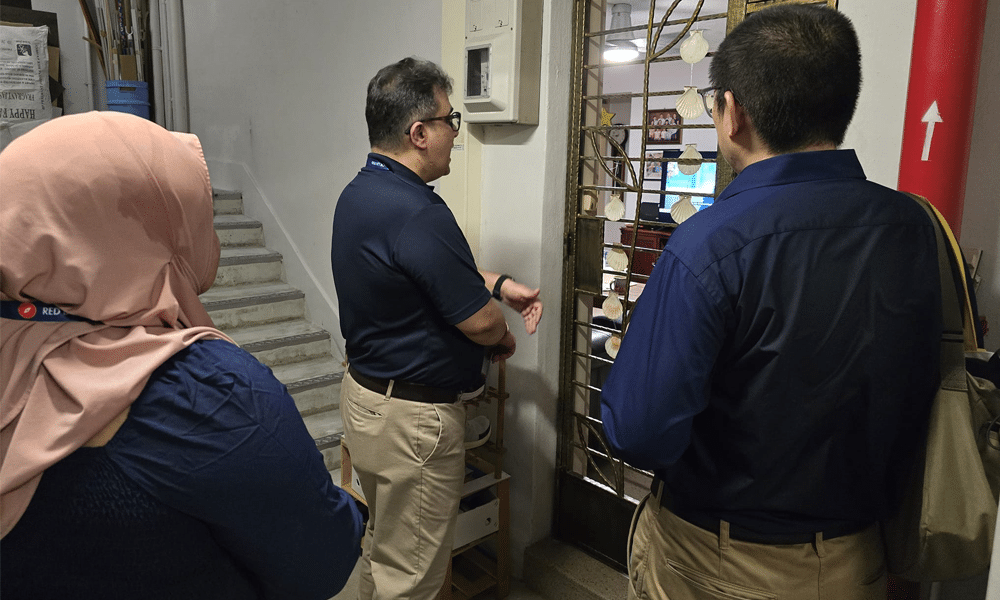

Members of the alternative political party, Red Dot United (RDU), took to the streets of Clementi last Thursday, uncovering unsettling signs of community division and changing social dynamics amidst the familiar blocks of flats.
As they navigated the neighborhood, the presence of CCTV cameras outside many flats sparked conversations with residents, revealing a growing distance among neighbors who were once tightly-knit in Singapore's compact residential areas.
Ravi Philemon, the secretary-general of RDU, shared his concerns with the press, highlighting the disheartening shift in the community's atmosphere.
"While walking around Clementi, we noticed a lot of flats with CCTVs outside. When we asked, people said they didn't feel as close to their neighbors anymore. It's sad to see this change; it's not how I remember Singaporeans being," Philemon remarked.
The conversations that RDU highlighted in its Facebook post revealed a complex tapestry of residents — from those who have called Clementi home since 1978 to Permanent Residents (PRs) and foreign workers renting flats.
The evolving demographic landscape, marked by the increasing presence of PRs and foreign workers, underscores the challenges of maintaining a sense of community in rapidly changing urban environments.
One poignant story emerged of a long-time resident, part of the Clementi community for over 40 years, who felt compelled to record conversations with newer neighbors who moved in six years ago. This act of surveillance, born out of mistrust or misunderstanding, symbolizes the deep-seated issues affecting neighborly relations today.
Despite these challenges, there is a glimmer of hope.
RDU noted in its post that both long-standing residents and newcomers expressed a desire for improvement, signaling a collective yearning for a return to the close-knit community values that once defined Singaporean neighborhoods.
The political party, however, questioned whether it might be time to reconsider how Singapore grants citizenship and permanent residency to better promote integration and harmony, in light of the importance of ensuring that everyone, including newcomers, feels a part of our community.
In 2023, Singapore granted approximately 23,500 new citizenships, including about 1,300 to children born overseas to Singaporean parents. Additionally, around 34,500 new Permanent Residencies were issued. For comparison, in 2022, Singapore granted roughly 23,100 new citizenships, with 1,300 of those going to children born overseas to Singaporean parents, and about 34,500 new permanent residencies were also issued.
As of June 2023, Singapore's total population stood at 5.92 million, marking a 5.0% increase from June 2022, while its fertility rate plummeted to a historically low level of 0.97.