Singapore population sets historic record with 5.92 million in 2023
Singapore's government has shed light on the nation's population dynamics, revealing a significant increase to 5.92 million in 2023, marking a 5% growth from the prior year. \n \nThis rise not only recovers the dips experienced during COVID-19 but also surpasses the 2019 figure of 5.7 million. As per the Prime Minister's Office (PMO), this 2023 figure sets a new record for Singapore.


Singapore has witnessed its population soar to an unprecedented 5.92 million, marking a 5% growth compared to the previous year.
This rise not only compensates for the decreases experienced during the brunt of the COVID-19 pandemic but also surpasses the pre-pandemic 2019 figure of 5.7 million.
In a statement from the Prime Minister's Office (PMO), it was noted, "The total population as of June 2023 is the highest ever registered in Singapore’s history."
This significant data was disclosed in the "Population in Brief" annual report on Friday (29 Sep), curated by the National Population and Talent Division under the PMO.
A deeper dive into these numbers reveals:
- Residents: Of the 5.92 million, a considerable 4.15 million are residents.
- Non-residents: The remaining 1.77 million, encompassing the foreign workforce, their dependants, and international students, fall under the non-resident category.
- Singaporean Citizens: Making up a substantial chunk of the total, 3.61 million or 61% are Singaporean citizens, registering a 1.6% increase from the previous year.
- Permanent Residents (PRs): The PR demographic has climbed by 3.7%, totaling 538,600 as of June 2023.
A significant reason for the ascension in both citizen and PR counts is attributed to the relaxation of COVID-19 travel restrictions, which prompted many overseas citizens and PRs to return home.
However, the non-resident population witnessed a more considerable surge of 13.1% to stand at 1.77 million.
This segment saw growth across all work permit categories. Most prominently, sectors like construction, marine shipyard, and processing industries reported a maximum influx.
Companies across various industries also onboarded more foreign workers, replacing those roles left vacant during the pandemic's peak.
When we zoom out and look at the bigger picture, considering the significant population dip in 2020 and 2021 due to the pandemic, the average growth rate over the past half-decade mirrors that of the five years before it.
A year-by-year breakdown reveals:
- 2021 saw the population shrink to 5.45 million due to international border closures.
- A mild recovery in 2022 pushed this figure to 5.64 million.
- The current 2023 count rests at a record 5.92 million.
Comparatively, between 2013 and 2018, Singapore's compound annual population growth rate was at 0.9%. This metric slightly increased to 1% for the period spanning 2018 to 2023.
The report also sheds light on societal metrics:
Ageing population
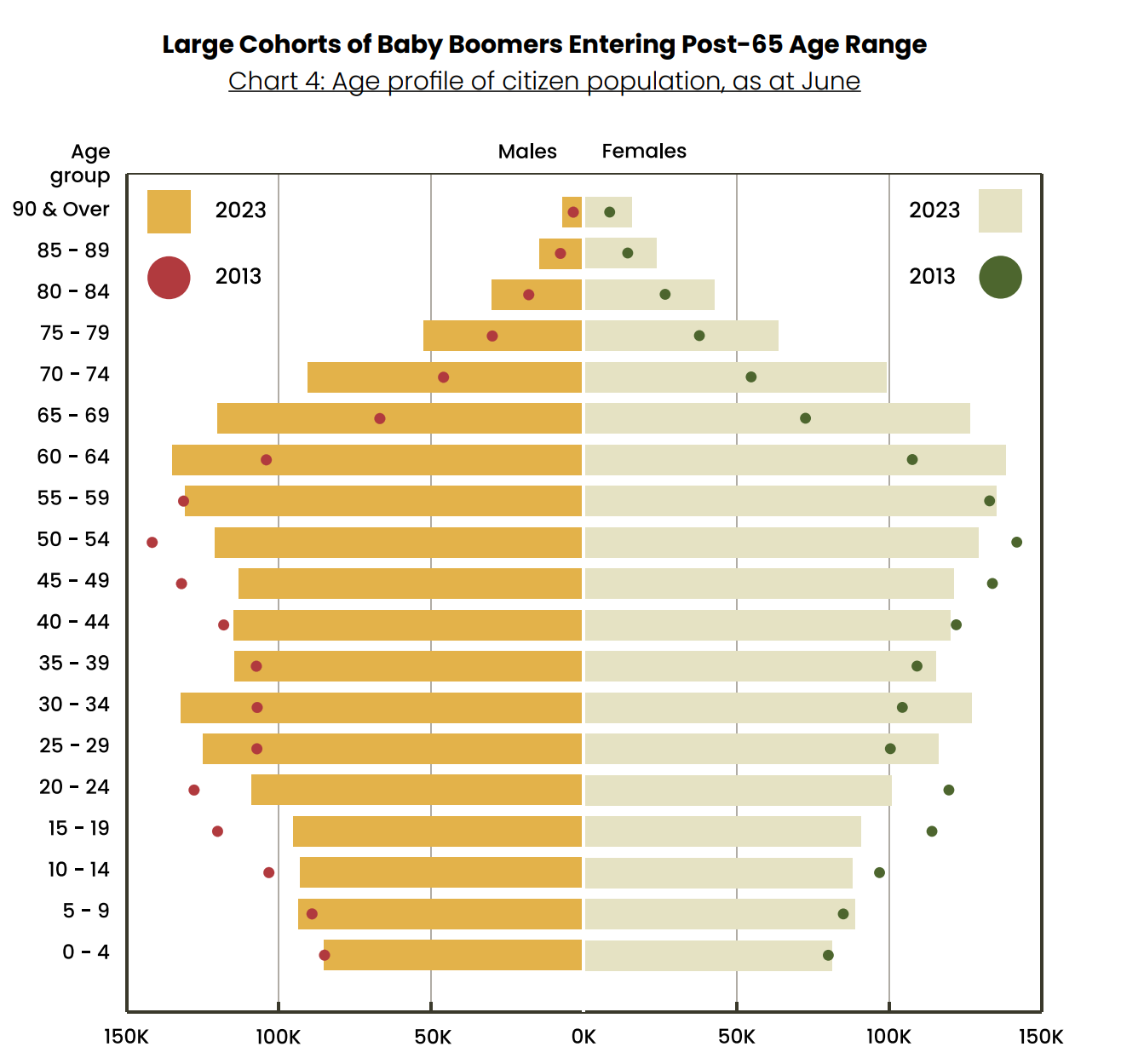
Singapore's citizen population aged 65 years and above is rising, and at a faster pace compared to the last decade.
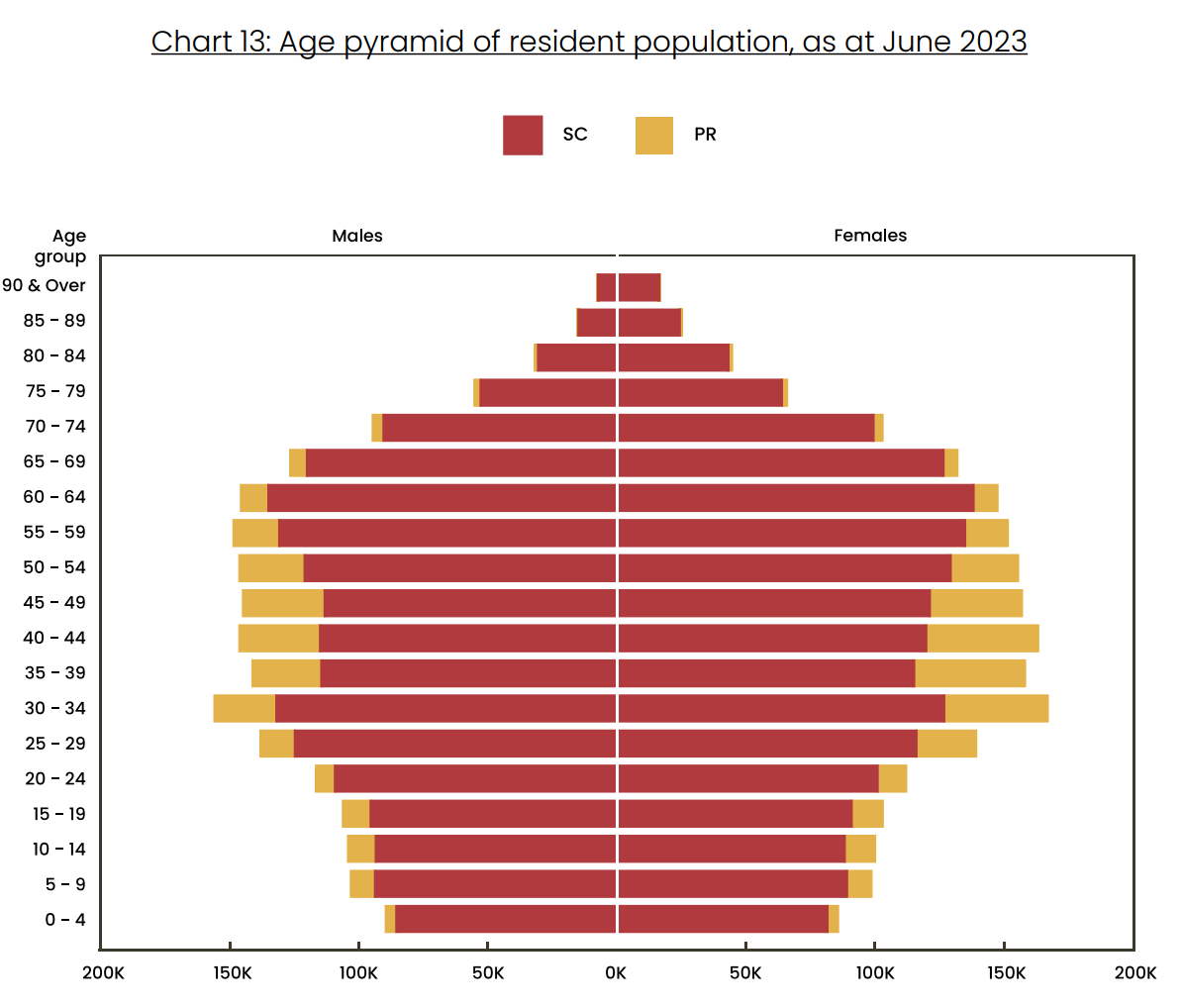
Currently, 61.0% of citizens are aged 20-64 years. This proportion has decreased from 64.9% in 2013. Conversely, the proportion of citizens aged 65 and above has increased from 11.7% in 2013 to 19.1% in 2023. By 2030, around 1 in 4 citizens (24.1%) will be aged 65 & above.
The number of citizens aged 80 and above has also increased by about 70% from 80,000 in 2013 to 136,000 in 2023.
Citizen Marriages Rise in Singapore while Birth Rates Decline in 2022
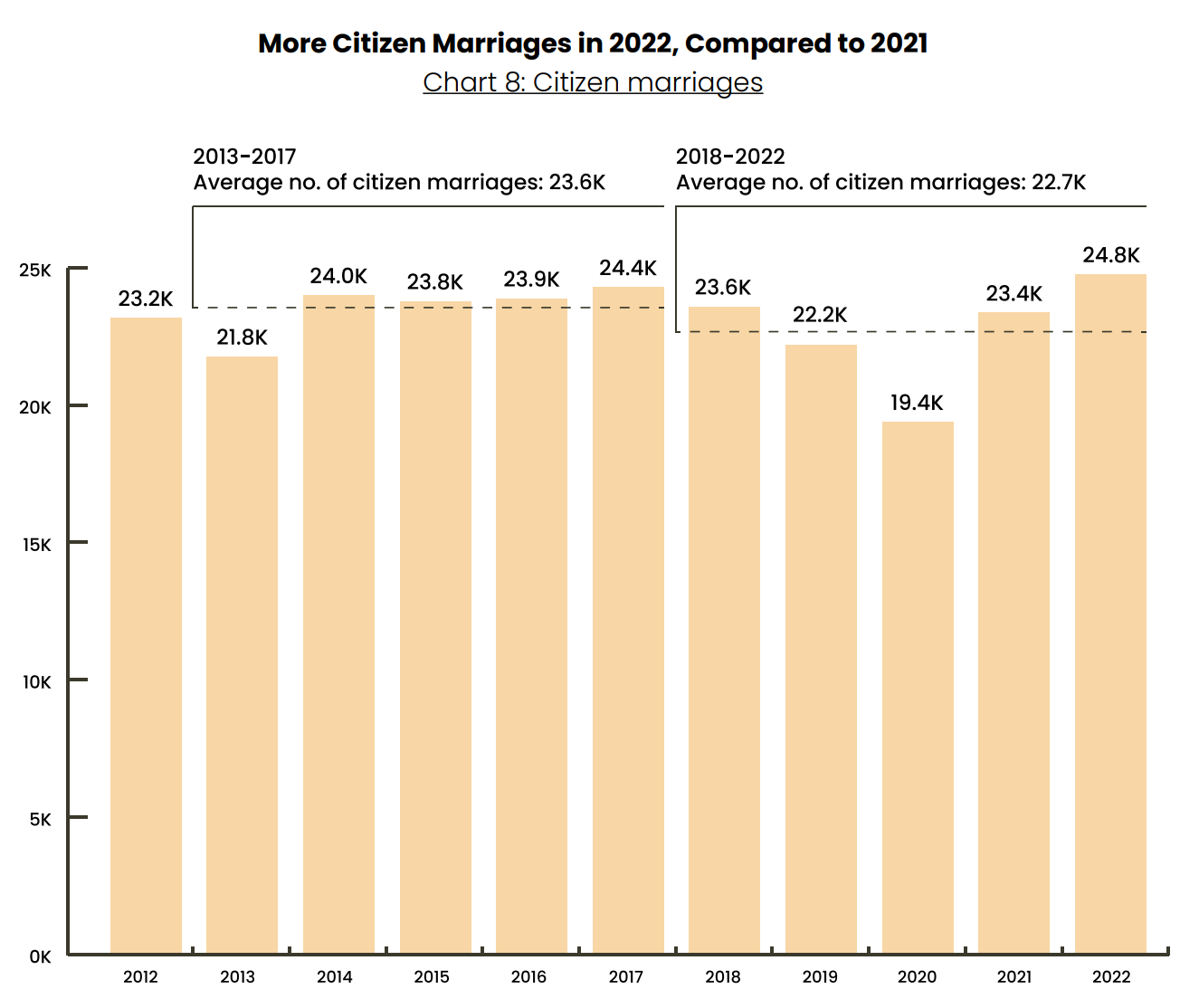
Singapore witnessed a notable surge in citizen marriages in 2022, registering 24,767 unions, a 5.7% increase from 23,433 in the preceding year. This growth in marriages marks the second consecutive year of increase since 2020.
Analysts speculate that this uptick could largely be attributed to couples resuming their marriage plans that might have been shelved due to the COVID-19 pandemic.
However, when zooming out to examine long-term marriage trends, the numbers reveal a different story.
The average annual number of citizen marriages over the last five years stood at 22,700, which is marginally lower than the average of 23,600 observed in the prior five-year span.
Additionally, over the past decade, the median age at which citizens are tying the knot has witnessed an incremental rise. As of 2022, first-time grooms typically marry at age 30.5, and brides at 28.8, compared to 30.1 and 27.7, respectively, in 2012.
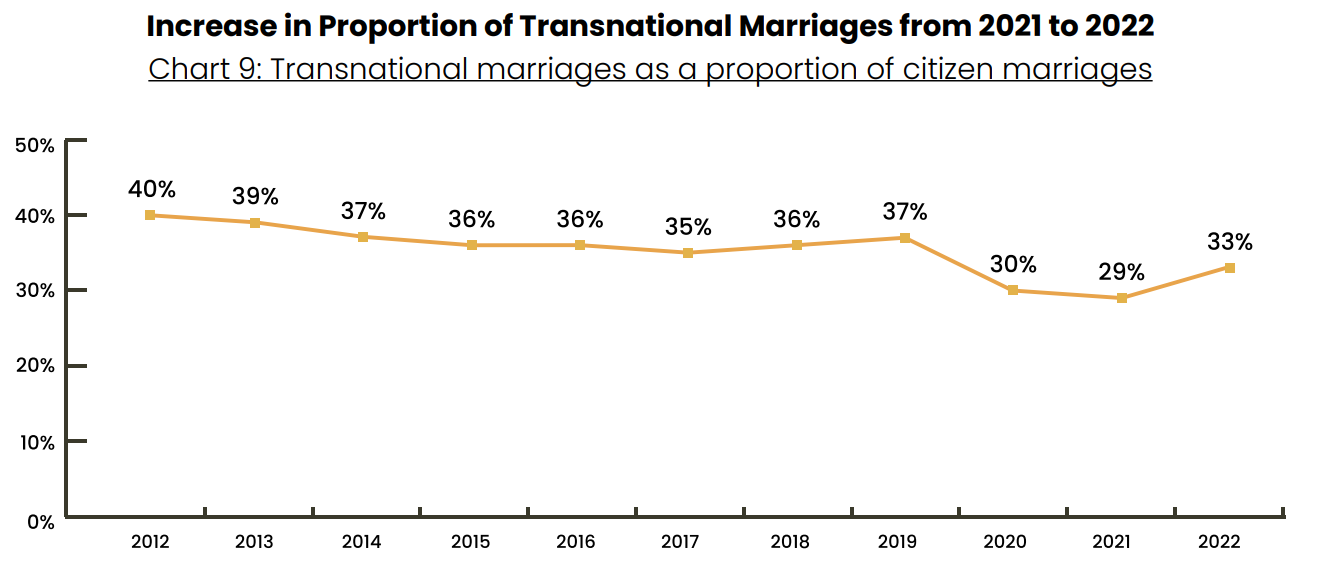
Adding layers of complexity to the marital landscape, 33% of citizen marriages in 2022 comprised transnational couples, a subtle ascent from 29% in 2021.
It's worth noting, however, that this figure remains below the pre-pandemic levels reported in 2019. Another steady trend is the proportion of inter-ethnic marriages, which has hovered around the 1-in-6 mark for the past decade.
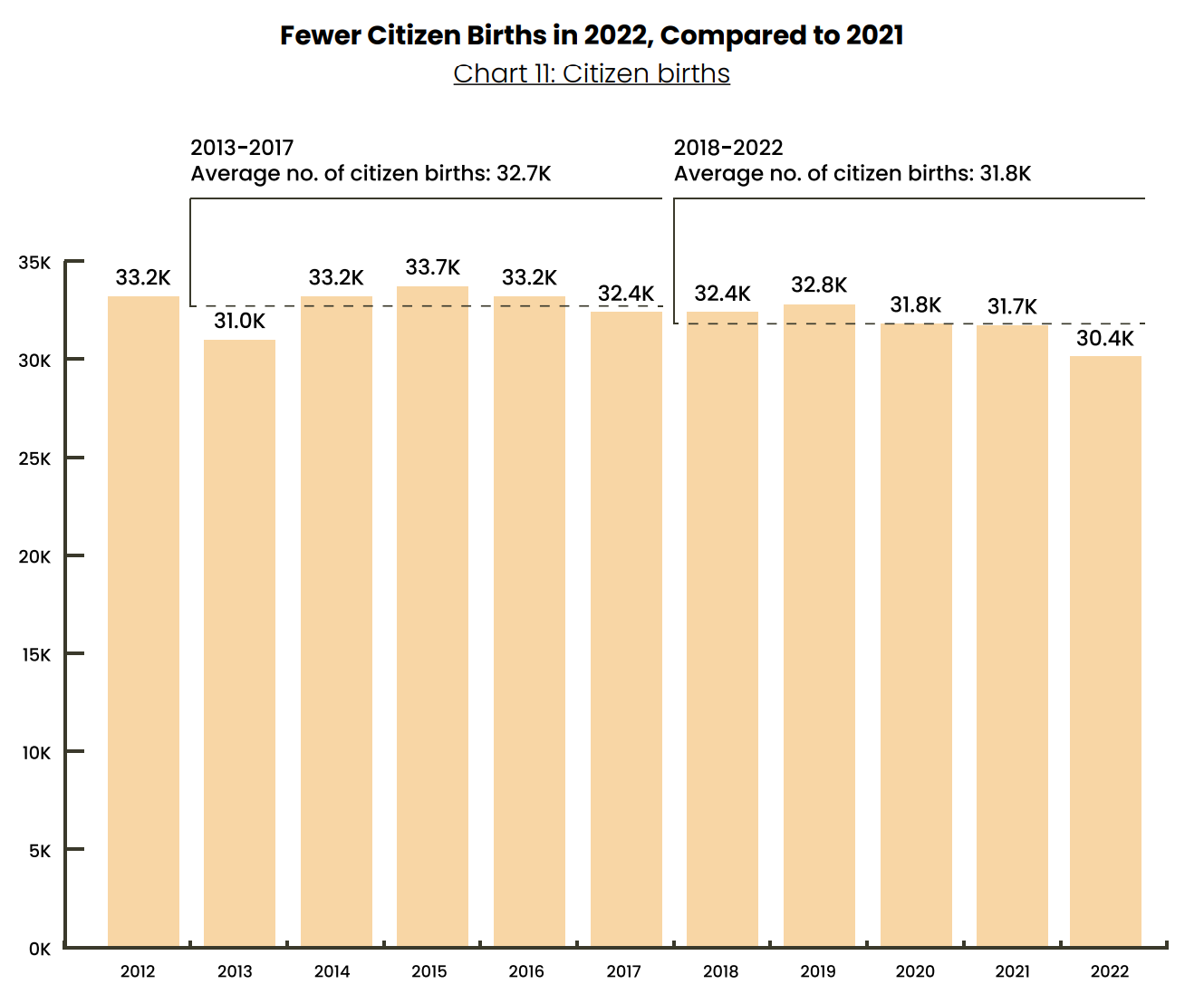
While marriages experienced a positive trajectory, citizen birth rates did not share the same fortune. In 2022, Singapore recorded 30,429 citizen births, a dip from 31,713 in 2021.
The recent five-year average for births, 31,800, is also marginally less than the average of 32,700 in the five years preceding it.
Mothers, on average, seem to be opting for childbirth a tad later, with the median age of citizen mothers at their first birth rising from 30.1 years in 2012 to 31.3 years a decade later in 2022.
Perhaps the most pressing concern from the demographic data is the plummeting resident total fertility rate (TFR).
Reaching a historic low of 1.04 in 2022, this decline has aligned with cultural patterns, specifically the Year of the Tiger in the Lunar calendar, which traditionally sees lower birth rates within the Chinese community.
Tackling Singapore's ageing population and declining births
Singapore's government has emphasized its strategic use of immigration policies as a countermeasure to the challenges posed by an aging population and decreasing birth rates.
By regulating the intake of Permanent Residents (PRs) and new citizens each year, the government suggests that this could potentially help to achieve a balanced demographic and deter a prolonged drop in the citizen populace.
The government outlines that their preference for granting new citizenships is predominantly directed towards individuals who show an ability to assimilate, contribute positively, and demonstrate a solid commitment to Singapore.
According to the official narrative, a significant portion of these new citizens often already have established connections to the country, be it through familial ties, such as marriage, or having resided, worked, or studied in Singapore for considerable durations.
Delving deeper into the citizenship process, as depicted by the authorities, all new adult citizens typically transition from the existing pool of PRs, as acquiring permanent residency is framed as an essential step before full citizenship.
There's a specific emphasis on an exception: a select group of new citizens, mainly minors, who gain citizenship without the PR intermediary step.
Officially, these are often children of current citizens, some of whom might be born overseas, or those who are listed as dependents in their parents' citizenship applications.
In championing the nation's dedication to demographic equilibrium, the government points to a stable PR population, which consistently remains around the half-million mark.
Notably, according to official figures, most of these PRs fall within the 25 to 59 age bracket, arguably the most economically productive age group.
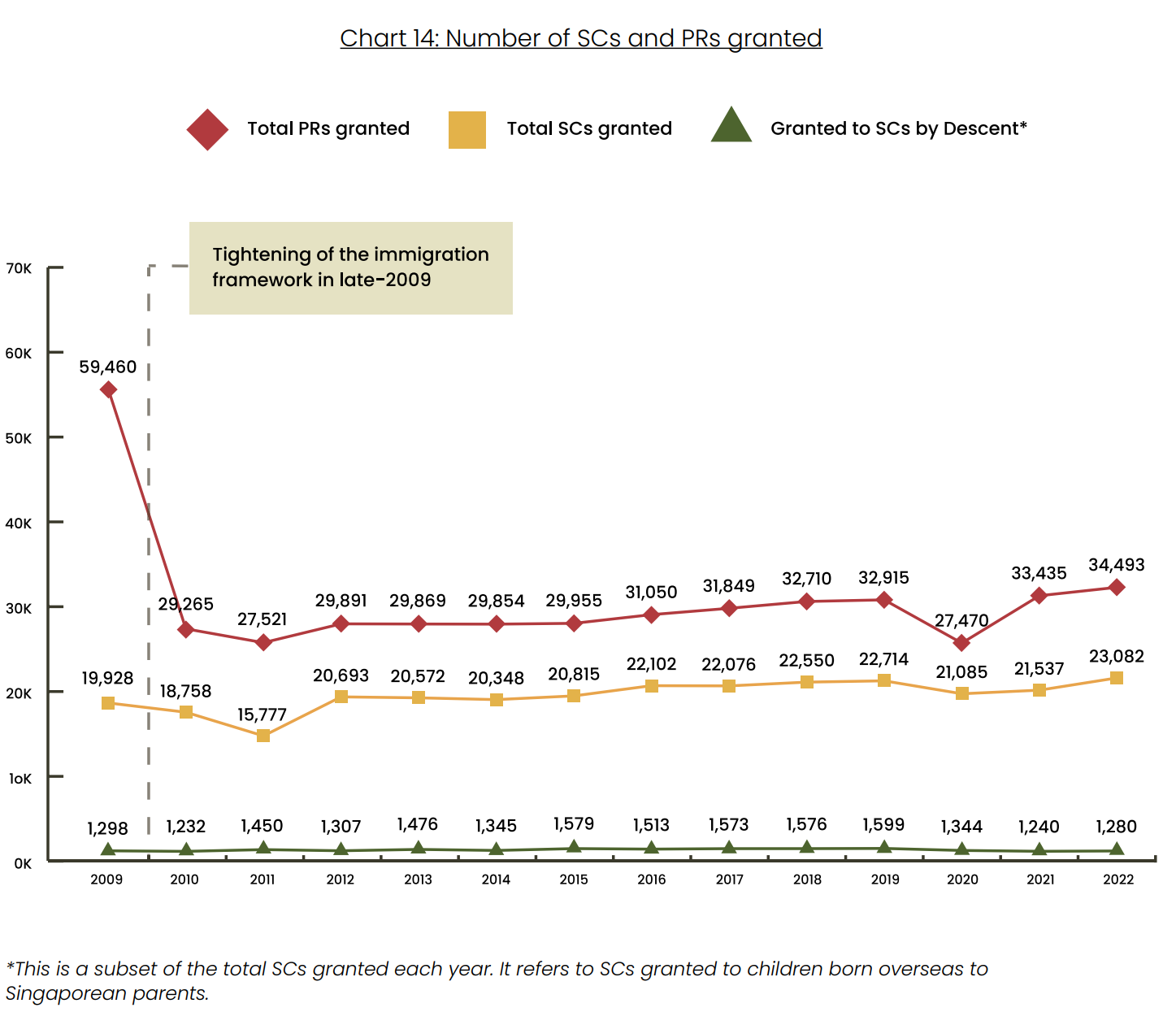
On the topic of immigration rates, the year 2022, as described by official sources, witnessed a steady and noteworthy influx: 23,082 individuals gained citizenship, and 34,493 were awarded PR status.
These figures, which are slightly higher than those before the pandemic in 2019, are framed by the government as an outcome of the backlog due to COVID-19-induced travel curbs and safety regulations.
As the narrative goes, many 2020 and 2021 applicants had their in-person interviews and processing for citizenship or PR delayed. But with the relaxing of measures, these processes resumed in 2022, causing the reported increase.
A highlighted element of the 2022 immigration data, as presented by the authorities, is that about 5.5% of the new Singaporean Citizens, translating to roughly 1,280 individuals, were labeled as “citizens by descent,” being children born abroad to Singaporean parents.