TikTok video reignites concern over elderly being forced to work in Singapore
A TikTok video highlighting an elderly cleaner reignites awareness of challenges faced by working elderly in Singapore. A LKYSPP report in Sept 2023 suggested S$1,492 for basic needs for seniors over 65, which was later rebutted by the Singapore Govt.
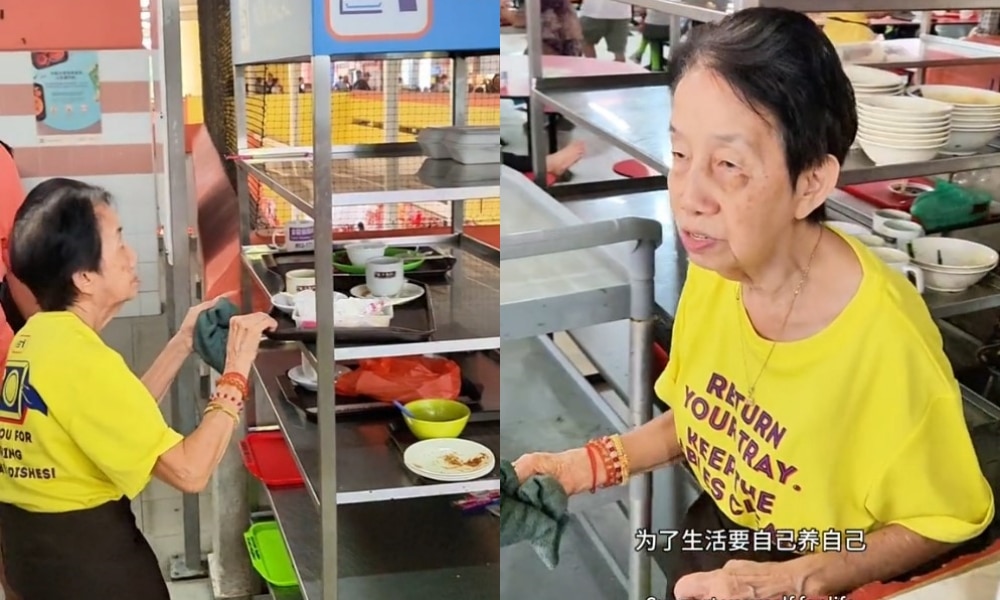

A recent TikTok video sparked active discussions within the online community, drawing attention once again to the challenges faced by elderly Singaporeans who continue working despite reaching retirement age.
On 24 January, Patrick Xu, a TikTok user, shared a video featuring an interview with a nearly 80-year-old woman who works as a cleaner at a hawker centre in Chinatown.
The video, currently boasting over 230 thousand views, sheds light on the woman's nine-year tenure as a cleaner at the hawker centre.
Despite having a son who owns a house, they do not live together, and the woman claimed that her son only visits her once a year.
She revealed that she lost her husband in 2009, prompting her to work to sustain herself.
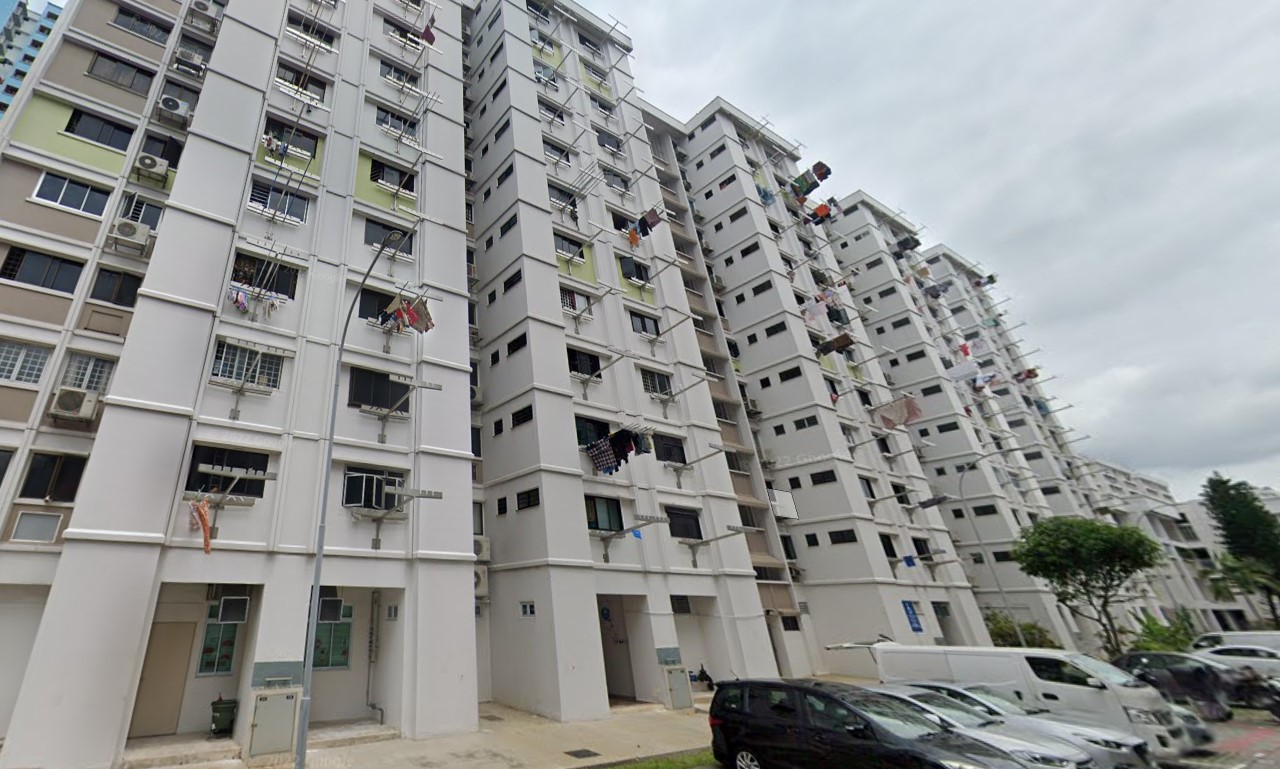
Expressing a sense of loneliness in her three-room HDB flat, she disclosed that her son's behaviour changed after her husband's passing.
"My son only gives me S$200 per month, how enough (to make ends meet)?" the elderly told Mr Xu while revealing that she earned S$1670 per month as a cleaner.
The TikToker suggested in the video that the elderly continued employment not only helps cover her household expenses but possibly also provides an opportunity for social interaction, preventing her from feeling isolated at home.
Before concluding the video, Mr Xu extends his wishes for the elderly woman's good health and happiness.
https://www.tiktok.com/@patrick.xu/video/7327596448457968898
Reflections on the elderly woman's struggle and the puzzling need to work in retirement
The video has amassed over 400 comments, with netizens expressing empathy towards the elderly woman. Many are questioning why she needs to continue working despite being at retirement age.



Netizens highlight challenges faced by low-income elderly workers
One comment underscored the challenges faced by low-income elderly workers, pointing out issues such as low salaries, limited days off, and extended working hours.
It was emphasized that these circumstances may make it difficult for them to take time off to see a doctor when they are unwell.
Considering Singapore's high cost of living, the comment implied that the elderly might be hesitant to depend on their children as they age, especially since their children likely have their own families and financial obligations.

A comment raised a challenge, noting that in Singapore, the elderly still receive government subsidies.
The netizen might be referring to the Silver Support Scheme provides additional support for elderly Singaporeans who had low incomes during their working years and now have less in their retirement.

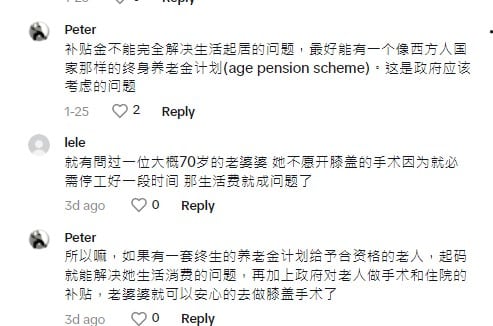
However, one netizen argued that relying solely on government subsidies cannot completely solve the daily living issues.
He proposed introducing an age pension scheme, similar to those in certain Western countries and urged the government to adopt more inclusive policies to care for the country's pioneer generation.
In another comment, it was mentioned that a 70-year-old individual was reluctant to undergo knee surgery as it would require significant time off, leading to financial concerns.
The netizen added that if there was a comprehensive age pension scheme for eligible elderly individuals, it could at least address their living expenses. Additionally, with government subsidies for surgeries and hospitalization, the elderly woman could undergo knee surgery without worrying about her livelihood.
Elderly Singaporeans forced to work for survival
Interestingly, upon reviewing earlier Reuters reports, it has come to light that the same elderly lady, identified as Mary Lim, was previously featured in an interview by Reuters in 2019.
In an article from five years ago, Reuters highlighted that "almost a third of Singaporeans over 65 continue to work," citing the insufficiency of Singapore's CPF retirement saving scheme for many elderly citizens, compelling them to seek employment post-retirement.
At that time, Mary Lim shared with Reuters that “the government’s retirement saving scheme doesn’t provide her with enough money”.
“I have to keep on working until the end of my life,” Mdm Mary lamented.
“What to do, no choice. I have to struggle for it.”
Nearly 70% of elderly workers in Singapore earn less than S$2,500
Singapore is rapidly transitioning toward an aged society. Every six individuals will be over 65 years old.
By 2030, every four Singaporeans will be over 65.
During a response in February 2023 to parliamentary questions by Non-Constituency Member of Parliament Leong Mun Wai, Manpower Minister Tan See Leng revealed concerning figures: Close to seven out of 10 working elderly in Singapore earn less than S$2,500.
The Lee Kuan Yew School of Public Policy (LKYSPP) at the National University of Singapore published a survey finding in Sept 2023 that an older Singaporean above 65 years old would need S$1,492 to meet his or her basic needs.
For an elderly couple aged 65 and above, the figure rises to S$2,551, while those aged between 55 and 64 years require S$1,857. The increase amounts to a rise of 4%–5% between 2020 and 2022 for the three indicative household types.
The report unveils figures detailing the necessary income households require to maintain a basic standard of living, using the Minimum Income Standard (MIS) method.
The 2023 MIS report also proposed three significant income reforms: introducing a universal wage floor, revising the CPF model to better serve the elderly, and pegging assistance amounts to current inflation rates.
However, the Singaporean government, in a statement, contested the findings by suggesting that they “might not accurately reflect basic needs”. Instead, the findings should be seen as “what individuals would like to have.”