Tharman's Bill: Challenging FICA principles and highlighting PAP's blank cheque approach
Opinion: It is proposed that the 'Constitution of the Republic of Singapore (Amendment No. 3) Bill' be informally referred to as 'Tharman's Bill', a name that reflects its creation in response to President Tharman's international roles. \n \nThis bill contrasts sharply with the objectives of the Foreign Intervention Countermeasure Act (FICA). By enabling high-level officials to hold positions in foreign organizations, it potentially undermines FICA's strict measures against foreign influence. \n \nFurthermore, it exemplifies the People's Action Party's (PAP) approach of using its majority to pass self-serving legislation, effectively utilizing the 'blank cheque' provided by the electorate.


SINGAPORE: The People's Action Party (PAP) government, on 6 November, put forth a proposal for significant amendments to the nation's Constitution. These changes, if ratified, would permit the President and ministers to undertake roles in foreign and international organizations on a personal basis.
This initiative, spearheaded by the Prime Minister’s Office (PMO) and presented to Parliament on 6 November, aims to enhance Singapore’s diplomatic influence and effectively serve the national interest on a global scale.
Encapsulated in the Constitution of the Republic of Singapore (Amendment No. 3) Bill, these proposed amendments target the existing constitutional restrictions that currently prevent the President from engaging in public roles privately. The PMO's statement articulated this intent: “The Bill proposes amending the Constitution to establish a framework that allows the President to engage in foreign and international roles privately, contingent on the Cabinet's advice that it aligns with the national interest.”
These amendments also underscore the Cabinet’s advisory role, mandating it to guide the President regarding actions and statements in these capacities and authorize the President to renounce any such position if it's deemed necessary. According to the PMO, this measure aims to strike a balance between the President’s autonomy in these roles and overarching national priorities.
The PMO further clarified that these amendments are designed to comprehensively encompass high-level government roles, ensuring that Singapore’s international engagement is both effective and transparent. The PMO added, “The acceptance or relinquishment of an office under this framework by the President or a Minister must be disclosed in the Gazette.”
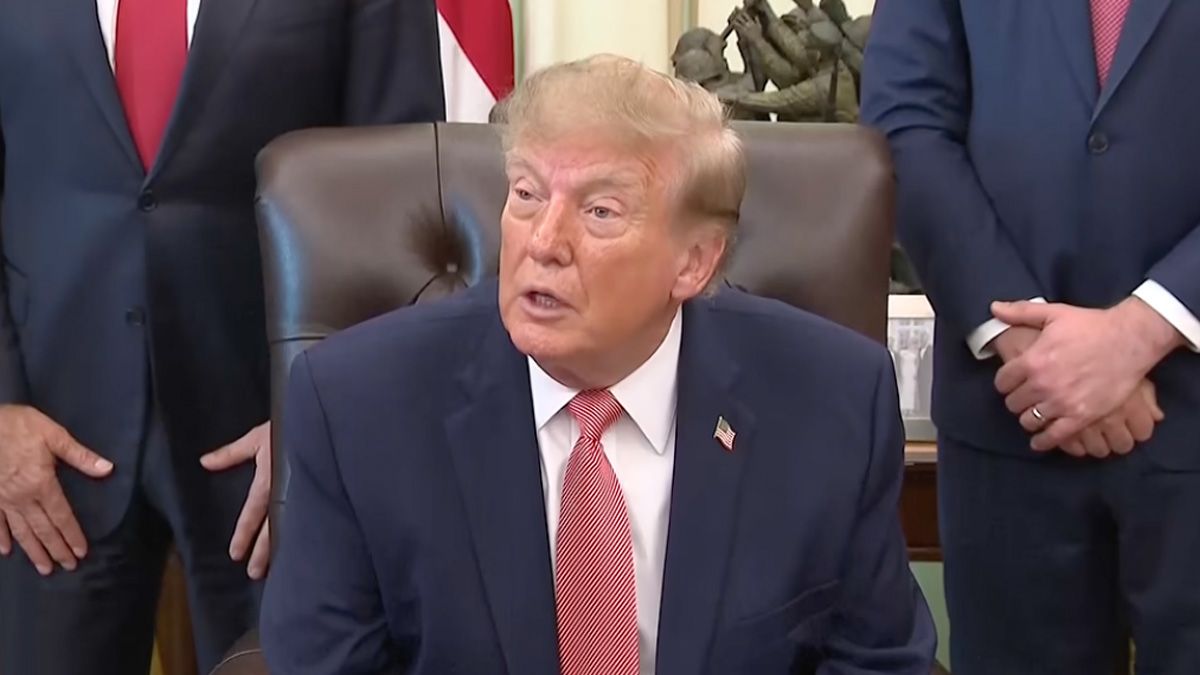
Regardless of how grandiose the PMO puts it, the bill should be named as Tharman's Bill, for there had been no reason for Singapore to introduce such amendments to the Singapore Constitution before Mr Tharman Shanmugaratnam was decisively elected as President on 14 September.
While Mr Tharman stepped down from his political appointments and resigned from the PAP just before contesting in the Presidential Election, he continues to hold prestigious positions, such as the chairmanship of the G30’s board of trustees and co-chairing the Global Commission on the Economics of Water, despite constitutional constraints. Even before the conclusion of the Presidential Election, concerns about potential conflicts of interest linked to President Tharman’s foreign appointments were previously raised.
The legal challenge brought about by Ms Iris Koh and filed by Mr M Ravi was struck down by the High Court, with the judges saying that there was no reasonable cause of action to bar Mr Tharman's candidacy, which the challenge sought to do.
While that may be true then, as Mr Tharman could always relinquish his foreign appointments after he is elected, one cannot be expected to take such drastic measures even before one is elected. But that is a different thing altogether given that Mr Tharman WAS indeed elected on 14 September.
And what we have today, instead of having Mr Tharman step down from his appointment due to concerns over possible conflict of interests and foreign interference, is amendments to the Constitution so that Mr Tharman can continue to hold those positions without any issues.
Therefore, this bill put forth by the PMO ought to be renamed the Tharman's Bill.
Furthermore, it appears that the bill's provisions for the President and Ministers to take up appointments in foreign entities in their personal capacities raise questions about its alignment with the Foreign Intervention Countermeasure Act (FICA) passed in October 2021.
FICA, which is aimed at 'preventing, detecting, and disrupting foreign interference in domestic politics,' has faced criticism for potentially undermining civic freedoms, a concern echoed by various stakeholders in Singapore. This legislation grants the Minister for Home Affairs the authority to arrest individuals suspected of knowingly or unknowingly colluding with foreign entities to exert influence in Singapore, and they can be held without bail.
The law sent tremors across the island, leading many individuals working with foreign embassies or missions to question their future or to relinquish their existing arrangements, simply to avoid falling afoul of the law.
Former Member of Parliament Leon Perera, during the second reading of FICA in 2021, highlighted an issue: ministers seem to be exempt from FICA's overbearing powers of control.
He stated, 'Sir, it overlooks the potential for foreigners to influence senior government figures, including the Minister for Home Affairs. Who checks the checkers? Or, in Latin, 'quis custodiet ipsos custodes' – who watches the watchmen?', emphasizing that this neglects the likelihood that foreigners with malicious intent would first seek to influence those holding more power, namely Ministers."
Mr Perera's speech addressed three key themes: the oversight of potential malign foreign influence on government figures, clarifying questions on overreach, and the rationale behind proposed amendments.
He raised concerns about the absence of an independent investigative authority in the Bill to scrutinize cases of malicious foreign influence (FI), whether directed at the Ruling Party or the Opposition. The Bill, instead, grants broad discretionary powers to the Minister for Home Affairs to act against FI directed at others, raising questions about what happens if the FI targets the Minister themselves.
Mr Perera proposed creating an independent Ombudsman's office, a suggestion previously made by Workers’ Party Members of Parliament, to investigate such cases credibly.
In response to these concerns and his proposal, Minister for Home Affairs and Law K Shanmugam simply stated, "Mr Perera asked who checks the checkers? What if the Prime Minister or the Minister for Home Affairs is suborned? In other countries, if a prime minister or a minister for home affairs is suborned, do the courts intervene? The ultimate check is the people."
FICA, as Mr Perera pointed out, already faces challenges in overseeing ministers for any form of foreign interference.
The new bill, which explicitly allows ministers and the president to act in the interest of foreign organizations without clearly defining the boundaries between Singaporean and foreign interests, seems to contradict the very rationale behind FICA's introduction. Additionally, it further muddles the definition of conflict of interest, particularly concerning the PAP's political leadership.
This situation redefines the phrase 'ownself check ownself' and suggests a mindset where the PAP government utilizes the blank cheque granted by the electorate in the General Elections.
The situation becomes even more absurd considering that President Tharman is the authority expected to sign the bill once it is passed—a bill that benefits him personally, as he would not have to resign from his prestigious international appointments. This contrasts with the decisions some individuals were forced to make after the passing of FICA in 2021, resigning out of fear.
And this further raises the question of the sacredness of Singapore's Constitution as the PAP Government seems to be amending the Constitution at its whims and whims to suit its political agenda.
Examples are how the PAP introduced the race reserved election, heightened criteria for private candidates, which saw the disqualification of candidates such as entrepreneur George Goh, and measures to prevent a "rogue" president from blocking decisions of the Parliament after Presidential candidate Dr Tan Cheng Bock nearly won in PE2011.
As Mr Shanmugam highlighted, in the current situation with a PAP majority government, the only deterrent against the PAP's abuse of the parliamentary process and the law is the electorate's response at the ballot box.