SUHAKAM and Malaysian Bar train young lawyers to defend Indigenous rights and customary land protections in Sarawak
Malaysia’s human rights commission and the Malaysian Bar have trained young lawyers and human rights officers in Sarawak to strengthen legal protections for Indigenous communities, including customary land rights, cultural identity and constitutional safeguards.
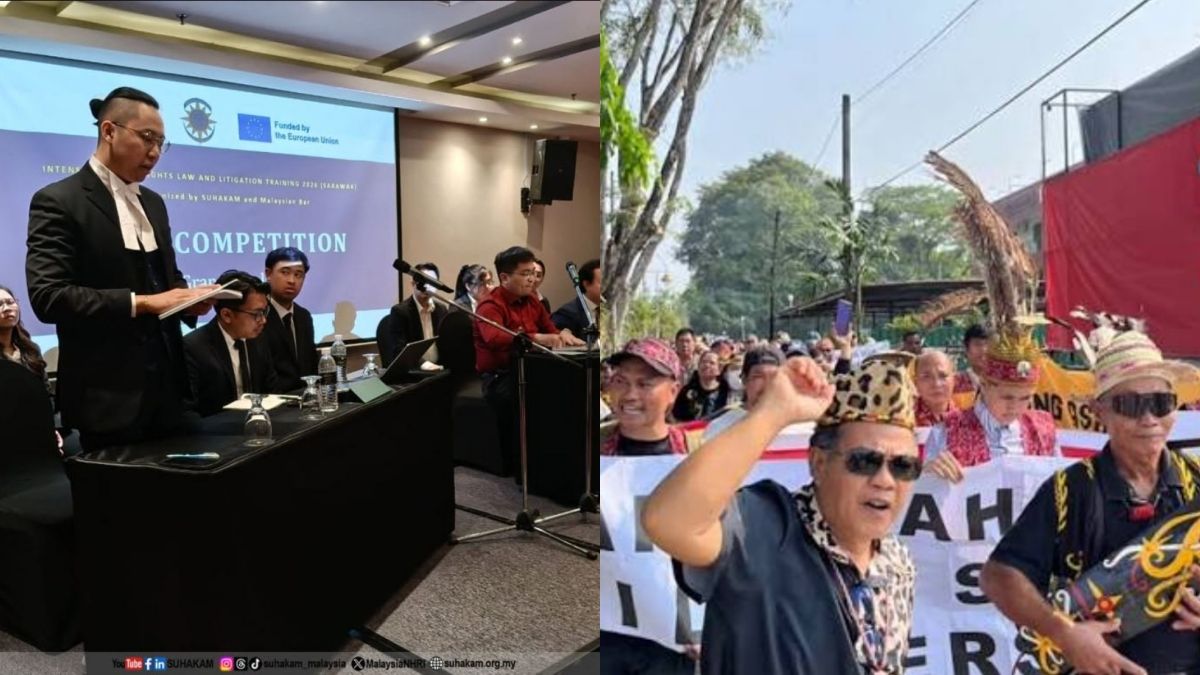
- SUHAKAM and the Malaysian Bar trained young lawyers and human rights officers in Sarawak to strengthen legal support for Indigenous communities.
- The programme addressed customary land rights, constitutional safeguards, cultural identity and the Malaysia Agreement 1963.
- Selected participants are expected to provide monthly pro bono legal support to non-governmental or civil society organisations.

SARAWAK, MALAYSIA: The Human Rights Commission of Malaysia (SUHAKAM) and the Malaysian Bar have strengthened efforts to protect Indigenous communities in Sarawak by equipping young lawyers with legal skills to defend customary land rights and fundamental freedoms.
The Intensive Human Rights Law and Litigation Training, held from 22 to 24 October 2026 in Kuching, focused on Indigenous Peoples’ Rights and Fundamental Liberties, including legal challenges affecting Native Customary Rights (NCR).
Supported by the European Union (EU) through its grant project, Advancing Human Rights in Malaysia via Strategic Approaches in Education and Awareness Raising, the programme also received assistance from the Advocates Association of Sarawak’s Kuching Branch.
The initiative brought together young lawyers and SUHAKAM officers to strengthen litigation capabilities, advocacy skills and understanding of constitutional protections affecting Indigenous communities.
Indigenous rights encompass cultural identity and community participation
SUHAKAM chairman Dato’ Seri Mohd Hishamudin Yunus emphasised that protecting Indigenous communities requires broader recognition of their cultural identity, traditional practices and involvement in decisions affecting their livelihoods.
“The protection is more than land ownership, it is the question of identity, cultural recognition and meaningful participation in various decisions on their livelihood,” he said.
His remarks highlighted the importance of recognising Indigenous rights beyond property ownership, particularly where ancestral territories remain closely connected to community livelihoods and cultural traditions.
The training incorporated discussions, case studies, interactive workshops and a moot court to help participants develop practical approaches to human rights litigation.
Participants examined constitutional, statutory and customary legal frameworks governing Indigenous rights in Sarawak, alongside procedural requirements, evidence gathering and litigation strategies.
The programme also addressed fundamental liberties under the Federal Constitution and the constitutional significance of the Malaysia Agreement 1963 (MA63).
Malaysia Agreement 1963 safeguards remain central to Indigenous rights
Representing the Malaysian Bar, Abang Iwawan stressed the importance of understanding MA63 and the Inter-Governmental Committee Report when examining legal protections for Indigenous communities in Sarawak.
“The safeguards concerning religion, language and Indigenous peoples discussed when Malaysia was formed remain closely connected to the concerns communities raise today,” he said.
“Lawyers need to understand what was secured, how it is reflected in our laws, and whether those protections are working for the people they were intended to serve.”
The training also featured the President of the Native Court of Appeal, Sarawak, Gabriel Gumis Humen, among its trainers.
Beyond developing litigation skills, the programme sought to strengthen cooperation between legal professionals, human rights institutions and Indigenous communities.
Selected participants are expected to contribute monthly pro bono hours to non-governmental or civil society organisations of their choice.
SUHAKAM and the Malaysian Bar reaffirmed their commitment to developing legal capacity and partnerships that improve access to justice and human rights protection nationwide.
Customary land disputes highlight continuing challenges in Sarawak
The initiative took place amid continuing concerns over customary land recognition, traditional territories and environmental protection affecting Indigenous communities in Sarawak.
These concerns have also emerged in cases involving logging concessions, development activities and competing claims over ancestral territories.
In July 2026, Human Rights Watch (HRW) highlighted the situation involving Rumah Jeffery, an Indigenous Iban community reportedly facing eviction threats following logging activities on land it regarded as ancestral territory.
According to HRW, timber company Zedtee allegedly logged the community’s ancestral land without consent in 2022.
The organisation reported that the Sarawak government had granted companies concessions covering the territory despite the community’s longstanding presence and had subsequently issued an eviction notice.
Following HRW’s investigation and advocacy, officials reportedly assured the community that it would not face forced eviction and indicated that its land would be excluded from the concessions.
The case illustrated concerns raised by rights organisations over the recognition of Indigenous land claims and the consequences of commercial activities affecting traditional territories.
EU deforestation rules bring greater attention to Indigenous land rights
HRW has also highlighted the European Union Deforestation Regulation as an important mechanism connecting international trade requirements with environmental protection and compliance with relevant laws, including land rights.
The organisation has advocated stronger scrutiny of commercial activities in Sarawak amid concerns over deforestation and alleged violations of Indigenous rights.
Working alongside Malaysian organisations SAVE Rivers, KERUAN and RimbaWatch, as well as international partners Borneo Project and Bruno Manser Fonds, HRW has called for closer examination of these risks.
The organisations have argued that international market requirements should account for Indigenous land rights when assessing products linked to forest-related activities.
The training programme also coincided with a significant political development following the reported dissolution of the Sarawak State Legislative Assembly on 26 October 2026.
The dissolution paved the way for the 13th Sarawak State Election, placing questions surrounding customary land protections, environmental management and community participation within the state's broader political landscape.
For Indigenous communities, these issues remain closely connected to legal recognition of ancestral territories, access to natural resources and participation in decisions affecting traditional livelihoods.