Malaysian Bar challenges Pardons Board's decision to halve Ex-PM Najib's jail term
The Malaysian Bar has lodged a judicial review against the Pardons Board's decision to reduce former PM Najib Razak's prison term, citing it violates Article 8(1) of the Malaysia Constitution, alleging preferential treatment.


KUALA LUMPUR, MALAYSIA: The Malaysian Bar filed a judicial review challenging the decision of the Pardons Board to halve former Prime Minister Datuk Seri Najib Razak's prison term for his conviction in the SRC International corruption case.
Filed on 26 April, the application by the Malaysian Bar asserts that the Federal Territories Pardons Board (FTPB)'s decision on January 29 regarding Najib is unlawful, unconstitutional, and void.
Additionally, the Malaysian Bar seeks a permanent injunction to prevent Najib, his servants, and agents from submitting any pardon applications until he publicly acknowledges responsibility and expresses repentance for his actions.
In a supporting affidavit, Bar Council secretary Murshidah Mustafa contends that the Pardon Board's decision constitutes a betrayal of the nation's trust and undermines efforts to investigate and prosecute corrupt individuals who abuse their positions.
Murshidah Mustafa claimed that the Board's decision violates Article 8 (1) of the Federal Constitution by granting Najib priority or special treatment that is not extended to other convicted prisoners who have been sentenced and have applied for a pardon.
On 16 March, during the Malaysian Bar 78th Annual General Meeting (AGM), nearly all members of the legal professional body for Peninsular Malaysia supported the resolution for the Bar Council to initiate the court challenge.
Mohamad Ezri Abdul Wahab, the new president of the Malaysian Bar, disclosed that 238 members voted in favour of the resolution, with just one member opposing the decision to file the court case.
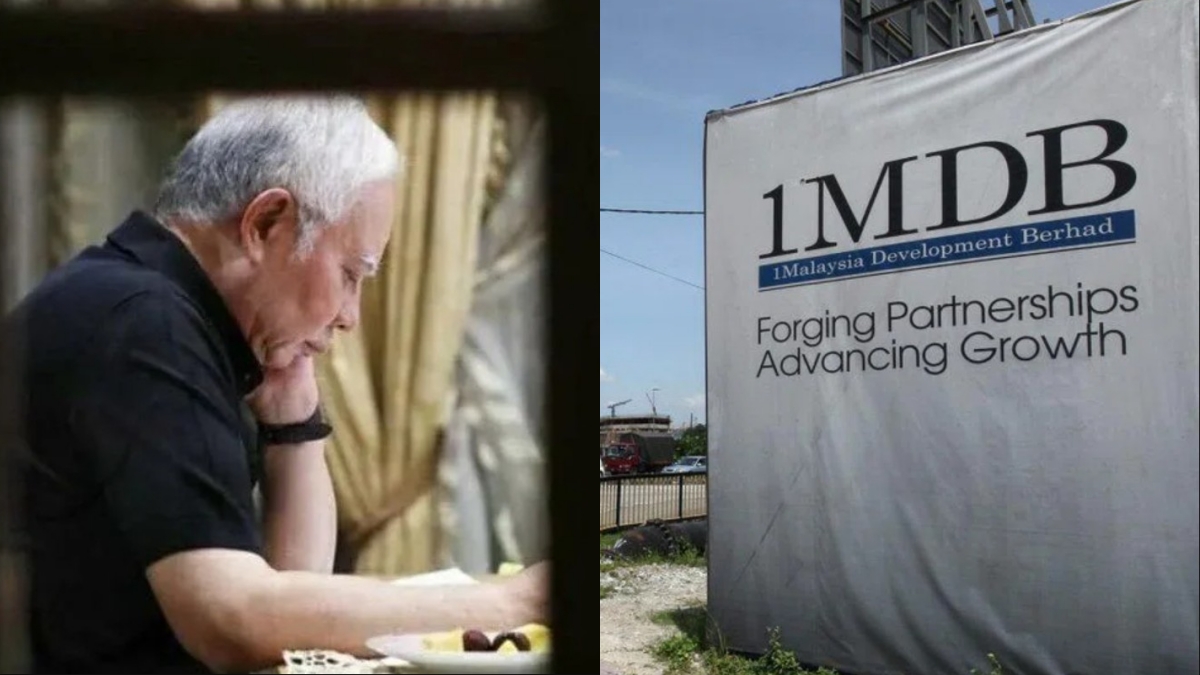
As outlined in the AGM resolution available on the Malaysian Bar’s official website, the organization criticized Najib Razak for actions leading to Malaysian taxpayers shouldering the burden of 1MDB debts surpassing RM50 billion.
Additionally, they highlighted the ongoing Tanore trial, where Najib Razak is accused of receiving USD600 million of 1MDB’s funds.
The Malaysian Bar further questioned the processing of Najib Razak’s pardon application, considering he had served only 1½ years of his jail sentence.
The Malaysian Bar emphasized that the 1MDB scandal has severely damaged Malaysia’s international reputation, citing remarks by Loretta Lynch, the former US Attorney General, and the description of the scandal as the largest kleptocracy investigated in US history.
“(The case) being the subject of a Netflix Documentary “Men on the Run”. Indeed, the Court of Appeal in the SRC appeal called it “a national embarrassment”.”
Regarding the Pardons Board’s decision, the Malaysian Bar deemed it to have acted “ultra vires” Article 42 of the Federal Constitution and in contravention of the law.
Public concerns grow over the fate of Najib Razak and Rosmah Mansor in ongoing 1MDB cases
Najib has been imprisoned since 23 August 2022, following the Federal Court’s confirmation of his convictions for criminal breach of trust, abuse of power, and money laundering related to the misappropriation of SRC International Sdn Bhd’s funds, accompanied by an RM210 million (approximately US$44.5 million) fine.
On 2 February, the Pardon’s Board reduced Najib’s sentence from 12 to six years for misappropriating funds amounting to RM50 million (approximately US$10.6 million), potentially enabling his release on 23 August 2028.
In early April, the former PM initiated legal proceedings to request serving his reduced sentence under house arrest.
Najib had earlier asserted that the addendum order from the former Malaysian King, Yang di-Pertuan Agong Al-Sultan Abdullah Ri’ayatuddin Al-Mustafa Billah Shah, specifies that he is allowed to serve the reduced sentence under house arrest instead of being confined in Kajang Prison.
Civil society group in Malaysia in October last year warned that if Najib and Rosmah are released from corruption charges, it could have detrimental consequences, damaging Malaysia’s rule of law and deterring global investors.
They called for a temporary halt to applications for Discharge Not Amounting to Acquittal (DNAA) or complete acquittals in cases involving politicians.