Indonesian green group urges Prabowo to recognise Indigenous land rights as protests mark COP31 climate talks
WALHI has urged Indonesia to recognise Indigenous and local community rights in climate policies, as nationwide demonstrations highlight concerns over deforestation, extractive industries and the gap between international commitments and domestic action.
- WALHI has called for Indigenous and local community rights to be recognised in Indonesia's national climate policies.
- Regional demonstrations have highlighted concerns over forest destruction, mining, plantations and conflicts involving customary territories.
- The government has outlined climate commitments at COP31, while WALHI demands stronger domestic implementation and direct community funding.

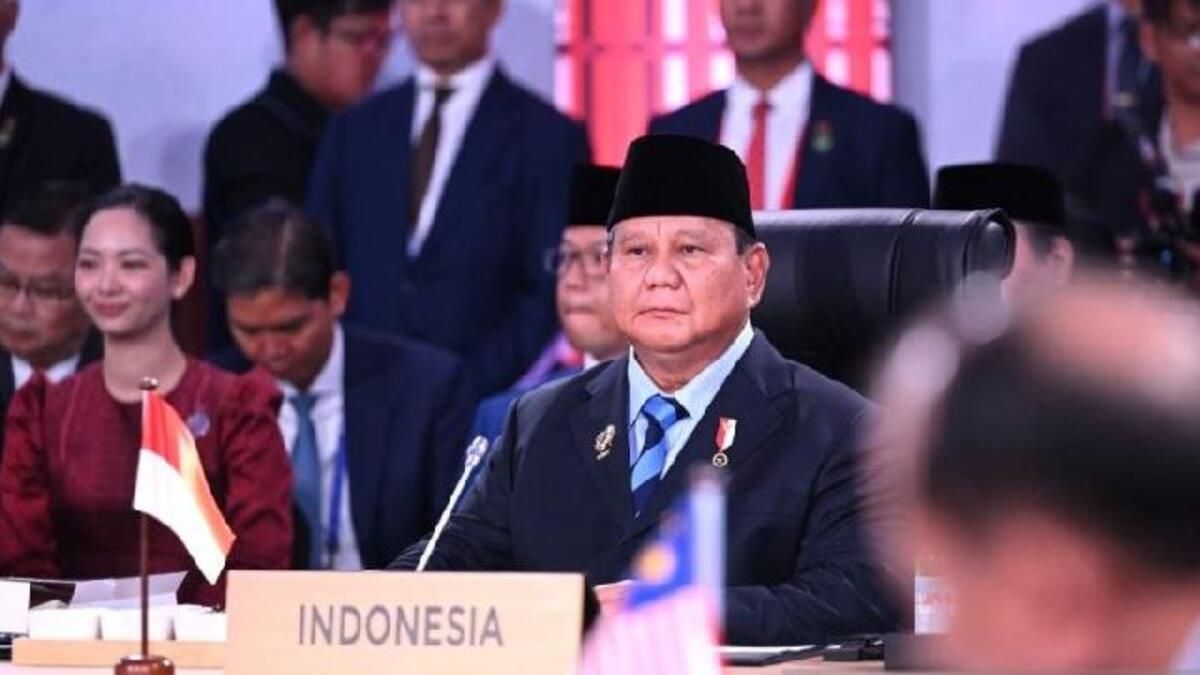
Indonesian environmental organisation Wahana Lingkungan Hidup Indonesia (WALHI) has called on President Prabowo Subianto's government to recognise the rights of Indigenous peoples and local communities in its climate policies, as activists staged demonstrations in several parts of the country during the United Nations climate conference COP31 in Antalya, Türkiye.
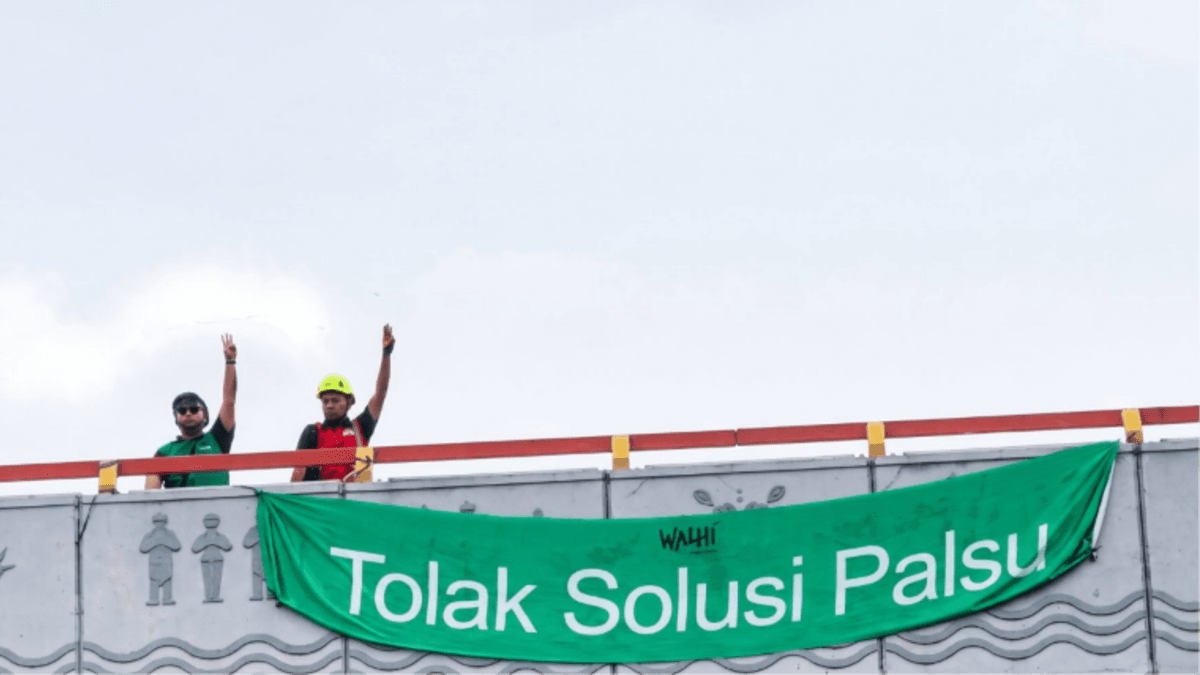
Under the campaign slogan "Put Life Before Profit. Recognise Community Rights Now", WALHI and its regional networks urged the government to move beyond international climate commitments and ensure that communities protecting forests, coastlines and other ecosystems are recognised and involved in decisions affecting their livelihoods.
A video circulated by WALHI shows demonstrations and public campaigns in different locations, with participants carrying banners and posters calling for the protection of Indigenous territories, an end to environmentally destructive development and greater community participation in climate action.
The campaign coincided with COP31, held in Antalya from 9 to 20 November, where governments are discussing the implementation of commitments under the Paris Agreement.
WALHI said the demonstrations were intended to bring the concerns of communities directly affected by environmental degradation into Indonesia's official position at the international negotiations.
The organisation argued that people who protect forests, manage local natural resources and maintain coastal ecosystems should be recognised as contributors to climate mitigation and adaptation, rather than being excluded from government policies and funding decisions.
Demonstrations held in several regions
WALHI's regional organisations organised activities around the opening of COP31 on 9 November, with demonstrations and public campaigns highlighting environmental problems in their respective areas.
In Bandung, WALHI West Java joined the GEMA community organisation from Bandung regency, Greenpeace Bandung and the Legal Aid Institute of Bandung (LBH Bandung) in a campaign at Taman Cikapayang.
Participants displayed posters carrying the messages "Life Beyond Profit" and "Recognition First: Community-Led Transformation".
Abi, a resource management staff member at WALHI West Java, said the government should not use the international conference to make additional promises without addressing demands already raised by affected communities.
"The Indonesian government does not need to issue new sweet promises in Antalya. What it must bring is an answer to the voices from the ground, which are still demanding the rights to life promised by the Indonesian government at COP30," he said.
WALHI West Java said Indonesia had supported international commitments at COP30 to recognise the land rights of Indigenous peoples and local communities, including a target to establish 1.4 million hectares of customary forests by 2029.
However, the organisation said the proposed Indigenous Peoples Bill, known as the RUU Masyarakat Hukum Adat, had remained stalled in the national legislative process for 18 years.
It also criticised the continued reliance on coal for electricity generation and the expansion of geothermal projects in West Java, which it said had affected communities' access to land and living spaces.
In West Kalimantan, WALHI and other civil society organisations held a silent demonstration in Pontianak on 8 November, calling for the recognition of Indigenous and local community rights in environmental and climate policies.
In South-east Sulawesi, WALHI's regional network also organised a campaign in November under the message "Sulawesi Tenggara Bukan Zona Pengorbanan Iklim" (South-east Sulawesi Is Not a Climate Sacrifice Zone), highlighting the environmental pressures associated with mining, nickel industrialisation and large-scale plantations.
WALHI Papua also at COP31 on 9 November under the slogan "Papua Is Not Empty Land" and "Papua Is Not for Sale", calling for an end to forest exploitation and the protection of customary territories.
WALHI calls for community-led climate action
At the national level, WALHI has urged Indonesia to use Article 6.8 of the Paris Agreement to recognise the contribution of Indigenous peoples and local communities to climate action.
Article 6.8 provides a framework for non-market approaches (NMA), allowing countries to cooperate on climate mitigation and adaptation without trading carbon credits or transferring emission-reduction outcomes.
WALHI said the mechanism could provide communities with access to climate funding, technology and capacity-building support without turning their environmental protection activities into commercial carbon assets.
In a policy brief published on 25 October, titled Recognising Those Who Protect, the organisation said Indonesia had not yet registered any initiative under the non-market approaches framework, despite the work already being carried out by communities.
It proposed that Indonesia use COP31 to announce its intention to register a community-based initiative under Article 6.8, with recognition of customary land rights as its foundation.
WALHI said the government should recognise Indigenous peoples and local communities as rights holders and climate guardians, with their contributions to forest protection, ecosystem restoration, food security and community-based energy included in national climate policies.
The organisation also called for direct funding for community initiatives rather than channelling financial support through corporations or commercial carbon projects.
Forest fires and deforestation among concerns
WALHI has also highlighted the continuing destruction of forests and the impact of land-use policies on communities.
In West Java, the organisation cited figures from the provincial disaster management agency (BPBD), which recorded 526 forest and land fire incidents affecting approximately 1,082.76 hectares by 19 October 2026.
The burned area had increased from 228 hectares at the end of August. Subang recorded the largest affected area, at 355 hectares, followed by Sumedang with 141.56 hectares.
Mount Ciremai had also experienced fires since 7 September, with fires reappearing towards the end of October.
WALHI said the figures demonstrated the need for stronger forest protection, better investigations into the causes of fires and greater support for communities involved in protecting forests.
The organisation also criticised the continued development of geothermal projects in West Java, citing projects in Cisolok, Galunggung, Mount Ciremai, Mount Pangrango and Mount Tampomas.
It argued that renewable energy development should not come at the expense of communities' land rights and access to their living spaces.
In Papua, WALHI's regional organisation raised concerns about large-scale plantations, mining, infrastructure projects and the conversion of customary land.
In a statement issued during COP31, WALHI Papua said forests were being cleared for plantations, land was being allocated for national strategic projects and mining activities were damaging ecosystems and rivers.
It also highlighted coastal erosion in Merauke, where some areas were reportedly losing between seven and 20 metres of coastline annually.
The organisation said the erosion threatened Wendu village, while saltwater intrusion into Rawa Biru was putting a water source serving Merauke at risk.
WALHI Papua also called for a moratorium on new forest clearance for large plantations, mining and extractive national strategic projects, alongside legal recognition of Indigenous territories.
Its executive director, Maikel Peuki, said Indigenous communities should have the right to determine how their customary territories were managed.
Government highlights its climate commitments at COP31
The Indonesian government has defended its climate policies, saying it is pursuing environmental protection alongside economic development and community welfare.
In an official statement issued on 13 November, the Ministry of Environment and Environmental Control Agency said Presidential Special Envoy for Climate and Energy Hashim S. Djojohadikusumo had presented Indonesia's climate priorities at the COP31 leaders' meeting.
"Indonesia will not choose between development and climate action. President Prabowo Subianto's vision is very clear: we must achieve both," Hashim said.
The ministry said the government had increased the number of forest protection and firefighting personnel from 8,000 to 70,000, supported by the participation of more than 25,000 local residents.
It also cited the social forestry programme, which it said had reached more than 1.4 million families across eight million hectares of forest.
The government said it had designated 400,000 hectares as customary forests, with a target of increasing the area to 1.4 million hectares by 2029.
The statement also highlighted plans to develop 100 gigawatts of solar power capacity and protect coastal ecosystems, including mangroves and seagrass beds.
On 14 November, Environment Minister Moh Jumhur Hidayat outlined three foundations for Indonesia's climate governance: environmental integrity, economic resilience and social inclusion.
He said climate policies should respect the rights of Indigenous peoples and local communities, promote gender equality and expand access to climate justice for vulnerable groups.
"We are building climate governance that is not only effective, but also fair, inclusive and accountable to the communities it serves," Jumhur said.
The ministry also said the government was preparing a draft law on climate justice to establish a longer-term legal framework for environmental and climate policies.
WALHI says international promises must translate into domestic action
Despite the government's statements, WALHI said the gap between international commitments and conditions experienced by communities remained a major concern.
The organisation pointed to the stalled Indigenous Peoples Bill, continued forest loss, reliance on coal and conflicts surrounding extractive industries as areas requiring government action.
National WALHI executive director Boy Jerry Even Sembiring also raised concerns about the direction of negotiations at COP31.
Speaking to NU Online on 16 November, Boy said Indonesia should not pursue ambitious energy transition targets without ensuring that environmental protection and community rights were respected.
He cited conflicts involving energy transition projects in North Maluku, Central Sulawesi, the Riau Islands and South-east Sulawesi, where he said communities had been affected by projects that did not adequately apply the principle of Free, Prior and Informed Consent (FPIC).
FPIC requires Indigenous peoples and affected communities to receive relevant information and participate in decisions before projects affecting their territories proceed.
Boy also said WALHI estimated that emissions from Indonesian fires between January and September 2026 had reached 307.6 million tonnes of carbon dioxide, more than twice the country's FOLU Net Sink 2030 target of 140 million tonnes.
The organisation also recorded 446 hotspots across 12 concessions associated with carbon projects, raising concerns about the use of carbon credits in areas where forests had been damaged by fires.
WALHI urged the Indonesian delegation to raise forest destruction and forest fires during the COP31 negotiations, including the thematic discussions scheduled for 17 November.
It also called for climate adaptation funding to be made directly accessible to communities and for greater transparency over climate finance, including funding under the Just Energy Transition Partnership (JETP).
Boy said Indigenous peoples, farmers, fishers and women should have decision-making roles in climate policies affecting their territories and livelihoods.
"Indonesia cannot fight for a just transition in Antalya while dispossessing and imprisoning communities in their villages," he said.
The organisation's campaign continues to centre on the demand that the government recognise the people protecting the country's natural resources and ensure that their rights are reflected in national climate policies.