China's new ethnic unity law takes effect amid global concern over minority rights and overseas enforcement
China's new ethnic unity law came into force on 1 July 2026, prompting criticism from the United Nations, Taiwan, Amnesty International and US lawmakers, who warn it could erode minority rights and extend Beijing's legal reach beyond its borders.
- China has begun implementing its ethnic unity law nationwide, including in Inner Mongolia and Xizang.
- Beijing says the law promotes national unity, stability and common development among all ethnic groups.
- Critics warn the legislation could restrict minority rights and enable transnational repression beyond China's borders.

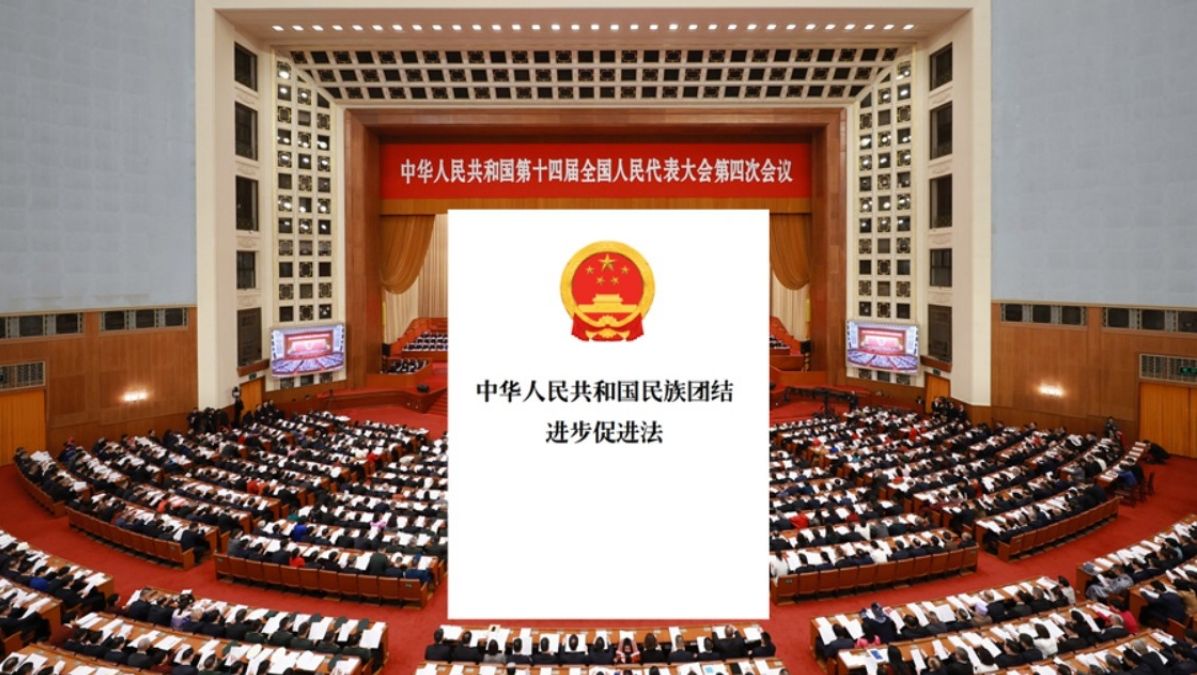
BEIJING, CHINA: China's new Law on Promoting Ethnic Unity and Progress (中华人民共和国民族团结进步促进法) came into force on Wednesday, 1 July 2026, as Beijing defended the legislation as a measure to strengthen national cohesion while facing mounting criticism from Taiwan, the United Nations, human rights organisations and United States lawmakers.
Chinese state media, including Global Times, reported that the legislation officially took effect on 1 July 2026, with multiple regions introducing implementation measures, including ethnic autonomous regions such as Inner Mongolia and Xizang, as well as autonomous prefectures, counties and townships.
The law was adopted during the annual session of the National People's Congress in March and is intended to foster what Chinese authorities describe as a shared national identity among the country's ethnic groups.
Among its objectives are strengthening the status of Mandarin as the national language, promoting interaction among ethnic communities and advancing what Beijing calls common prosperity and modernisation.
Regional implementation begins
China's National Ethnic Affairs Commission announced on Tuesday that authorities in the Inner Mongolia Autonomous Region had introduced 23 measures to support implementation of the legislation.
According to the commission, the measures focus on legal education, public awareness campaigns, coordination among government departments and ensuring effective enforcement of the new law.
Inner Mongolia will also organise study and publicity activities designed to encourage respect for, understanding of and compliance with the legislation.
Authorities said they would review existing local regulations, government rules and other normative documents to ensure consistency with the new law.
The implementation package also includes accelerating revisions to the Inner Mongolia Autonomous Region's regulations on promoting ethnic unity and progress.
Officials said the measures aim to encourage greater interaction, exchange and integration among all ethnic groups while steadily advancing what they described as shared modernisation.
In the Xizang Autonomous Region, local government departments introduced another 20 implementation measures.
Regional ethnic affairs authorities said these initiatives are intended to establish a stronger legal environment for safeguarding ethnic unity while improving institutional systems and strengthening legal guarantees.
Officials added that implementation would also focus on infrastructure development, public services, border stability and development in border areas.
The measures further call for integrating study and implementation of the law into the daily lives and work of people from all ethnic communities.
Beijing defends the legislation
Chinese officials have rejected accusations that the legislation undermines minority rights.
Speaking on 24 June, Vice Minister of Justice Hu Weilie defended provisions allowing legal accountability for organisations and individuals outside China accused of engaging in ethnic separatism.
According to Xinhua News Agency, Hu described the provision as "justified, lawful and necessary."
"We also firmly oppose all acts of smearing, suppression, infiltration and sabotage targeting China under the guise of ethnic, religious, human rights, or other issues," Hu said.
Chinese authorities have consistently denied allegations of abuses against ethnic minorities.
Beijing maintains that its policies are intended to safeguard national security, preserve social stability and promote economic development benefiting all ethnic groups.
Human rights concerns intensify
The legislation has nevertheless prompted strong criticism from international human rights organisations and overseas advocacy groups.
Campaigners argue the law will further weaken the rights of minority communities, particularly Uyghurs and Tibetans, whom Beijing has long been accused by critics of persecuting.
They have also highlighted provisions allowing legal liability for individuals outside China, arguing that the legislation provides broader justification for targeting critics living overseas.
Amnesty International warned that the law risks further institutionalising policies it says promote forced assimilation.
Sarah Brooks, Amnesty International's Deputy Regional Director, said the legislation would require "political and ideological alignment with the Chinese Communist Party" and "further institutionalise... policies of forced assimilation".
"Chinese authorities have human rights obligations requiring them to protect minority communities and their cultures, but this law does the opposite," Brooks said.
Amnesty also argued that the legislation encourages ethnic communities to adopt what it described as "a single, state-defined national identity dominated by Han Chinese culture".
United Nations calls for repeal
The United Nations High Commissioner for Human Rights, Volker Türk, has also expressed concern over the legislation.
Türk called for the law to be repealed, warning that it risks "deepening restrictions on freedoms of language, education, practice of religion, culture, expression and assembly".
Uyghur and Tibetan advocacy groups have likewise urged governments worldwide to pressure Beijing to withdraw the legislation, arguing that it seeks to erase the identities and cultures of minority communities.
Taiwan condemns overseas provisions
Taiwan strongly criticised the law after it came into force, describing it as another expansion of Beijing's legal reach beyond mainland China.
Taiwan's Ministry of Foreign Affairs issued what it described as a "strong condemnation", warning that the legislation broadens threats and intimidation against Taiwanese citizens and people from other countries.
"In the future, individuals from any country whose words or actions are not acceptable to China may become targets of the law or be pursued under it," the ministry said.
China regards Taiwan as part of its territory and has repeatedly stated that it reserves the option of using force to bring the self-governed island under its control.
Taiwan's Mainland Affairs Council also warned that Taiwanese citizens already face significant risks when travelling to China.
The council said Beijing now possessed "yet another law to fabricate charges".
According to a statement attributed to Deputy Minister Liang Wen-chieh, Beijing could use the legislation "as a legal basis to further suppress and persecute human rights in Xinjiang and Tibet, or to expand its threats against voices internationally that support or are friendly towards Taiwan".
US lawmakers voice opposition
Concern over the legislation has also emerged in Washington.
Nine US lawmakers, including the senior Republican and Democratic members of the Senate Foreign Relations Committee, released a joint statement opposing the law.
The legislators pledged to continue speaking out against what they described as Beijing's efforts to "legitimise its transnational repression."
They said they were particularly concerned about provisions requiring ideological compliance with the Chinese Communist Party and language allowing authorities to pursue people outside China who are deemed to undermine "ethnic unity and progress".