Bangladesh’s ousted leader Sheikh Hasina vows to return home in December despite facing a death sentence
Ousted Bangladesh prime minister Sheikh Hasina says she will return from India in December despite a death sentence. Dhaka insists she can come back only through extradition, as Awami League supporters clash with police in Gopalganj and analysts dispute the government’s motives.
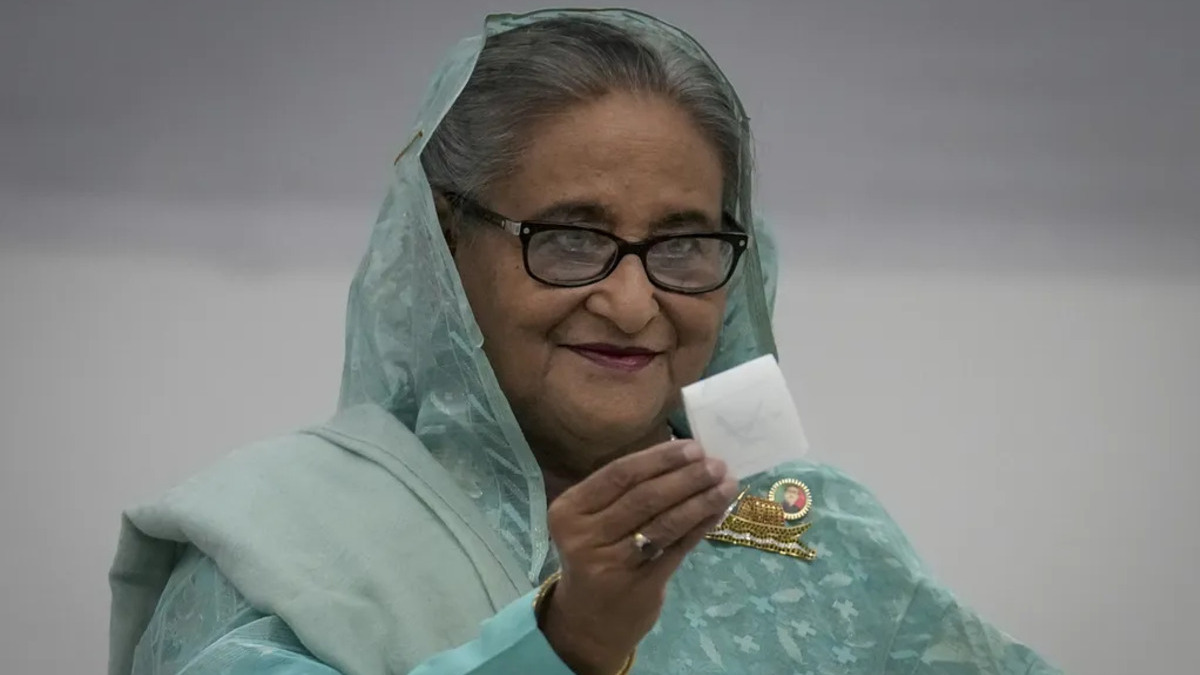
- Hasina tells AFP she will return to Bangladesh in December despite her death sentence.
- Dhaka refuses her a passport and insists on extradition; India says the request is under legal review.
- Awami League supporters attack police in Gopalganj as commentators question whether Dhaka wants her back.

Ousted Bangladesh prime minister Sheikh Hasina has said she will return home from India in December despite a death sentence, as her supporters staged violent demonstrations in her home district of Gopalganj.
In an email interview with AFP on 16 November 2026, the 79-year-old said she was fully aware of the risks. She said “no threat of death will keep me away from my own country”.
Hasina fled to India in August 2024 after a student-led uprising ended her 15-year rule. She has remained there since, and has repeatedly said since July that she intends to return and face legal proceedings.
Bangladesh’s International Crimes Tribunal sentenced her to death in absentia on 17 November 2025 for crimes against humanity over the crackdown on protesters. She denies wrongdoing and rejects the legitimacy of the trial.
Dhaka says Hasina faces execution and has no further legal recourse
Her remarks came days after the Bangladeshi authorities said she would face execution if she returned. They added that she had no further legal recourse, having missed the deadline to appeal against her conviction.
Hasina told AFP the government’s stance was “contradictory”. She said the authorities had demanded her return for months, yet now seemed more interested in threatening her than in allowing it to happen.
The government has declined a request, made on her behalf by London-based Matrix Chambers, for a new passport and national identity card. The request was communicated to the Bangladesh High Commission in New Delhi.
Law Minister Md Asaduzzaman said on 14 November 2026 that Bangladesh had completed the legal process to secure her return, and that the decision now rested with India.
India says extradition request is a legal matter still under review
Dhaka is seeking her extradition under a bilateral treaty. India has acknowledged receiving the requests but has not announced a decision.
Ministry of External Affairs spokesperson Randhir Jaiswal said in New Delhi on 13 November 2026 that the extradition was a legal matter and would be dealt with accordingly.
Bangladesh has also linked the issue to a possible visit to India by Prime Minister Tarique Rahman. It said the return of Hasina and other fugitives would help create a conducive environment for the trip.
Ruhul Kabir Rizvi, a senior leader of the ruling Bangladesh Nationalist Party (BNP), said on 13 November 2026 that Hasina could not simply return through the ordinary process as a convicted person sought under an extradition treaty.
Speaking at a discussion in Dhaka, he described passports and identity documents as secondary matters, and extradition as a legal process between two sovereign states.
Awami League supporters attack police vehicles and outpost in Gopalganj
On 15 November 2026, hundreds of Awami League activists took to the streets of Gopalganj carrying machetes and spears, according to officials and media reports. Many women activists joined them.
They set a police armoured personnel carrier on fire, vandalised a police outpost and broke through barricades. They also pulled down a monument marking the fall of Hasina’s government on 5 August 2024.
Ilyas Haque, an Awami League leader in the district, told a party rally that the street movement would continue until Hasina was brought back to the country.
The unrest followed the overnight burning of two BNP offices in Tungipara, Hasina’s birthplace, by unidentified persons. The Awami League’s activities remain banned, though it retains supporters across Bangladesh.
The government withdrew the district’s deputy commissioner and police superintendent. Platoons of the paramilitary Border Guard Bangladesh (BGB) were called out to support riot police.
Home Minister Salahuddin Ahmed said law enforcement agencies were determined to prevent sabotage and terrorism.
Rahman chaired a Cabinet meeting on the situation the same day and later met senior party leaders at Parliament, Prothom Alo reported. BNP leaders told the newspaper he asked activists to “remain active” on the ground.
“The government will not let the situation spiral out of control,” a Home Ministry official told the newspaper, adding that deployments would be increased depending on developments.
Commentators divided over whether Dhaka truly wants Hasina to return
The government’s insistence on extradition has drawn sharply different readings from two journalists who follow Bangladesh closely.
Faisal Mahmud, managing editor of Daily Waadaa, argued in a commentary that a voluntary return would let Hasina appear to have negotiated her own comeback. He said a passport should not become a political bargaining chip.
He cited a United Nations Human Rights Office report from February 2025, which estimated that as many as 1,400 people were killed between 15 July and 5 August 2024. Children accounted for an estimated 12 to 13 per cent.
Mahmud acknowledged that concerns about due process, the trial in absentia and the death penalty deserved scrutiny. He nonetheless concluded: “The terms must be set by law.”
He added that formal extradition would give a clearer chain of responsibility, and that a return portrayed as a personal victory could energise Awami League networks and raise the risk of unrest.
David Bergman, a journalist who has long covered Bangladesh, offered a contrasting view on X. He argued that the government knows India is unlikely to agree to extradition without conditions Dhaka would struggle to accept.
Bergman compared the approach to the former Awami League government’s public demands for the extradition of UK-based Jamaat-e-Islami leader Chowdhury Mueen-Uddin, convicted in absentia in 2013. He said no formal request was ever made to Britain.
Mueen-Uddin has always denied the allegations, and Bergman noted that the UK Supreme Court had strongly criticised the fairness of those proceedings in a related defamation claim.
In Bergman’s assessment, Hasina’s offer to surrender herself upsets that calculation. He wrote that the government does not really want her back, and now insists on extradition, “a route it knows is closed”.