South-east Asian leaders agree to protect migrant workers from fake job offers linked to scam centres
ASEAN leaders have adopted a declaration to promote fair recruitment, curb excessive placement fees and improve protection for migrant workers targeted by trafficking networks operating online scam centres.
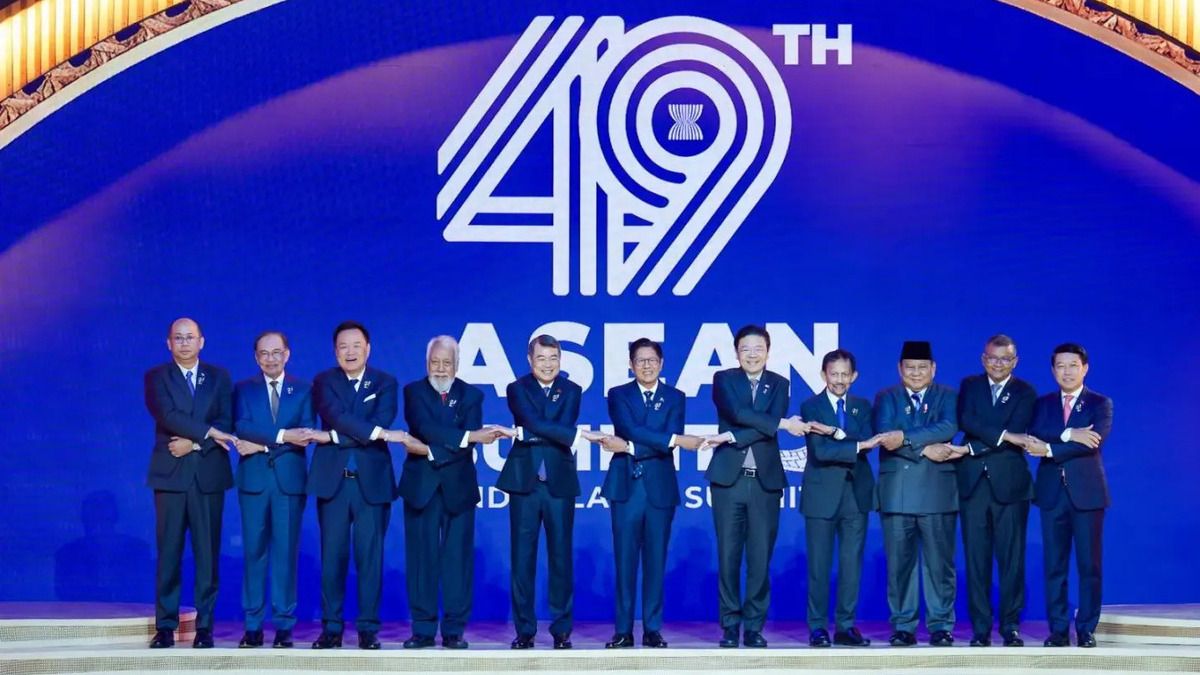
- ASEAN adopted a declaration on 15 November to strengthen fair recruitment and migrant worker protections.
- Criminal networks are using fraudulent overseas job offers to traffic workers into online scam centres.
- Implementation is expected to begin in early 2027, with effectiveness dependent on national enforcement.

The Association of Southeast Asian Nations (ASEAN) has adopted a regional declaration to strengthen migrant workers' protection and promote fair recruitment, as criminal networks increasingly use fake overseas job offers to traffic workers into online scam centres across South-east Asia.
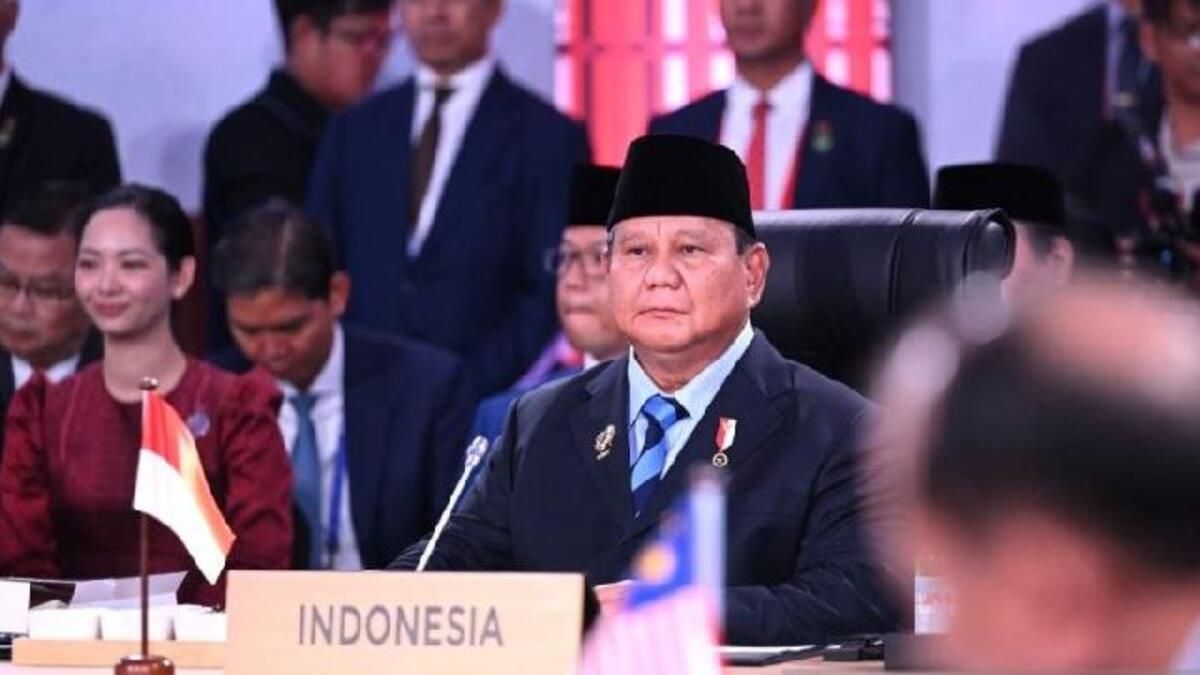
The agreement, adopted by ASEAN leaders on Sunday (15 November) during the 49th ASEAN Summit in Manila, Philippines, aims to improve recruitment practices, prevent excessive placement fees and strengthen cooperation between member states in protecting workers from exploitation.
The ASEAN Declaration on Fair, Ethical and Sustainable Recruitment for Empowered Migrant Workers also addresses the growing use of online recruitment platforms by criminal groups to lure jobseekers into human trafficking, forced labour and cybercrime operations.
Philippine Department of Migrant Workers (DMW) Secretary Hans Leo Cacdac said the declaration would benefit approximately 600,000 Filipino migrant workers across ASEAN member states by strengthening safeguards throughout the recruitment and employment process.
"This declaration advances ASEAN instruments towards the protection and promotion of rights of migrant workers," Cacdac said during a press briefing on Sunday, according to the Philippine News Agency (PNA).
He said the agreement was intended to make recruitment more transparent and accountable while improving cooperation between countries of origin and destination.
The declaration seeks to ensure that migrant workers are not charged excessive or unreasonable recruitment fees, strengthen the regulation of recruitment agencies and provide better access to justice and remedies for workers whose rights have been violated.
It also calls for closer cooperation between ASEAN governments in identifying illegal recruitment networks, rescuing trafficked workers and facilitating their repatriation.
Scam centres expose migrant workers to forced labour
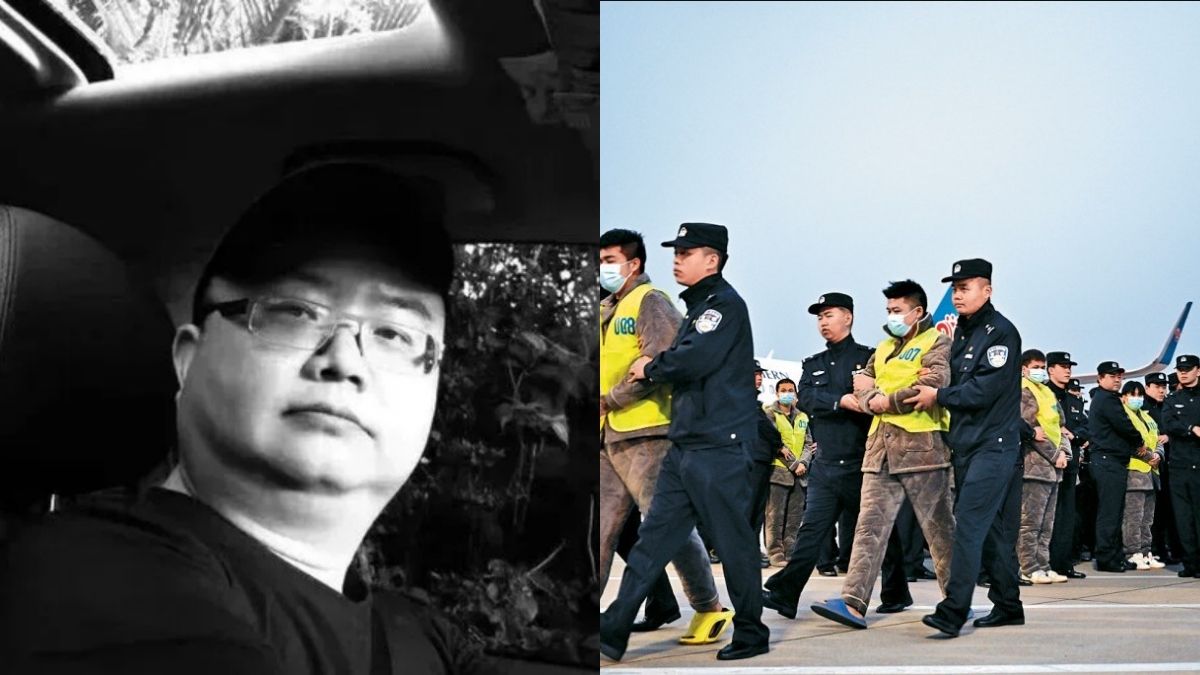
The agreement comes amid growing concern over criminal organisations operating online scam centres in countries including Myanmar, Cambodia and Laos.
These networks frequently advertise overseas employment opportunities through social media and other digital platforms, promising attractive salaries and jobs in customer service, technology, marketing or cryptocurrency-related businesses.
Workers who accept the offers may subsequently discover that the jobs are fraudulent. Some are transported across borders, have their passports confiscated and are held in compounds where they are forced to conduct online financial fraud, romance scams and cryptocurrency investment schemes.
Victims who refuse to participate or fail to meet targets can face threats, physical abuse, intimidation and restrictions on their freedom of movement.
The Philippines has become both a source of trafficking victims and a destination for foreign nationals recruited into illegal operations.
In a raid in Pasay City on 3 November, Philippine authorities rescued and profiled 166 foreign nationals suspected of being coerced into cyber-fraud activities. They included 138 Indonesians, 16 Vietnamese, 10 Chinese and two Malaysians.
The case demonstrated the cross-border nature of the operations, with people of different nationalities found in an alleged scam operation within the Philippines itself.
Philippine officials have also warned that workers recruited into scam centres abroad can face criminal charges in the countries where the operations are located, even when they were initially trafficked and forced to participate.
Hundreds of Filipinos remain vulnerable in scam hubs
The scale of the problem is reflected in the number of Filipinos being monitored by the Philippine government in countries where scam operations have been reported.
Former Presidential Anti-Organized Crime Commission (PAOCC) director Winston Casio estimated that between 900 and 1,500 Filipinos remained trapped in scam centres in Myanmar alone, excluding potential victims in Cambodia and Laos.
The Department of Migrant Workers has also been monitoring Filipinos detained in Cambodia over their alleged involvement in online scam operations.
On 10 November, Cacdac said 51 Filipinos were being monitored in Cambodian detention facilities.
Of these, 28 were being held in Sihanoukville and facing felony charges aggravated by organised crime, which carry possible prison sentences of five to 10 years. Another 23 were detained in Battambang and faced misdemeanour charges carrying possible sentences of two to five years.
Cacdac said the Philippine government was concerned that some host countries were treating trafficked workers as criminals rather than recognising them as potential victims.
"The problem now is that laws have been passed in Myanmar and Cambodia penalising employment in the scam hubs. So some, if not all of them, are seen as perpetrators rather than victims, which is rather different from the way we see it," he said.
He said the situation complicated efforts to rescue and repatriate Filipino workers because the authorities in host countries might detain them while investigating their alleged involvement in criminal activities.
The Philippine government has been coordinating with its embassies and Migrant Workers Offices in Myanmar, Cambodia, Malaysia, Thailand and Laos to monitor affected workers.
Cacdac also disclosed that 19 Filipinos detained in Myanmar had been released and returned home during the preceding two months.
He urged jobseekers to use licensed recruitment agencies, ensure that they had valid employment contracts and verify that their work visas matched the jobs offered.
ASEAN seeks to regulate recruitment agencies and eliminate excessive fees
Under the new declaration, ASEAN member states have committed to strengthening recruitment regulations and improving accountability among agencies involved in placing workers overseas.
The measures include:
-
Promoting transparent, fair and accountable recruitment practices.
-
Preventing excessive or unreasonable recruitment fees and related costs.
-
Strengthening the licensing, monitoring and oversight of recruitment and manning agencies.
-
Improving equal employment opportunities and protection for migrant workers.
-
Expanding access to justice and effective remedies for workers who experience exploitation.
-
Improving cooperation between countries of origin and destination.
-
Supporting the rescue, legal assistance, welfare protection and repatriation of trafficked workers.
The declaration also encourages closer coordination between national recruitment systems, including the recognition of recruitment licences and employment-processing procedures across member states.
Cacdac said cooperation was necessary to ensure that governments could distinguish legitimate overseas employment arrangements from fraudulent recruitment schemes.
The longer-term objective is to move towards zero placement fees for migrant workers across ASEAN.
However, member states have yet to harmonise their recruitment regulations and administrative systems.
The declaration does not establish financial penalties or sanctions against member states that fail to implement its provisions.
Instead, it relies on institutional capacity-building, cooperation and the development of stronger national regulatory systems.
Implementation expected to begin in 2027
ASEAN's new declaration will be incorporated into the work of the ASEAN Committee on the Protection and Promotion of the Rights of Migrant Workers, including its 2026–2030 work plan.
DMW Assistant Secretary Levinson Alcantara said the Philippine government was preparing the necessary documentation and implementation activities following the adoption.
He said initial implementation could begin in early 2027.
The declaration builds on previous regional commitments, particularly the 2007 ASEAN Declaration on the Protection and Promotion of the Rights of Migrant Workers and the 2017 ASEAN Consensus on the Protection and Promotion of the Rights of Migrant Workers.
However, the latest agreement addresses recruitment-related challenges that have become increasingly complex with the growth of digital platforms and cross-border employment arrangements.
At the 19th ASEAN Forum on Migrant Labour in October, Cacdac warned that social media and online recruitment platforms were increasingly being exploited by criminal groups to attract jobseekers.
"The rise of the digital platforms and remote work has provided opportunities for migrant workers, but at the same time, the same platforms are now used for misinformation, illegal recruitment and trafficking in persons that have led many into forced criminality," he said.
The forum discussed regulatory gaps in online recruitment, digital literacy for jobseekers and cooperation with technology companies to identify and remove fraudulent employment advertisements.
The Philippines also reported that it had helped remove approximately 250,000 online posts linked to fraudulent overseas job offers through cooperation with Meta and TikTok Philippines.
DMW Undersecretary Darlene Pajarito said governments, social media companies and other stakeholders needed to work together to prevent recruitment fraud.
"We cannot work in silos," she said.
The forum also discussed ways to improve legal assistance, victim identification and cross-border referral mechanisms for workers who become victims of trafficking.
ASEAN strengthens regional action against trafficking networks
The migrant workers declaration is part of wider efforts by ASEAN governments to address transnational criminal networks, particularly those operating online scam centres.
In October, national anti-trafficking committees from the 10 ASEAN member states agreed to launch a regional public awareness campaign under the slogan "One ASEAN, One Action: Stop the Digital Trap. Break the Chains of Human Trafficking".
The initiative was discussed at the fourth Regional Meeting of Southeast Asian National Anti-Trafficking Committees, held in Lapu-Lapu City, Cebu, from 13 to 15 October.
Philippine Justice Undersecretary Nicholas Felix Ty said no country could tackle the problem independently because trafficking networks operated across national borders.
"No single nation can put an end to this transnational crime alone. It takes a community of anti-trafficking committees in our region," he said.
The campaign will use social media materials, videos and public information activities adapted by individual member states.
The meeting also highlighted difficulties in distinguishing trafficking victims from perpetrators in scam compounds, particularly when people who were initially forced into criminal activities subsequently assumed supervisory or recruitment roles.
Delegates discussed improving information-sharing, referral arrangements, legal assistance and repatriation procedures to ensure that victims could receive protection while authorities pursued those responsible for trafficking.
The Philippines has also highlighted the regional movement of scam operations following its decision to prohibit Philippine offshore gaming operators, which had been used as cover for some illegal activities.
Justice officials said the closure of those operations had disrupted criminal networks in the country but had not ended their activities across South-east Asia.
The adoption of the migrant workers declaration provides another regional mechanism for addressing the recruitment practices that bring workers into these operations.
However, its effectiveness will depend on how member states translate the commitments into national regulations, enforcement measures and practical assistance for workers.