Chinese blogger killed in 2024 after exposing scam gangs and Prince Group-linked businessman Liu Ren
Chinese anti-scam blogger Wu Kai, known as Huijian, was abducted, beaten and left to die in November 2024. Court documents made public in October 2026 revealed a contract-killing plot, with 14 people sentenced and the alleged overseas organiser still at large.
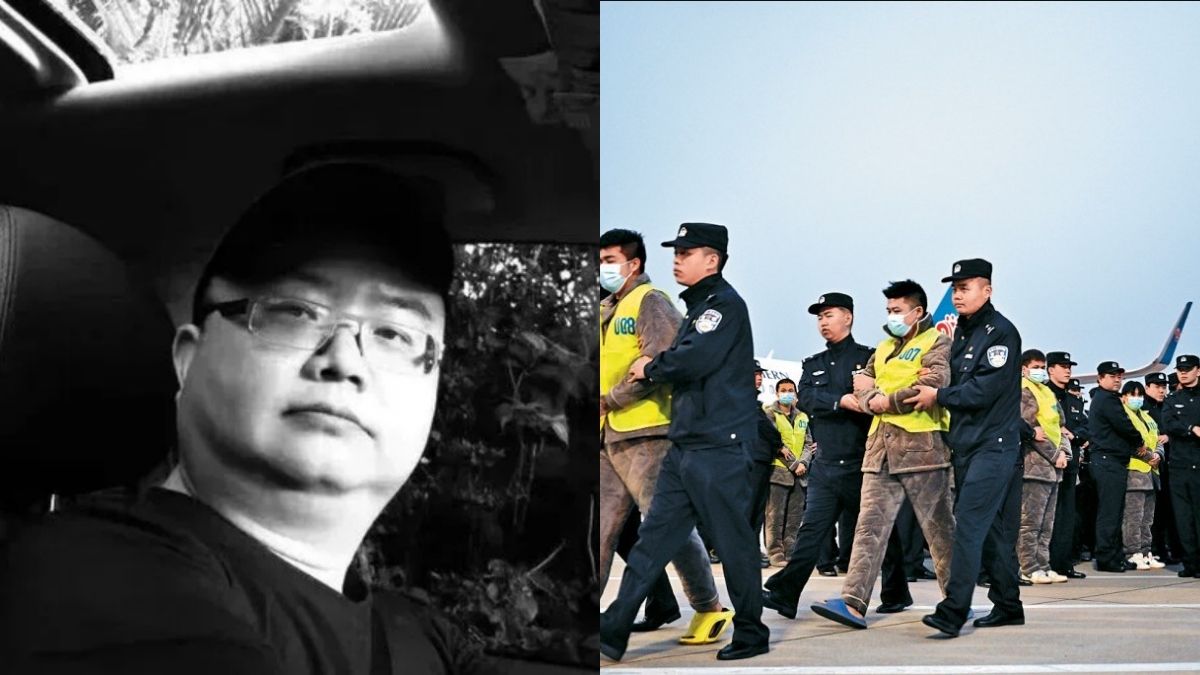
- Chinese blogger Wu Kai was abducted and killed in November 2024 after exposing alleged Southeast Asian scam operations.
- Court documents revealed that attackers impersonated police officers, forced the deletion of online articles and abandoned Wu on a mountainside.
- Fourteen defendants received prison sentences or other penalties, while the alleged overseas organiser remains at large.

A Chinese investigative blogger who exposed alleged criminal activities linked to online scam operations in Southeast Asia was abducted, tortured and left to die in November 2024, according to court documents disclosed by Chinese media in October 2026.
Wu Kai (吴恺), known online as Huijian (徽剑), had investigated alleged fraud networks operating in Cambodia and northern Myanmar, attracting hundreds of thousands of followers on China's WeChat social media platform.

His disappearance initially fuelled rumours that he had been arrested for extortion.
However, a criminal ruling from the Guangdong Provincial High People's Court revealed that he had been targeted in a paid abduction organised through the Telegram messaging platform.
According to Chinese media reports, 14 people involved in the case have been sentenced, including gang leader Zhao Bing, who received a suspended death sentence.
An alleged overseas organiser using the online alias "Major" remains at large.
Court documents reveal how the blogger was abducted and killed
According to the Guangdong Provincial High People's Court ruling, Zhao accepted a paid assignment in October 2024 from an individual using the name "Major" in a Telegram group.
On 10 November 2024, three accomplices impersonated police officers and seized Wu while he was stopping his vehicle to collect belongings in Huizhou, Guangdong province.
The attackers transported him between locations in Guangdong and neighbouring Jiangxi province, demanding that he identify the people allegedly directing his WeChat publications and delete articles exposing suspected criminal operations.
Wu was repeatedly beaten and mistreated during his detention.
On 11 November 2024, the group took him to a mountainside in Dingnan county, Jiangxi province, where Zhao kicked him in the head, leaving him unconscious.
Zhao reportedly photographed Wu and sent the image to "Major".
After nightfall, he covered Wu with dry grass and abandoned him.
Villagers discovered Wu's body on a hillside beside a road in Longtang township on 13 November 2024.
The court documents also identified Xie Yihui, who allegedly received Wu's mobile phone under arrangements made by "Major", as a fugitive.
Friends believed false arrest rumours for nearly two years
Following Wu's disappearance, almost all articles on his WeChat account were deleted, while rumours circulated that he had been detained for extortion.
His friend Zhang Yangfei told Phoenix News that he initially believed the claims.
Zhang last spoke to Wu during an eight-minute telephone conversation on 6 November 2024, four days before the abduction.
When rumours of Wu's arrest appeared in a Telegram group on 13 November, Zhang repeatedly attempted to contact him without success.
Wu had no wife or children, his parents had died, and Zhang knew of no close relatives who could clarify his whereabouts.
Zhang only learnt what had happened after journalists investigated the court documents in October 2026.
"We actually joined the internet in wrongly accusing him for two years," Zhang said, expressing shock and guilt.
Another friend, Feng Yuefeng, also believed Wu had been arrested after receiving no response to messages.
Feng said their final conversation, three days before Wu's abduction, concerned producing short dramas based on real cases involving people trafficked into scam compounds.
Wu had invited him to Huizhou to discuss the project, but the meeting never took place.
Blogger had publicly accused Cambodian businessman of crimes
Wu's reporting had included allegations against Liu Ren (刘忍), a prominent Chinese businessman in Cambodia associated with Prince Group and formerly president of the Cambodia Anhui Chamber of Commerce.
Beginning in August 2024, Wu publicly accused Liu of involvement in violent illegal lending, the fatal assault of a renovation contractor, protection payments, scam compounds and organised cross-border criminal activities.
Liu denied the allegations through a statement issued in the chamber's name, describing them as malicious fabrications and baseless defamation.
Several Chinese-language media outlets in Cambodia subsequently published the denial.
In June 2026, Liu was escorted back to China from Cambodia.
According to Chinese media reports, authorities identified him as a key member of a criminal organisation associated with Chen Zhi, whose business interests included the Jinbei Group.
Liu was suspected of involvement in illegal detention, intentional injury and other serious violent offences.
The available court account does not establish that Liu commissioned Wu's abduction or identify "Major" as Liu.
Friends recall efforts to help victims escape scam compounds
Before becoming known for his investigations, Wu worked in internet marketing and established Shenzhen Huijian Network Technology Co Ltd in 2010.
He was also associated with the Nanshan Internet Industrial Park and Shenzhen Huishang Club.
He later focused on exposing alleged fraud operations in Southeast Asia and helping Chinese nationals trapped in scam compounds.
Zhang recalled working with Wu and others in 2024 to assist a female university student who had reportedly been abducted after being deceived into travelling to Vietnam.
The student's parents approached the group with videos supplied by the abductors. Wu helped assess the material and explore possible contacts who could assist negotiations.
According to Zhang, the student was eventually rescued.
Feng, who met Wu through a WeChat mutual-aid group for Chinese people in Cambodia, described him as one of the boldest independent commentators investigating regional scam networks.
The group included former scam victims, bereaved families, businesspeople and volunteers assisting Chinese nationals in difficulty.
Feng recalled Wu contributing 200 yuan to help the family of a Chinese businessman killed in Cambodia.
He said Wu was unusually willing to identify influential individuals publicly, even when other commentators concealed names because of concerns about lawsuits, censorship or retaliation.
Feng also recalled seeing Wu's personal information, including purported travel, hotel and household registration records, circulated on overseas websites, although he could not verify their authenticity.
Killing raises concerns about retaliation against anti-scam activists
The disclosure has renewed concerns about the risks faced by independent investigators and volunteers exposing criminal operations connected to Southeast Asia's online scam industry.
Zhang recalled that, shortly before Wu's death, people allegedly associated with Liu had approached an acquaintance in Cambodia seeking information about Wu's residential address in China.
The acquaintance reportedly refused to provide the information. That account has not been established as part of the court's findings.
Feng said learning of Wu's killing had changed how he approached unfamiliar people seeking assistance.
"I no longer meet strangers," he said, expressing concern that requests for meetings could be used to lure him into danger.
In a commentary published on 27 October 2026, Chinese news outlet The Paper described the killing as a serious challenge to public scrutiny and the rule of law.
The commentary called for further investigations into those who financed the crime and continued efforts to apprehend suspects still at large.