Sarawak to dissolve state assembly on 26 October, triggering snap election within 60 days
Sarawak will dissolve its state assembly on 26 October 2026, triggering an election within 60 days. The vote will test ruling Gabungan Parti Sarawak’s dominance, Premier Abang Johari Openg’s leadership and the state’s push for greater autonomy.
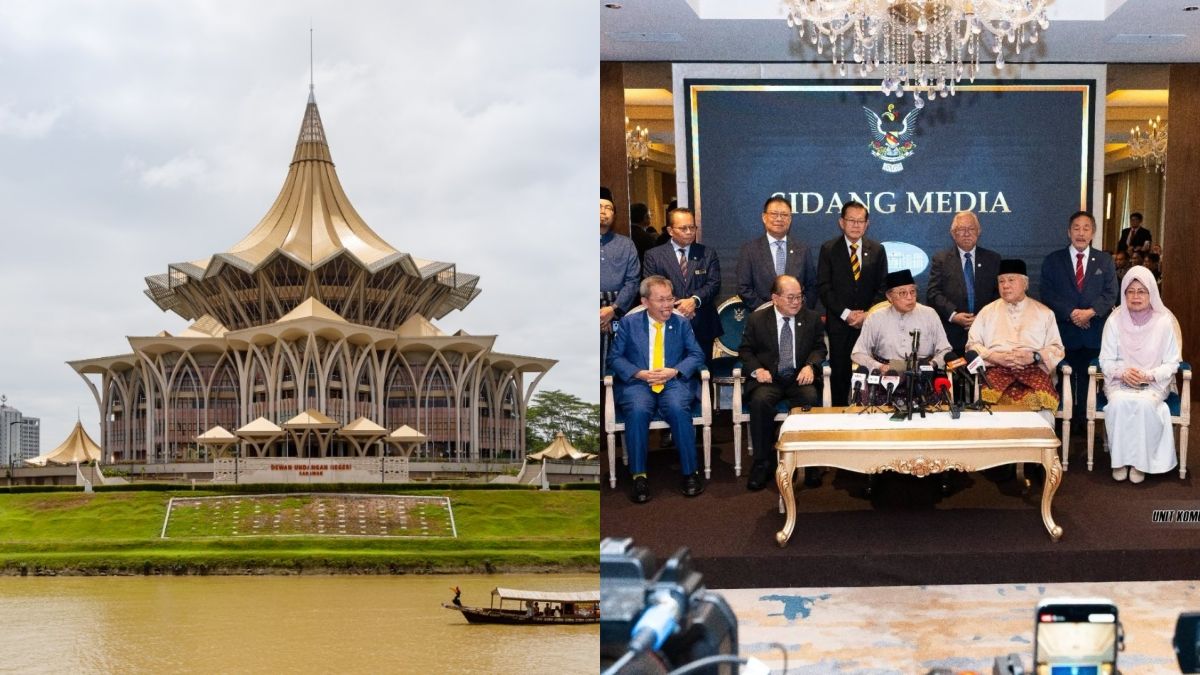
- Sarawak will dissolve its state assembly on 26 October, triggering an election within 60 days.
- Gabungan Parti Sarawak won 76 of 82 seats in 2021, and the upcoming vote will test its political dominance.
- Autonomy, living costs, rural development, indigenous land rights and government accountability are key issues facing voters.

SARAWAK, MALAYSIA" Sarawak will dissolve its state assembly on 26 October 2026, paving the way for a state election within 60 days and an early test of the ruling coalition’s political dominance in Malaysia’s largest state by legislative representation.
Premier Abang Johari Openg announced the decision at a press conference in Kuching on 23 October, after obtaining the consent of Sarawak Governor Wan Junaidi Tuanku Jaafar, according to local media reports.
The election must take place within 60 days of the dissolution.
The Election Commission (EC) is expected to meet to determine the official polling date.
The election was originally due by April 2027, making the dissolution an early move by the state government.
Sarawak Tourism, Creative Industry and Performing Arts Minister Abdul Karim Rahman Hamzah previously indicated that voting could take place in December, with 12 December or 19 December suggested as possible dates, according to local media.
The contest follows state elections in Sabah, Johor and Negeri Sembilan over the past year.
Melaka is also scheduled to hold its state election on 14 November.
82 seats at stake as proposed expansion faces a delay
Sarawak’s state assembly currently has 82 seats, making it the largest state legislature in Malaysia.
The number could eventually rise to 99 after the EC approved 17 additional constituencies, according to local media reports. However, the expansion is not expected to take effect for the coming election.
EC chairman Ramlan Harun told The Borneo Post that a review of electoral boundaries, known as redelineation, would not be completed in time for the polls.
The upcoming election is therefore expected to proceed under the existing constituency arrangement, although the final electoral timetable and arrangements remain subject to official announcements.
Gabungan Parti Sarawak (GPS), the ruling coalition, secured a landslide victory in the December 2021 election, winning 76 of the 82 seats contested.
Political realignments have since strengthened its position in the assembly.
The coalition now holds 80 seats, while the Democratic Action Party (DAP) has two.
GPS dominance faces a test amid a fragmented opposition
The political landscape has changed since the previous election, particularly following the dissolution of Parti Sarawak Bersatu (PSB), which won four seats in 2021.
Three former PSB assemblymen joined the Progressive Democratic Party (PDP), a component party of GPS.
Another former PSB assemblyman, See Chee How, became an independent.
See, who represents Batu Lintang, has voiced support for Abang Johari.
These developments have left GPS in a commanding position ahead of the next election.
The contest will test whether the coalition can retain its overwhelming majority and secure a renewed mandate for Abang Johari, who has led Sarawak since January 2017.
The opposition faces difficulties in mounting a statewide challenge. Political analysts quoted by Free Malaysia Today on 20 October 2026 identified obstacles to expanding opposition support beyond established constituencies.
Fragmentation and organisational weaknesses could make it harder for opposition parties to present a convincing alternative. However, the election outcome will depend on voters’ assessments of the government and competing candidates.
Autonomy and resource control remain central to Sarawak’s agenda
The election comes as Sarawak continues to seek greater autonomy within Malaysia’s federal system.
GPS has made greater control over the state’s affairs a central political objective, drawing on the Malaysia Agreement 1963 (MA63), which underpins its arguments concerning Sarawak’s position within the federation.
The state has pursued greater control over strategic economic assets, including aviation, ports and banking. These initiatives are intended to expand Sarawak’s economic capacity and strengthen its position in dealings with the federal government.
Energy governance is another major issue. The state government has sought greater regulatory control over hydrocarbon resources through Petroleum Sarawak Bhd (PETROS), its wholly owned energy company.
This effort challenges the established role of national oil company Petroliam Nasional Bhd (Petronas) in Malaysia’s oil and gas industry.
The election will test public support for GPS’ autonomy agenda and whether voters believe its policies are delivering practical benefits.
Greater state control over resources does not, by itself, establish whether revenue is being distributed effectively or whether public services are improving.
Living costs and uneven development add pressure
Beyond constitutional and political questions, household economic conditions are likely to be important issues during the campaign.
Rising living costs, stagnant incomes for some households and employment pressures have raised questions about whether the benefits of economic growth and resource wealth are reaching ordinary residents.
Government assistance can provide short-term relief, but concerns also extend to wages, productivity, affordable housing, transport, healthcare and the availability of secure, better-paid employment.
The extent of these pressures across different income groups requires further verification through household income and expenditure data.
Development disparities between urban centres such as Kuching and Miri and remote rural settlements also remain a concern.
Some rural communities continue to face gaps in road connectivity, clean water, electricity, digital access, education and healthcare.
The election could bring renewed scrutiny of whether infrastructure investment is reducing these inequalities or concentrating economic opportunities in selected towns and industries.
Indigenous land rights and environmental protection remain contentious
Questions surrounding indigenous communities’ customary land rights, environmental protection and participation in development decisions form another part of Sarawak’s political landscape.
Human Rights Watch reported in July 2026 on the Iban community at Rumah Jeffery and its dispute involving logging, company concessions and ancestral territory.
The case highlights issues that may require attention during the campaign, particularly the relationship between economic development, commercial resource use and the rights of indigenous communities.
The wider question for the state government is how resource-led development can be reconciled with environmental safeguards, customary land claims and transparent decision-making.
Sarawak’s federal influence raises expectations for tangible results
GPS also holds an influential position in federal politics.
Malaysia’s fragmented parliamentary landscape has increased the importance of East Malaysian representation since the 2022 general election.
The coalition’s 23 parliamentary seats contributed to the formation and stability of the federal unity government, giving Sarawak greater bargaining power in discussions over MA63, resource governance and political representation, as discussed by the ISEAS–Yusof Ishak Institute.