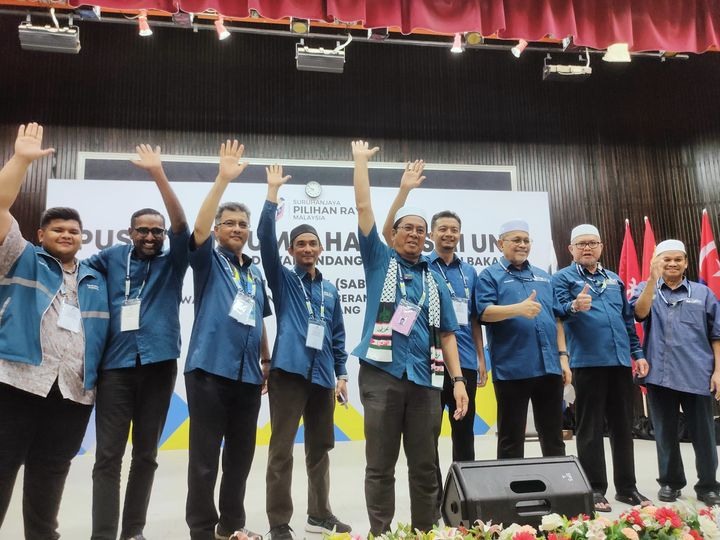
Barisan Nasional wins landslide in Johor state election, routing Pakatan Harapan
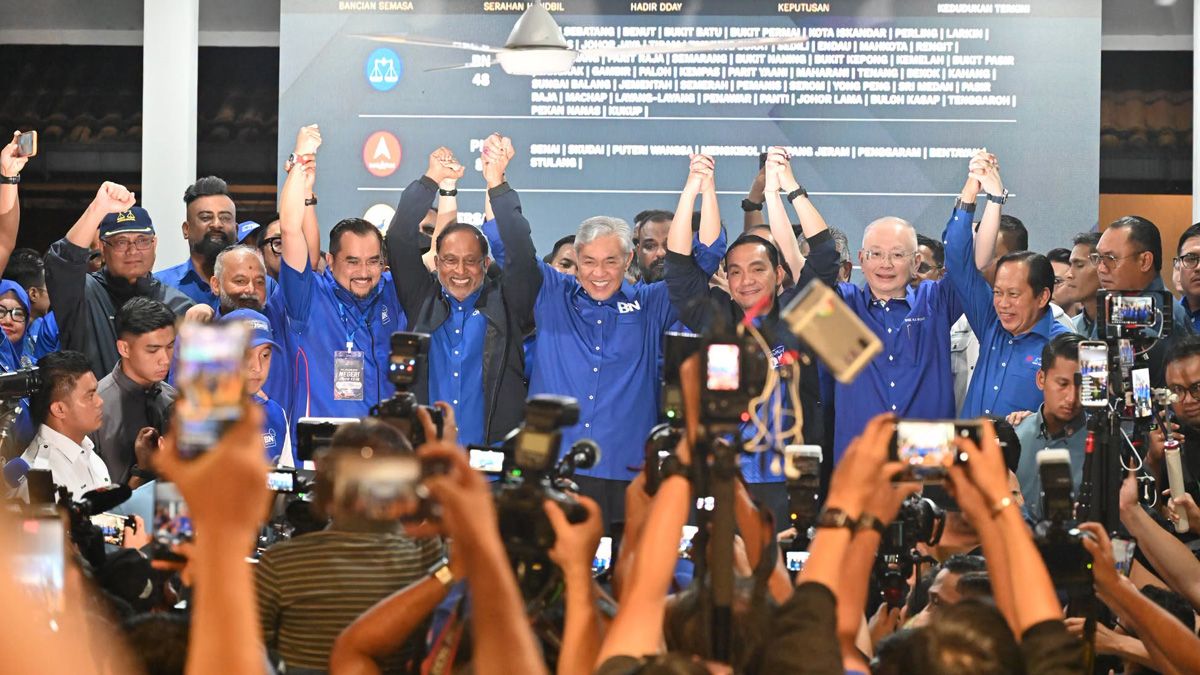
Barisan Nasional won 48 of 56 seats in Johor's state election, up from 40 in 2022, while Pakatan Harapan fell to eight seats, giving BN a two-thirds supermajority.
- Barisan Nasional won 48 of 56 Johor seats, up from 40 in 2022.
- Pakatan Harapan fell to eight seats, losing several urban strongholds.
- Result seen as boosting BN ahead of Negeri Sembilan polls and GE16.

Barisan Nasional (BN) won a landslide victory in Johor's state election on Saturday, 11 July 2026, taking 48 of 56 seats and improving on the 40 it secured in 2022. Pakatan Harapan (PH), the coalition led by Prime Minister Anwar Ibrahim, won the remaining eight seats, down from 12 in the previous election. The Election Commission (EC) confirmed the results at about 1am on Sunday, 12 July 2026.
According to the EC, BN crossed the simple majority threshold of 29 seats at 10.32pm on Saturday. The coalition's tally gives it a two-thirds supermajority in the state assembly, granting it the power to pass constitutional amendments and redraw electoral boundaries unilaterally.
Within BN, the United Malays National Organisation (UMNO) won 36 of the 37 seats it contested, three more than in 2022. The Malaysian Chinese Association (MCA) doubled its seat count to eight of the 15 seats it contested, while the Malaysian Indian Congress (MIC) won all four seats it fielded candidates in.
BN and PH were the only coalitions that contested all 56 seats. Other parties, including Perikatan Nasional (PN), fielded between one and 33 candidates. A total of 172 candidates stood, with most seats seeing multi-cornered contests.
BN chairman Ahmad Zahid Hamidi thanked supporters and congratulated Johor BN chairman and incumbent chief minister Onn Hafiz Ghazi, who retained his Machap seat. Zahid said BN would continue cooperating with the federal unity government and would implement the manifesto it had promised Johoreans.
Seats that flipped from PH to BN included Johor Jaya, Perling, Bukit Batu, Jementah and Tangkak. BN also took three seats previously held by PN: Bukit Kepong, Maharani and Endau.
Of PH's eight seats, six went to the Democratic Action Party (DAP) and one to Amanah, which retained Simpang Jeram by a margin of just 0.6 per cent. The remaining seat, Puteri Wangsa, was won by Parti Keadilan Rakyat's (PKR) Dr Maszlee Malik, a former education minister, who wrested it from the Malaysian United Democratic Alliance (Muda) in a five-cornered fight.
Overall turnout was 68.73 per cent, up from 54.9 per cent in 2022. BN secured about 60 per cent of the popular vote, compared with 33 per cent for PH and 5.4 per cent for PN.
Political analyst Dr Bridget Welsh said non-Malay voters appeared to have engaged in strategic voting, consolidating support behind BN to block further gains by PN. Universiti Sains Malaysia honorary professor Dr Ahmad Fauzi Abdul Hamid said the result would likely raise BN's confidence ahead of the Negeri Sembilan state election in August, and could allow BN, as a member of the unity government, to press Anwar to call the 16th general election (GE16) sooner.
Newly formed Parti Bersama Malaysia, led by former PKR deputy president Datuk Seri Mohd Rafizi Ramli, lost all 15 seats it contested and forfeited its deposits in each after failing to secure 12.5 per cent of valid votes. Muda lost all four seats it contested, including Puteri Wangsa, which it had won uncontested by PH in 2022, and lost all its deposits.
Among PN's component parties, PAS lost all 11 seats it contested, with four candidates losing deposits, while Bersatu lost all 16 seats it contested and forfeited deposits in seven. Within PH, PKR lost deposits in Sri Medan and Tanjung Surat, and Amanah lost deposits in Sedili and Penawar.
Anwar congratulated BN on its win and thanked voters, saying it was time for all sides to work together to build a more prosperous Johor. He said PH candidates, whether they won or lost, had been asked to continue serving their constituents.
PKR's election director and Selangor Chief Minister Amirudin Shari said PH remained committed to its role as opposition in Johor, and that the result would motivate the coalition to strengthen its outreach ahead of GE16 and the Negeri Sembilan election on 1 August. He added that the unity government's commitment to remain intact until the end of its term was unchanged, a pledge he said BN had also made.
PH leader Dr Khalid Abdul Samad cautioned against reading the Johor result as a barometer for the general election, saying the coalition remained confident in its choice of prime ministerial candidate and that state and national contests could not be equated.
Cost of living, housing affordability and delays to the Johor-Singapore Special Economic Zone masterplan were among the dominant issues during the two-week campaign.
Observers say the Johor result, together with the outcome in Negeri Sembilan, will offer an early indication of how PH and Anwar may perform in the national polls, which must be called by February 2028.