Philippines rejects Chinese academics’ claim that Batanes belongs to China through Taiwan
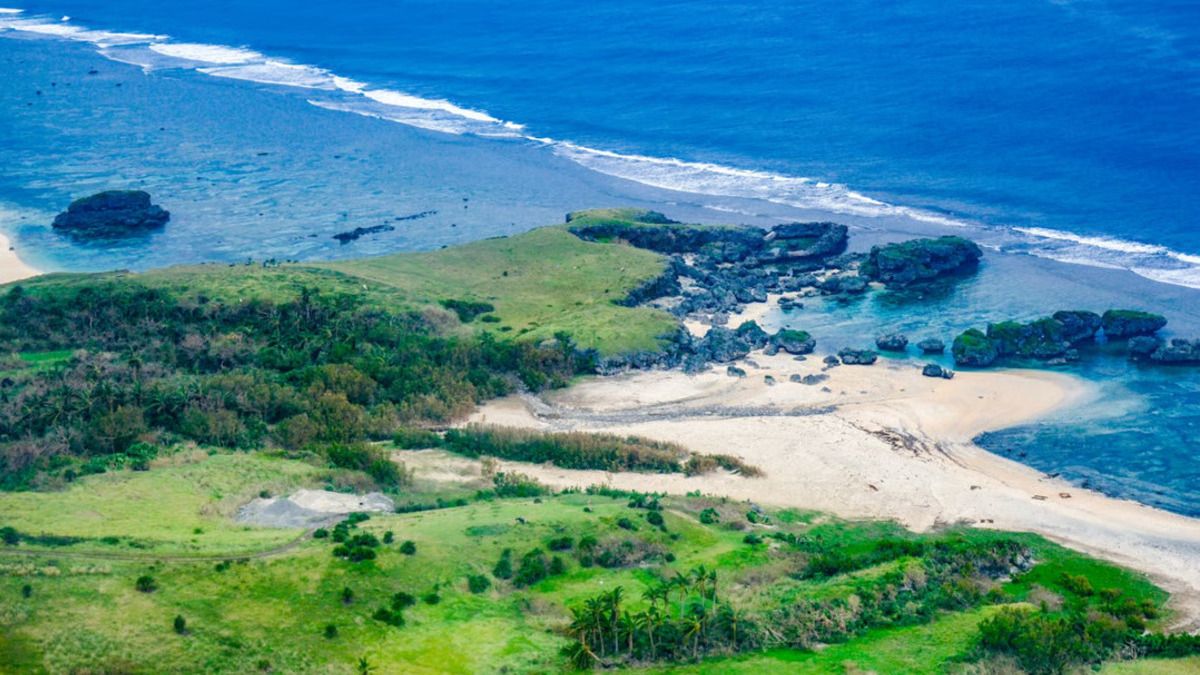
The Philippine government has dismissed claims by Chinese academics that Batanes belongs to China through Taiwan, describing the assertions as historically and legally baseless while reaffirming the province's status as an integral part of the Philippines.
- The Philippines rejected Chinese academics' claims that Batanes belongs to China through Taiwan.
- Philippine officials said historical and legal records firmly establish Batanes as Philippine territory.
- Maritime observers warned the claims could support broader information and lawfare campaigns despite lacking official endorsement.

The Philippine government has firmly rejected claims made by a group of Chinese academics that the northern Philippine province of Batanes belongs to China through Taiwan, describing the assertion as baseless and inconsistent with historical and legal realities.
The controversy emerged following an academic symposium held on 30 June at Jinan University in Guangzhou, China.
According to reports from Chinese state-linked media, participants from several Chinese research institutions argued that Batanes is a “natural geographical extension” of Taiwan and therefore falls under the sovereignty of the People’s Republic of China.
The scholars reportedly also claimed that the Philippines lacks the historical and legal basis to administer Batanes and argued that any maritime boundary negotiations involving areas east of Taiwan would be “illegal and invalid”.
However, there has been no indication that the Chinese government has formally adopted the academics’ conclusions or officially asserted sovereignty over Batanes.
Manila dismisses the claims
The Philippine Department of Foreign Affairs (DFA) rejected the assertions, stating that the country’s sovereignty over Batanes is settled and not open to discussion.
“The Philippines’ sovereignty over Batanes is settled and not up for debate,” the DFA said, adding that it would not entertain what it described as revisionist claims over Philippine territory.
The department also noted that the consular district of the Chinese Consulate General in Laoag includes Batanes, which it said demonstrates China’s own recognition of the province as part of the Philippines.
Defence Secretary Gilberto Teodoro Jr. also dismissed the academics’ position, calling it “a joke”, “ludicrous” and without basis.
Philippine Coast Guard spokesperson for the West Philippine Sea Rear Admiral Jay Tarriela said such narratives should be challenged to prevent the spread of misinformation and historical revisionism.
Historical commission rejects argument
The National Historical Commission of the Philippines (NHCP) also strongly rejected the claim, saying it lacks historical and legal foundation.
In a statement, the commission said there is no archaeological or historical evidence showing that Batanes was ever governed by China during the Ming or Qing dynasties.
The NHCP cited records from British explorer William Dampier, who documented organised Ivatan communities in Batanes in 1687 without any indication of Chinese administration.
It also noted that Spain formally incorporated Batanes into the Province of Cagayan in 1783 and that successive Philippine governments have continuously exercised sovereignty over the islands since then.
The commission further stated that Batanes was represented in the Malolos Congress and remained an integral part of the Philippines through subsequent governments. It also highlighted that the province liberated itself from Japanese occupation in early 1945.
“This only proves beyond any doubt that Batanes has always been Filipino,” the NHCP said.
Concerns over “lawfare”
The issue has also raised concerns among maritime security observers.
SeaLight executive director Raymond Powell said the symposium may represent the start of a broader Chinese “lawfare” effort, referring to the use of legal and academic narratives to support strategic objectives.
According to SeaLight, the lack of formal endorsement from Beijing does not necessarily diminish the significance of the claims, arguing that similar narratives have previously formed part of Chinese grey-zone information operations.
Powell warned that such arguments could potentially be used to justify a stronger Chinese presence near Batanes or complicate future territorial and maritime discussions.
Officials stress sovereignty
Labour Secretary Francis Tolentino, a former senator and principal author of the Philippine Maritime Zones Law, described the claim as a form of “lawfare” and “historical revisionism”.
He argued that Philippine sovereignty over Batanes is demonstrated through the continuous exercise of state authority, including governance, elections, courts and public services.
Tolentino also cited the 1935 Philippine Constitution, the 1898 Treaty of Paris, the 1900 Treaty of Washington and the 1930 US-UK Convention as legal instruments supporting the province’s status as part of the Philippines. He further noted that Spain formally annexed Batanes into the Philippine archipelago in 1783 under Governor-General José Basco y Vargas. (Source: Philippine News Agency)
Philippine officials have consistently maintained that Batanes, the country’s northernmost province located between Luzon and Taiwan, remains an integral part of the Philippines and that claims to the contrary have no legal or historical merit.