Trump says he has ‘some very severe problems’ before walking back health remark
US President Donald Trump told firefighters at the White House he has “some very severe problems”, before retracting the remark as a joke, amid continuing public questions over his health, bruised hands and repeated boasts about a cognitive test.
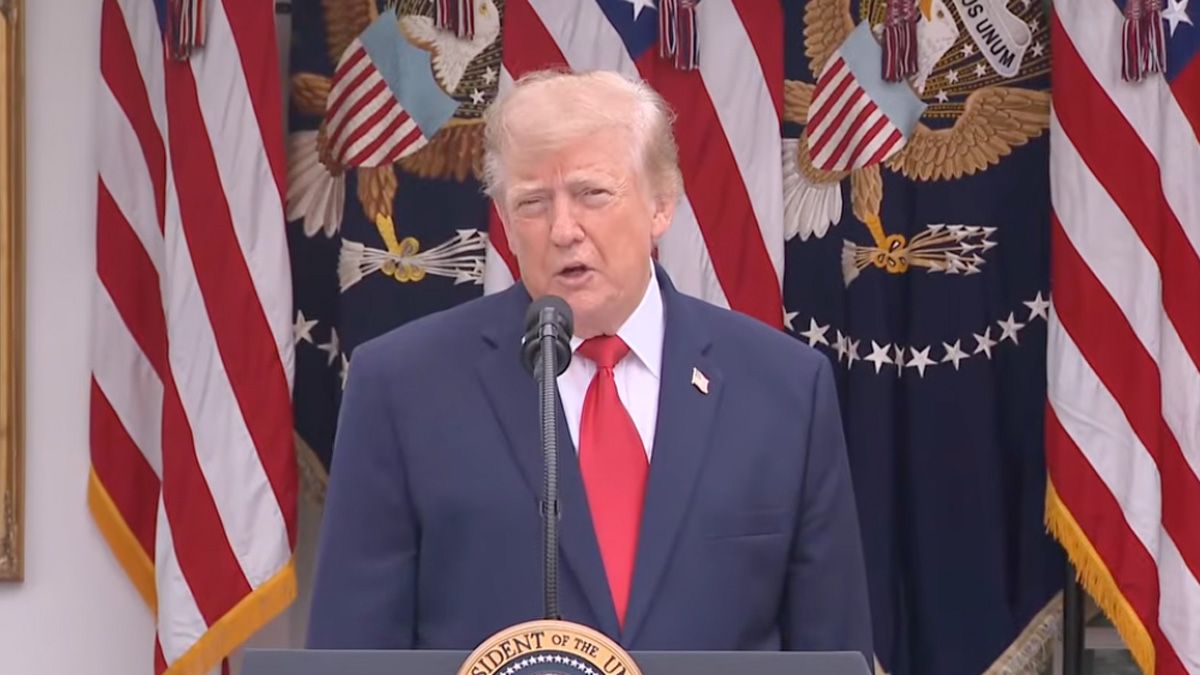
- Trump told firefighters he has “some very severe problems” but declined to specify them.
- He later retracted the remark, saying he was joking with the media.
- At an Arizona rally, he boasted of cognitive test results and called sick attendees “collateral damage”.

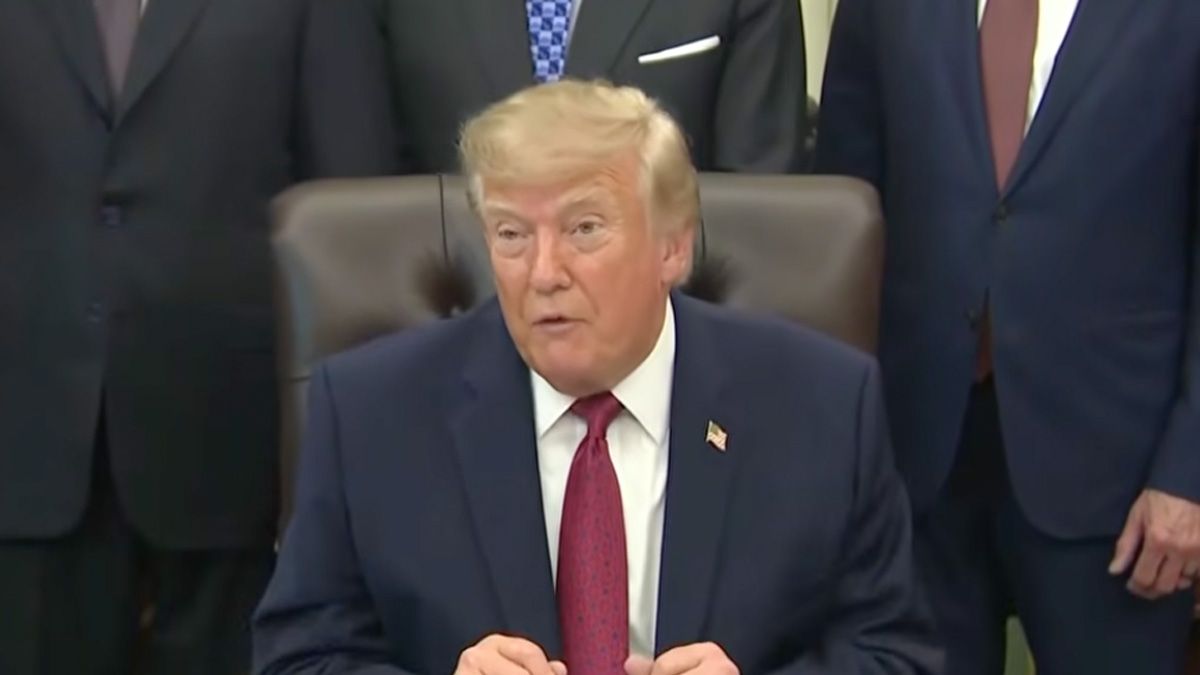
US President Donald Trump told a group of firefighters at the White House on Thursday (15 October 2026) that he has “some very severe problems”, before walking the remark back moments later as a joke aimed at the media.
The 80-year-old made the comment while discussing personal vices, according to reports by Australian outlet nine.com.au and British newspaper The Mirror. He did not specify what the problems were.
“If you don’t drink or you don’t take drugs or if you don’t smoke, there’s no problem,” Trump said. “I have other problems, I have some very severe problems. But those are not one of them.”
He added that he did not want to elaborate: “I don’t want to add them to the list, ‘cos if I did I guarantee I wouldn’t be here right now.”
Remark walked back moments later
Shortly afterwards, Trump appeared to retract the statement, anticipating how journalists would respond.
“The press is going to say ‘What problem does he have? Let’s figure that out’,” he said. “I probably set myself up for that one.”
“I actually don’t know. I was just having fun to the media. They’re wonderful people,” he continued.
The Mirror described the comment as the first time since the start of his second term that Trump had appeared to concede his health was less than ideal.
The outlet noted that the president has repeatedly claimed to be in perfect health, while many Americans have questioned whether he will be able to complete his current term.
Questions over the president’s health
The president’s health has been the subject of considerable public speculation. According to nine.com.au, several videos circulated over the past month appear to show Trump struggling to walk in a straight line.
Other footage appears to show him slapping the side of his leg in an unusual manner, the outlet reported.
Questions have also been raised about large dark bruises on the president’s hands. The White House has attributed the bruising to the number of hands he shakes.
The Mirror, which described Trump’s hands as appearing “mummified” at Thursday’s event, also pointed to reports of swollen ankles, memory lapses and what it characterised as bizarre blunders.
Reaction on social media
Users on X responded to the remark with surprise. One asked whether it was “the first real truth he has ever muttered”, while another wrote that he had “just admitted that he has severe ailments”.
A further user questioned the official position on the president’s health, writing: “His Dr says he’s in perfect health tho?”
Others focused on the president’s hands, with one remarking that the bruising had “spread into his knuckles now”.
Boasts about cognitive test
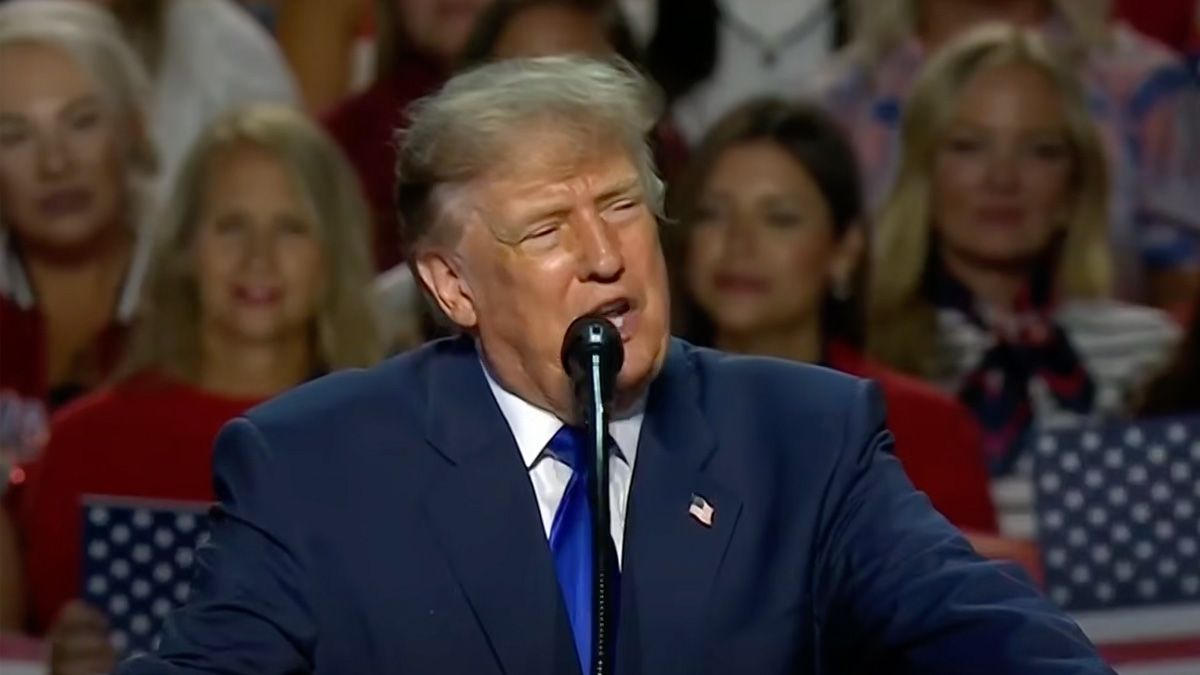
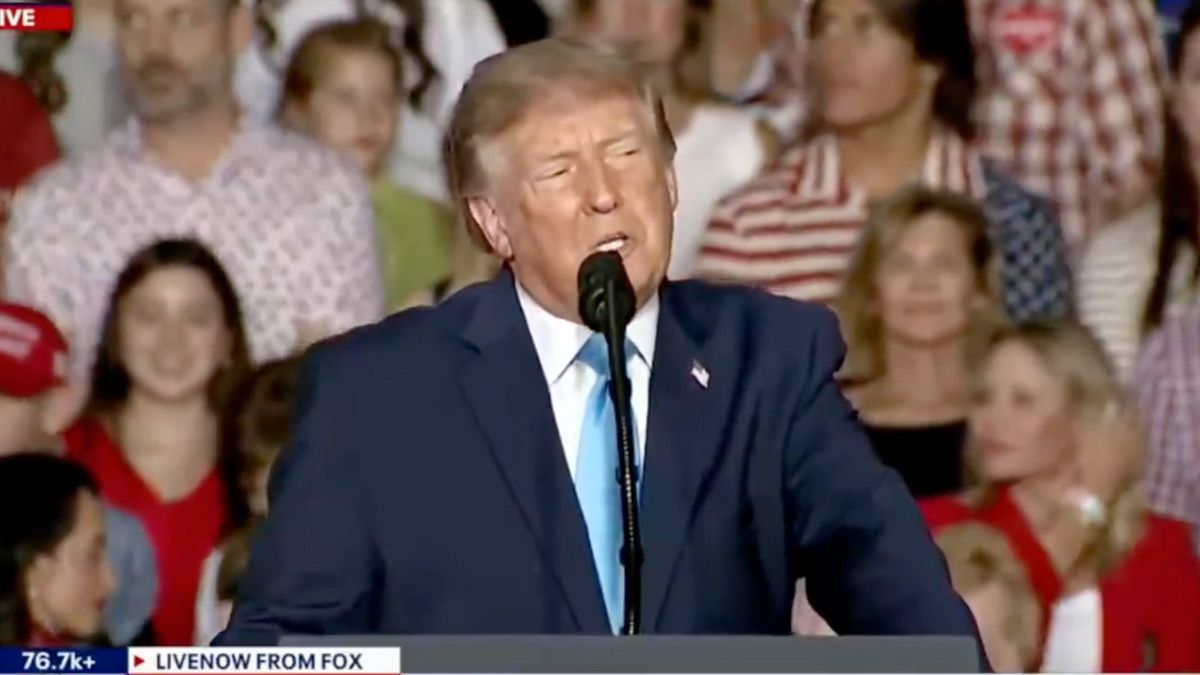
At a campaign rally at Laughlin Bullhead International Airport in Arizona on Wednesday (14 October 2026), Trump spoke at length about his performance on a cognitive test administered by his doctors.
He said that after he correctly recalled five words in sequence, the doctors exclaimed “Holy s—”. “They say very few people can do that, but almost none can do them in order like that. But I can,” Trump said.
“You know why? Because I’m a freakin’ genius,” he added.
Trump has repeatedly cited his results on the test, which is used to screen patients for dementia.
The test in question is the Montreal Cognitive Assessment (MoCA), a ten-minute screening tool developed by Canadian neurologist Dr Ziad Nasreddine to help detect conditions such as Alzheimer’s disease and dementia.
Sample tasks include drawing an analogue clock showing the correct time, with points awarded for correct numbering.
Another task asks the patient to name as many words beginning with the letter B as possible within one minute. According to nine.com.au, fewer than 11 words would constitute a failing result.
The final questions require the patient to state the date, the day of the week, their location and the city they are in.
“It wasn’t designed to be a test of IQ,” Dr Nasreddine told nine.com.au in May. “It was designed to assess normal cognitive performance.”
‘Collateral damage’ remarks at Arizona rally
At the same rally, Trump boasted of travelling with a large number of doctors.
“If people get sick in the audience, they leave them alone. You know what they call them? Collateral damage,” he said.
He then singled out a member of the crowd. “If that person right over there, he looks like s— actually. He looks like he’s ready to have a heart attack,” Trump said.
“If he actually had a heart attack, you know what my doctors would do, they would follow the president and leave him alone. I’ve got like six ambulances and they won’t use one for anybody else.”
The remarks drew criticism from Democratic Congressman Jim McGovern. “This is how he treats his biggest supporters,” McGovern said. “Of course he doesn’t give a s— about any of us.”
Comments on police tips and Senate candidates
At Thursday’s White House event, Trump also lamented that law enforcement officers are not permitted to accept tips.
“You’re not allowed to take a tip. If you take a tip, then, they’ll come and grab you, they’ll throw you in the clinker, so tips don’t help you,” he said.
“We’re not supposed to be giving law enforcement tips,” he added.
He also criticised two Democratic candidates in Senate races: Texas state Representative James Talarico and Michigan’s Abdul El-Sayed.
Expletive-laden Time interview
Earlier this month, Trump drew attention over an hour-long interview with Time magazine, according to The Mirror.
The interview covered subjects including the Iran war, the midterm elections, the White House ballroom and the Supreme Court.
According to the published transcript, when asked whether he would pardon members of his administration before leaving office, Trump accused the reporters of not asking him “one f----g positive question”.
Before the outburst, he passed over a follow-up question on whether Kentucky Senator Mitch McConnell should resign over his health, choosing instead to continue responding to the question on pardons.
Political commentator Aaron Rupar, sharing the transcript, urged people to read it “to get a sense of the president’s grave cognitive impairment”.
Rupar argued that Trump was “either unwilling or unable (or maybe both) to answer the questions he’s actually asked”, adding that the interviewers did their best to give structure to his responses.
Oldest serving president
Trump has typically been guarded about his health. According to nine.com.au, by the end of his current term he will be the oldest person ever to have served as president of the United States.